A Sellable Laser Project Is A Product, Not Just A Cut File
Laser cutting ideas that sell usually succeed because the finished product solves a clear need, fits a specific buyer, can be produced repeatably, ships safely, photographs well, and leaves enough margin after material, machine time, finishing, packaging, fees, and mistakes. A laser can make beautiful parts quickly, but profit comes from product judgment. The strongest ideas are not only clever files. They are items a small shop can make consistently, explain clearly, and deliver without turning every order into a custom emergency.
A: Start with the smallest test that proves one real part of the project.
A: Enough to know the goal, material limits, tool setup, and first safety check.
A: No. It should be clear, testable, and easy to revise.
A: Early failures usually come from poor first layers, wrong temperatures, weak orientation, wet filament, bad supports, and unfinished cleanup.
A: Match the material to load, use, finish, cost, repair, and available tools.
A: Scale after a small test works repeatedly and the cost still makes sense.
A: Save measurements, settings, suppliers, photos, failures, and changes.
A: Rework drops, fit improves, safety is clearer, and results repeat more often.
A: Avoid hiding weak structure, unsafe setup, or unclear decisions under a nice finish.
A: It solves the intended job and teaches a better next build.
Start With A Buyer, Not A Pattern
A laser cutter can turn a pattern into an object quickly, which makes it tempting to start with shapes. Sellable products usually start with a buyer instead. A teacher, gardener, market vendor, board game player, pet owner, coffee hobbyist, or small retailer has specific frustrations. A product that speaks to one of those frustrations is easier to position than a generic decorative cutout.
This focus also improves design. The dimensions, material, finish, packaging, and product copy all become clearer when the buyer is real.
Profit Lives In The Unseen Work
Material cost is only one slice of the price. Machine time, setup, masking removal, sanding, staining, assembly, photography, packaging, platform fees, failed cuts, customer messages, and shipping problems all affect profit. A product can look profitable on the sheet and become weak once the whole workflow is counted.
Track time during a small batch. If five items take much longer than expected, the product needs a higher price, simpler design, better process, or retirement.
Repeatability Beats Novelty For Small Shops
A profitable laser product should be repeatable. The file should cut consistently, parts should fit without hand wrestling, materials should be obtainable, and finishing should not vary wildly from order to order. Novelty gets attention, but repeatability keeps a shop alive.
Personalization can be valuable, but it should be controlled. Offer defined choices instead of unlimited custom design unless custom work is priced as custom work.
Choose Product Categories With Workflow In Mind
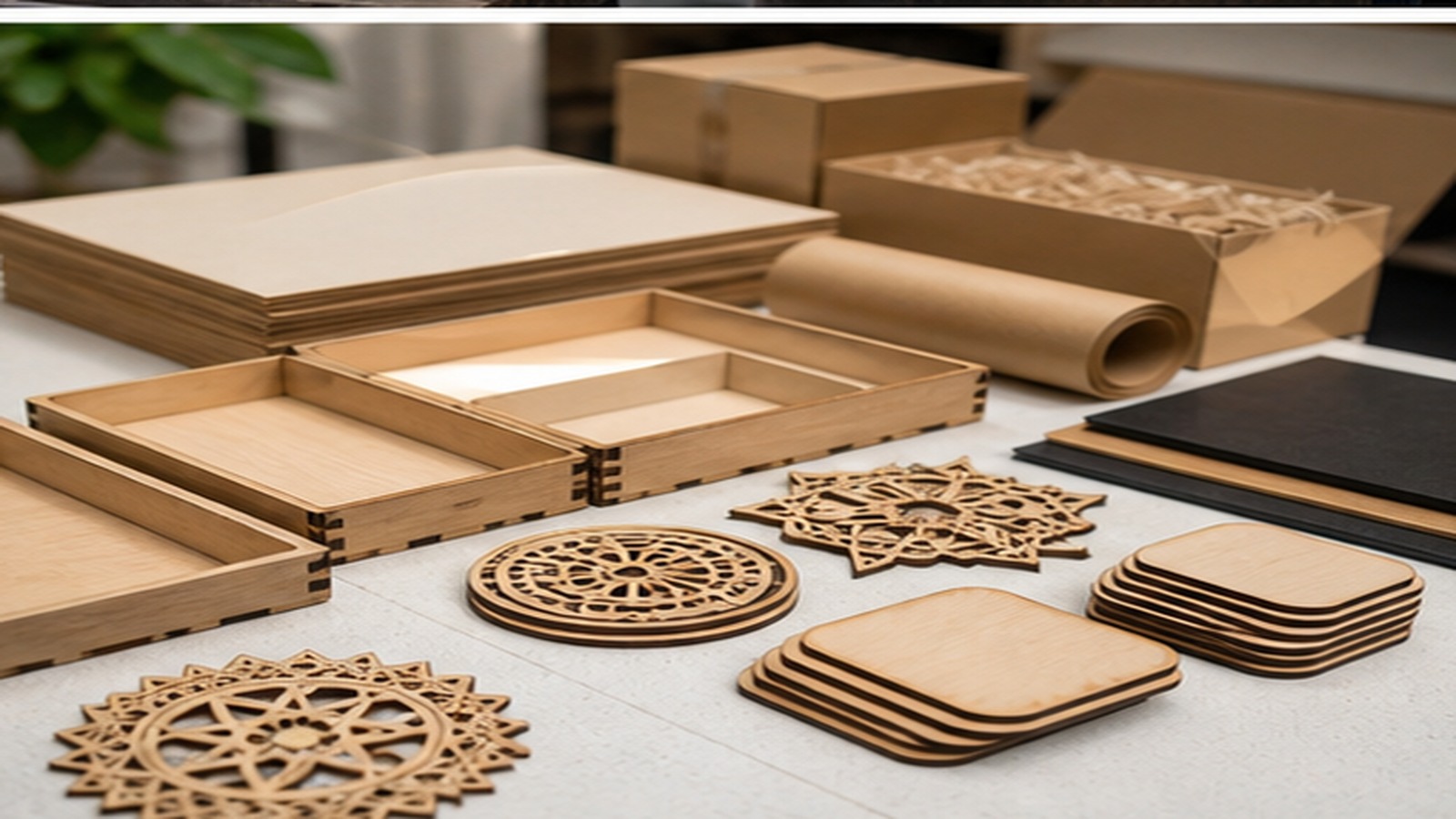
Desk organizers, trays, coasters, signs without protected content, retail displays, plant markers, classroom kits, templates, and drawer dividers can all work when they match a niche. The category alone does not make the product profitable. The workflow does.
A small tray with quick assembly and reliable finish may outperform a complex layered artwork that takes hours to sand and pack. Judge products by complete production behavior, not by how impressive the file looks.
Design For Shipping Before Selling
Laser-cut items can have delicate corners, thin bridges, brittle engravings, or finishes that scratch. Shipping exposes those weaknesses. Before listing a product, pack it, shake it gently, drop-test within reason, and see whether it arrives as intended. Shipping size also affects price and buyer resistance.
If an item needs excessive protective packaging, the margin must support it. Otherwise the product may be better suited to local markets than online sales.
Finishing Changes Perceived Value
The same cut file can feel cheap or premium depending on edge cleanup, stain, paint, oil, sanding, assembly, and packaging. Buyers pay for the finished object, not for the laser’s existence. Finish should match the product’s use and price point.
Do not overfinish low-priced items until they lose profit. Do not underfinish items that buyers will touch closely. The right finish is a business decision as much as a craft decision.
Build A Small Product Family
A focused product family is easier to sell than a random collection. Items can share material, visual language, packaging, and buyer type. A desk set might include a pen tray, cable holder, monitor shelf accessory, and small drawer organizer. A gardener set might include plant markers, seed packet dividers, and tool tags.
Shared workflow helps production too. Batch cutting and finishing become easier when products are related rather than reinvented.
Avoid Protected Designs And Thin Trends
Selling copied artwork, logos, characters, or trendy traced designs can create legal and reputational trouble. Even when a design seems common online, that does not mean it is safe to sell. Build original products around use, proportion, material, and niche insight instead of imitation.
Trends can inspire market awareness, but they should not replace original product development. A shop lasts longer when it owns its point of view.
Prototype The Customer Experience
A buyer experiences more than the object. They see photos, read descriptions, choose options, wait for shipping, open packaging, assemble parts, and use the product. Prototype that whole experience. Can the item be understood without a long explanation? Are assembly steps obvious? Does packaging protect and present it well?
Small improvements here can matter more than another decorative layer. A clear, durable, pleasant product earns repeat trust.
Use Data Without Losing Taste
Sales numbers, conversion rates, market feedback, and production time should influence what a laser shop keeps making. But data alone cannot design taste. The maker still chooses style, material, finish, and the kind of customer relationship the shop wants.
The best profitable products sit where demand, workflow, and creative identity overlap. That is where a laser cutter becomes a business tool rather than just a fast way to make more things.
Launch Small And Learn Fast
Start with a small set of products and make a real batch. Photograph them, price them honestly, sell them in a focused place, and listen to what buyers ask. The first launch is not a final judgment on the shop. It is a structured test of product, workflow, and market.
A profitable laser catalog grows from what survives that test. Keep the products that sell cleanly, improve the ones with promise, and retire the ones that steal time without returning value.
Validate Demand Before Scaling Inventory
A maker does not need hundreds of units to learn whether an idea has demand. A small batch, local market, focused online listing, or preorder test can reveal whether buyers understand and want the product. The goal is to learn before material, packaging, and storage costs pile up.
Validation should include price. Compliments are pleasant, but purchases at a profitable price are stronger evidence.
Make Customization Modular
Customization sells, but uncontrolled customization destroys batching. A smarter approach makes the custom part modular: a swappable panel, limited color choice, defined size range, or fixed personalization field. The base product remains repeatable while the buyer still feels served.
This protects both quality and sanity. A shop can offer personal products without turning every order into a fresh design consultation.
Design For Fast Finishing
Many laser products are not limited by cutting time; they are limited by finishing. Mask removal, sanding soot, staining edges, painting layers, gluing, and drying can consume the margin. Designs that minimize cleanup or accept a clean natural finish often scale better.
Prototype finishing before pricing. If the finish step is fussy, the product must either command a higher price or be simplified.
Use Photography To Test Clarity
A product that photographs poorly may be harder to sell online even if it works in person. Take simple photos during the prototype stage and ask whether the use, scale, material, and value are obvious. If the photo needs a paragraph of explanation, the design or staging may need work.
This does not mean chasing visual gimmicks. It means making the product’s purpose legible at a glance.
Plan For Material Variation
Wood sheets, acrylic colors, cork, leather, paper, and specialty boards can vary between suppliers and batches. Thickness changes affect slots and tabs. Grain and color affect appearance. Protective films and coatings affect cutting and cleanup. Production files should account for real material behavior.
Keep notes by supplier and batch when possible. A product that depends on a perfect nominal thickness may become fragile when materials shift.
Build A Retirement Rule
A product can sell and still be bad for the shop. Maybe it attracts too many custom messages, breaks during shipping, requires too much sanding, or earns weak margin. Create a rule for reviewing products after a certain number of orders or months.
Retiring a product is not failure. It is how a small shop keeps its catalog healthy enough to support better work.
Keep File Hygiene Businesslike
A sellable laser product needs organized files. Keep prototype files separate from production files, name versions clearly, and store notes about material, thickness, settings, finishing, and assembly. A confused file folder can create bad batches, wrong personalization, or lost improvements.
File hygiene sounds boring until an order repeats six months later. Then it becomes profit protection.
Build Quality Checks Into The Batch
Quality control should happen during production, not only before shipping. Check the first cut, inspect slots, test one assembly, watch for char changes, confirm material thickness, and look for warped sheets. Catching a problem early saves the rest of the batch.
A small shop does not need industrial paperwork, but it does need repeatable standards. Buyers remember the product they receive, not the cleverness of the design file.
Know The Difference Between Market And Online Products
Some laser-cut items sell beautifully in person because buyers can touch the finish, understand scale, and carry them home. The same item may struggle online if shipping is expensive or photos do not communicate value. Other products work online because they are flat, durable, clear, and easy to package.
Choose the sales channel before finalizing the product. The channel changes size, packaging, margin, and customer expectations.
Price Prototypes Honestly
Prototype time is learning time, but it should still inform pricing. If a product requires six test versions to become reliable, the final price does not need to repay all learning instantly, but the shop should understand the development cost. Otherwise every new idea feels exciting while the business quietly absorbs unpaid work.
Track enough to see patterns. Some categories may always demand more revision than they return.
Create Listings Around Use
A listing should make the product’s use obvious. Buyers want to know size, material, finish, care, assembly, shipping, and what problem it solves. Pretty photos help, but practical clarity reduces confused messages and returns.
Good product copy is part of production. It saves labor after the item is posted.
Let The Catalog Stay Coherent
A coherent catalog helps buyers understand the shop. Products do not have to be identical, but they should share enough material, purpose, audience, or style that the shop feels intentional. A scattered catalog can make production harder and branding weaker.
Coherence also supports batching. Related products can share sheet stock, finish, packaging, photography setups, and customer expectations.
Protect The Maker’s Time
Profit is not only money left after material. It is also whether the product leaves the maker enough time and energy to keep producing good work. A product that creates constant rush orders, fragile packing, or endless revisions can drain a small shop even if it sells.
The best laser products respect the buyer and the maker at the same time. When a product line protects attention, the shop can improve quality instead of constantly recovering from its own catalog. That steadiness is part of what lets a small product become a reliable offer.