Small-Space Woodworking Is A Design Constraint, Not A Dead End
Woodworking projects for small spaces succeed when the project, tools, dust plan, storage, and assembly sequence are scaled to the room available. A tiny shop can still produce shelves, boxes, stools, frames, trays, jigs, organizers, repair parts, and small furniture if the maker avoids oversized materials, controls mess, and chooses methods that fit the environment. The trick is not pretending a hallway corner is a cabinet shop. It is designing the work around the space honestly.
A: Start with the smallest test that proves one real part of the project.
A: Enough to know the goal, material limits, tool setup, and first safety check.
A: No. It should be clear, testable, and easy to revise.
A: Early failures usually come from voltage drops, overheated motors, loose wires, weak brackets, bad calibration, and unsafe motion.
A: Match the material to load, use, finish, cost, repair, and available tools.
A: Scale after a small test works repeatedly and the cost still makes sense.
A: Save measurements, settings, suppliers, photos, failures, and changes.
A: Rework drops, fit improves, safety is clearer, and results repeat more often.
A: Avoid hiding weak structure, unsafe setup, or unclear decisions under a nice finish.
A: It solves the intended job and teaches a better next build.
Design Around The Room First
A small space asks the woodworker to think like a planner before acting like a builder. Measure the floor area, bench surface, doorway, storage spot, and path where boards will move. A project that fits on paper may still fail if a board cannot rotate, a clamp cannot reach, or a glued assembly has nowhere to dry.
This does not make the work less real. It makes the project more honest. The room becomes one of the materials, and good woodworking respects material behavior.
Start With Useful Small Objects
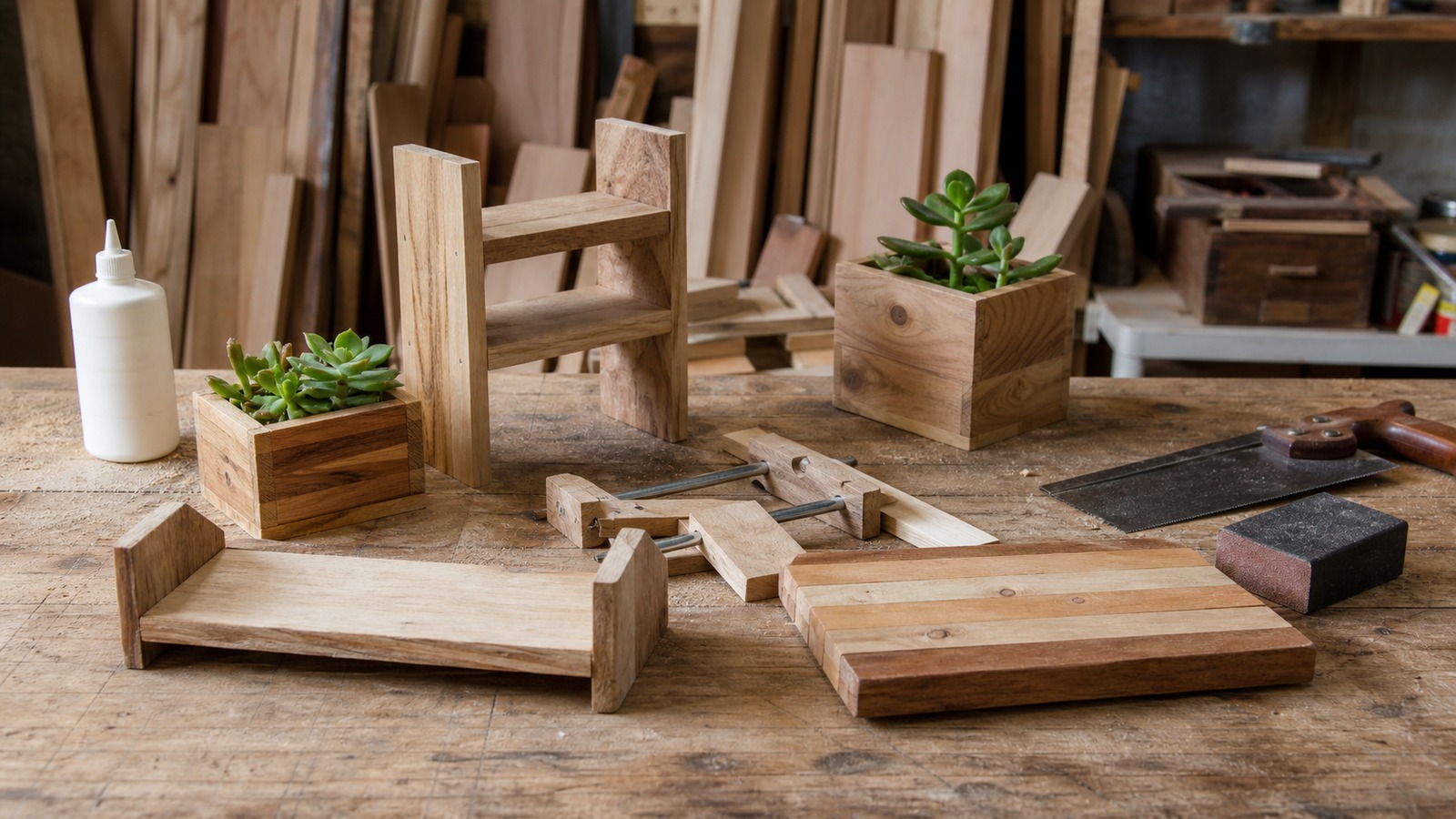
The best small-space projects earn their footprint. Shelves, trays, boxes, organizers, stools, frames, tool holders, and repair pieces teach layout, cutting, sanding, assembly, and finish without demanding a giant bench. They also improve the home or shop immediately, which keeps motivation high.
Choose objects with clear dimensions and simple joinery first. A small finished shelf teaches more than an ambitious table that cannot be clamped, stored, or sanded comfortably.
Use Hand Tools Strategically
Hand tools are not automatically quiet, clean, or easy, but they can be excellent in tight spaces. A sharp saw, plane, chisel, marking knife, square, and drill can do serious work with less setup than many machines. They also give direct feedback about grain, pressure, and accuracy.
The tradeoff is skill and patience. Dull tools make small-space woodworking miserable because they demand force and create ragged results. Sharpening and workholding matter as much as the tools themselves.
Make Workholding A Priority
A small bench without good workholding quickly becomes frustrating. Bench hooks, clamps, portable vises, hold-downs, sacrificial boards, and anti-slip mats can make a compact surface safer and more accurate. Workholding is what lets the tool cut the wood instead of chasing it across the table.
Plan workholding before buying specialty tools. A router, saw, or sander becomes risky when the workpiece is not secure. A modest clamp setup often improves more projects than another cutting gadget.
Control Dust As A Daily Habit
Dust control is not optional in a small room. Fine dust lands on shelves, electronics, fabric, food areas, and lungs. Use dust extraction where possible, sand with collection, clean before dust spreads, and choose hand-tool approaches when they reduce airborne mess. A shop vacuum with good filtration can be more important than a bigger tool.
Containment matters too. Work over a mat, keep a dedicated cleanup kit, and avoid letting dust migrate through shared rooms. Small-space woodworking survives when the rest of life does not resent it.
Respect Noise And Shared Walls
Noise limits shape project choice. A pull saw, chisel, brace, or hand plane may be more neighbor-friendly than a circular saw or trim router. If power tools are needed, use them during reasonable hours and make cuts in short planned sessions rather than scattered bursts.
Noise is not only volume. Vibration through floors and benches can carry surprisingly far. Padding, stable stands, and thoughtful timing help keep the workshop from becoming a household conflict.
Break Big Ideas Into Modules
Small spaces can still support larger ambitions if the design breaks into modules. A bookcase might become separate boxes. A table might use knockdown hardware. A storage wall might be built one panel at a time. Modular thinking keeps each work session within the room’s limits.
This approach also improves accuracy because each subassembly can be checked before the whole object becomes awkward. If a module fails, it is easier to remake than an entire oversized build.
Store Projects So They Can Resume
Many small-space woodworkers lose time because every session begins by reconstructing the project from scattered parts. Use trays, labeled bags, clamps left in safe positions, and notes on the next step. Store the active project so it can restart without searching for hardware or remembering decisions.
A pause plan is part of the build. In a shared room, the ability to pack down cleanly is what makes regular woodworking possible.
Choose Finishes That Fit The Environment
Finishing can be the hardest part of small-space woodworking. Odor, drying time, dust nibs, ventilation, rags, and surface protection all become more complicated indoors. Water-based finishes, hardwax oils, or simple wipe-on approaches may be better than products that require stronger ventilation, but always follow the product’s safety guidance.
Test finishes on scrap and plan where the object will dry. A perfect build can become stressful if it occupies the kitchen table for three sticky days.
Let The Space Teach Better Design
Small-space woodworking rewards restraint, sequence, and clean detail. Those lessons transfer to any shop size. A maker who learns to plan cuts, control dust, store parts, and finish modest projects in a tight room will not lose those skills in a larger space.
The small shop is not a lesser shop. It is a precise teacher. Build what fits, finish it well, and let each project make the next one easier.
Plan Lumber Before It Enters The Room
Small-space woodworking often goes wrong at the lumber stage. A long board may be affordable, but it has to fit through doors, around corners, onto a bench, and into storage. It may need to acclimate without leaning dangerously or blocking daily life. Planning lumber length and breakdown before buying prevents chaos.
Some makers solve this by having boards rough cut at the store or by choosing project sizes around transportable stock. There is no shame in designing for what can be carried and stored safely.
Use Vertical Space Without Creating Danger
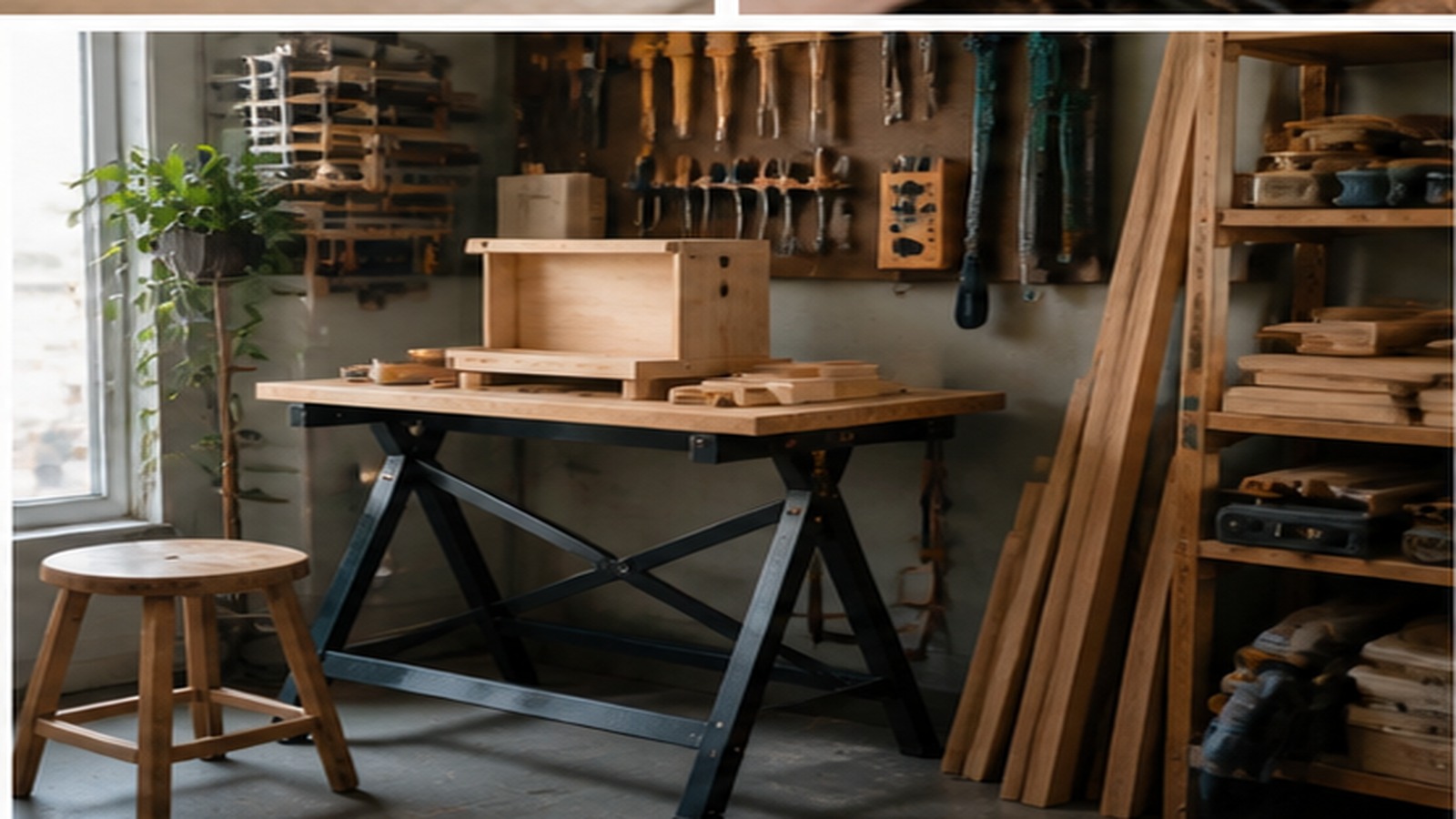
Vertical storage is one of the best friends of a small shop, but it must be secure. Wall-mounted racks, pegboards, shallow shelves, and French cleats can free floor area, yet falling tools or overloaded brackets create hazards. The goal is accessible storage, not a display that makes the room nervous.
Keep heavy objects low, sharp tools protected, and frequently used items easy to reach. A small space works better when storage follows the order of use rather than the look of a catalog wall.
Choose Joinery That Matches The Setup
Small spaces favor joinery that can be cut, clamped, and checked without heroic gymnastics. Screws with plugs, dowels, rabbets, dados, pocket holes, simple mortises, and small half-laps may all be appropriate depending on the project. The right joint is the one that meets strength, appearance, and workflow needs inside the available setup.
Avoid judging a project by joinery prestige. A clean screwed shelf that fits the room and holds weight is more successful than an elaborate joint that cannot be clamped accurately in the space.
Think About Cleanup Before The First Cut
In a garage-sized shop, cleanup can wait briefly. In a kitchen corner or spare bedroom, cleanup defines whether woodworking remains welcome. Put down protection, plan where dust will collect, keep a vacuum ready, and decide how scraps will leave the room. This makes the project less disruptive from the beginning.
Cleanup planning also improves safety. Slivers, cords, clamps, and offcuts become trip hazards quickly in a small area. A clean reset after every session keeps the temporary shop usable.
Use Jigs To Make The Small Bench Smarter
Jigs can multiply the usefulness of a compact bench. A bench hook supports hand sawing, a shooting board refines edges, a drilling guide improves repeat holes, and a simple sanding station controls small parts. Shop-made aids are especially valuable because they are sized for the actual workspace.
Build jigs that hang flat or nest together. In a small shop, a jig that cannot be stored may become a problem as large as the one it solved.
Let Project Scale Grow Slowly
A small-space woodworker can build bigger things eventually, but scale should grow with systems. Before tackling a cabinet or table, ask whether cutting, clamping, sanding, finishing, moving, and storing each stage are already solved. If not, build one component or related smaller project first.
Slow growth keeps enthusiasm from turning into gridlock. Each completed project improves the workspace and proves which limits are real.
Design Around Assembly Footprint
A project may have small parts but require a large assembly footprint. Long clamps, diagonal measurements, open drawers, or awkward glue-ups can exceed the bench even when every board seemed manageable. Think about the largest moment of the build, not only the largest part.
Mock assembly with dry parts and clamps before glue. If the room cannot handle the moment cleanly, redesign the object into smaller modules or choose different joinery.
Scrap Management Matters More In Tight Shops
Offcuts multiply quickly, especially when small projects invite saving every useful-looking piece. A small shop needs rules for scrap: what lengths are worth keeping, where they live, and when they leave. Without rules, scrap becomes the largest project in the room.
Keep pieces that match recurring work and let the rest go responsibly. A clean scrap system makes the next small project faster instead of burying it.
Small Projects Can Still Feel Finished
A compact project does not have to feel like a compromise. Crisp edges, good proportions, smooth surfaces, thoughtful finish, and careful installation can make a small shelf or box feel deeply complete. Scale does not determine craft.
In fact, small work often reveals care more directly. When the object is close to the hand and eye, every edge and joint has a chance to teach.
Borrow Space For The Few Big Moments
Some small-space projects only need extra room for one operation. Breaking down a sheet, routing a long edge, spraying a finish, or assembling a wide panel may not justify owning a larger shop. Borrowing a driveway, community shop, friend’s garage, or store cutting service can make the project realistic.
The key is to identify those moments early. If the project needs borrowed space, schedule that step instead of discovering the problem when wet glue or oversized material is already in the room.
Design Storage Into The Projects Themselves
Small-space woodworking improves when projects solve storage problems as they teach skills. A clamp rack, wall shelf, tool tote, folding stool, under-bed box, or narrow cart can make the workshop more capable after it is finished. The project gives back space instead of consuming it.
This feedback loop is powerful. Each useful build can make the next build easier, turning a cramped setup into a smarter one over time.
Keep A Short Setup Checklist
A small shop benefits from a repeated setup checklist: protect the surface, secure the work, connect dust collection, stage the next tool, check lighting, and confirm where scraps will go. The list sounds ordinary, but it prevents the little omissions that make compact work frustrating.
When setup becomes repeatable, the space feels larger because less attention is spent reinventing the room.