
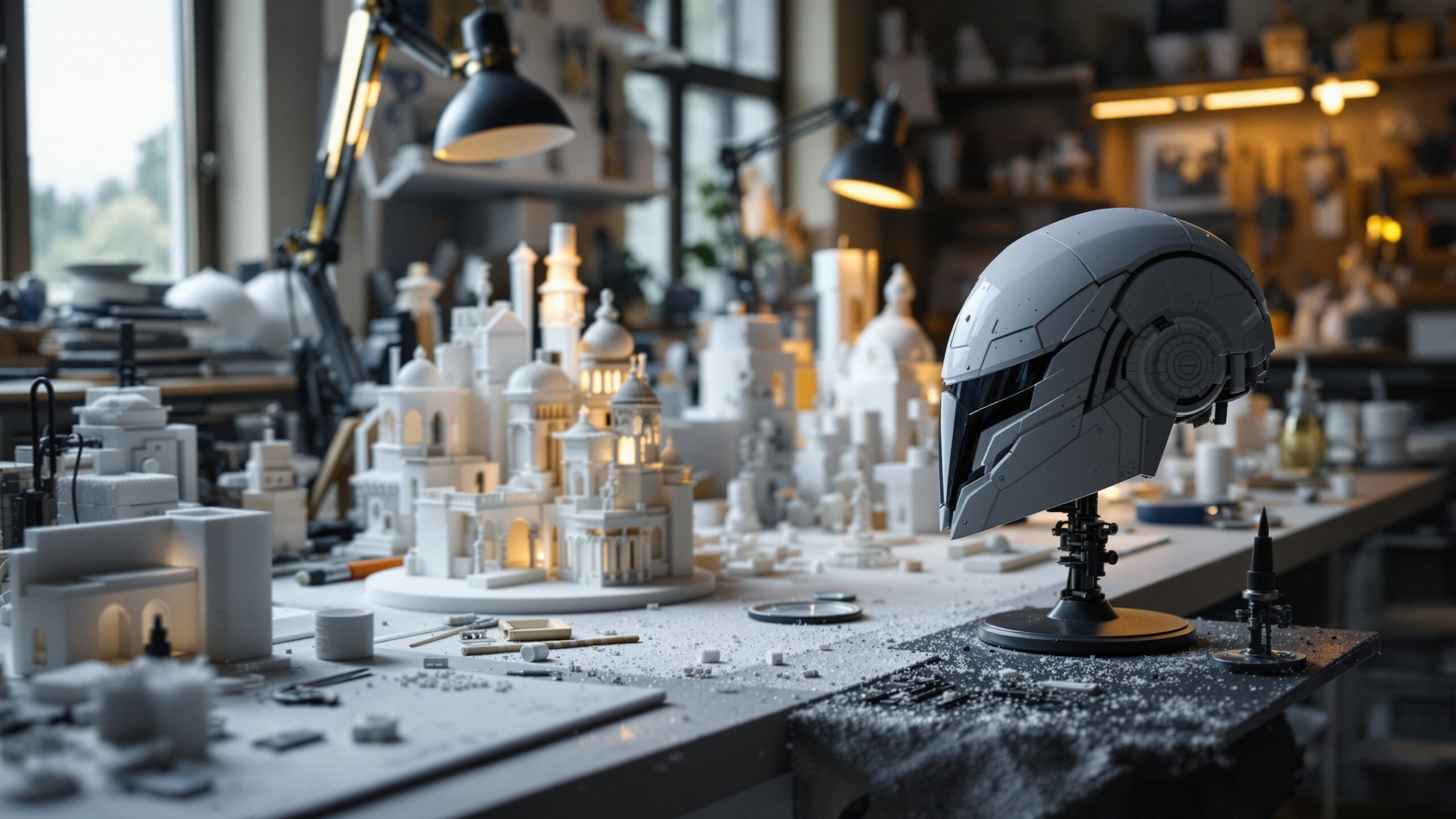
Modelmaking & Props is where imagination jumps off the sketchbook and lands in your hands. This is the corner of Crank Street where foam, plastic, resin, wood, and LEDs team up to become starships, fantasy weapons, miniature cities, and studio-ready replicas. Whether you’re building your first tabletop terrain piece or dialing in a screen-accurate movie prop, this sub-category is your backstage pass to the entire process. Here, we break down complex techniques into approachable builds: from cutting clean seams in EVA foam and styrene, to casting resin greeblies, magnetizing panels, and painting weathered finishes that look like they’ve lived a lifetime. You’ll discover how 3D printing, CNC, and hand tools can play together, how to plan a build that survives conventions, shipping, and close-up cameras, and how to turn “I wish this existed” into something you can place on a shelf. Grab your hobby knife, fire up the heat gun, and let’s bring props and miniatures to life—one build at a time.
A: Begin with a small prop or diorama and a limited material list: foam, glue, knife, and primer.
A: No. Basic hand tools and patience can go a long way; upgrade gear as your builds get more complex.
A: Foam excels at big, lightweight builds; 3D prints shine for detailed parts—many makers combine both.
A: Use good primer, flexible paints where possible, and seal with clear coats suited to your material.
A: Simple pieces can be weekend projects; hero props and big dioramas often stretch over several weeks.
A: Absolutely. Many makers design parts in 3D software, print them, then blend with hand-built elements.
A: Practice on scrap: washes, dry-brushing, and sponging can quickly add age, dirt, and story.
A: Keep them dusted, shaded from harsh sun, and supported so no single point bears all the weight.
A: Yes, with proper PPE: gloves, respirators, and ventilation—always follow product safety instructions.
A: Use padded bins, removable parts, and hard cases where possible; plan for bumps, crowds, and weather.