
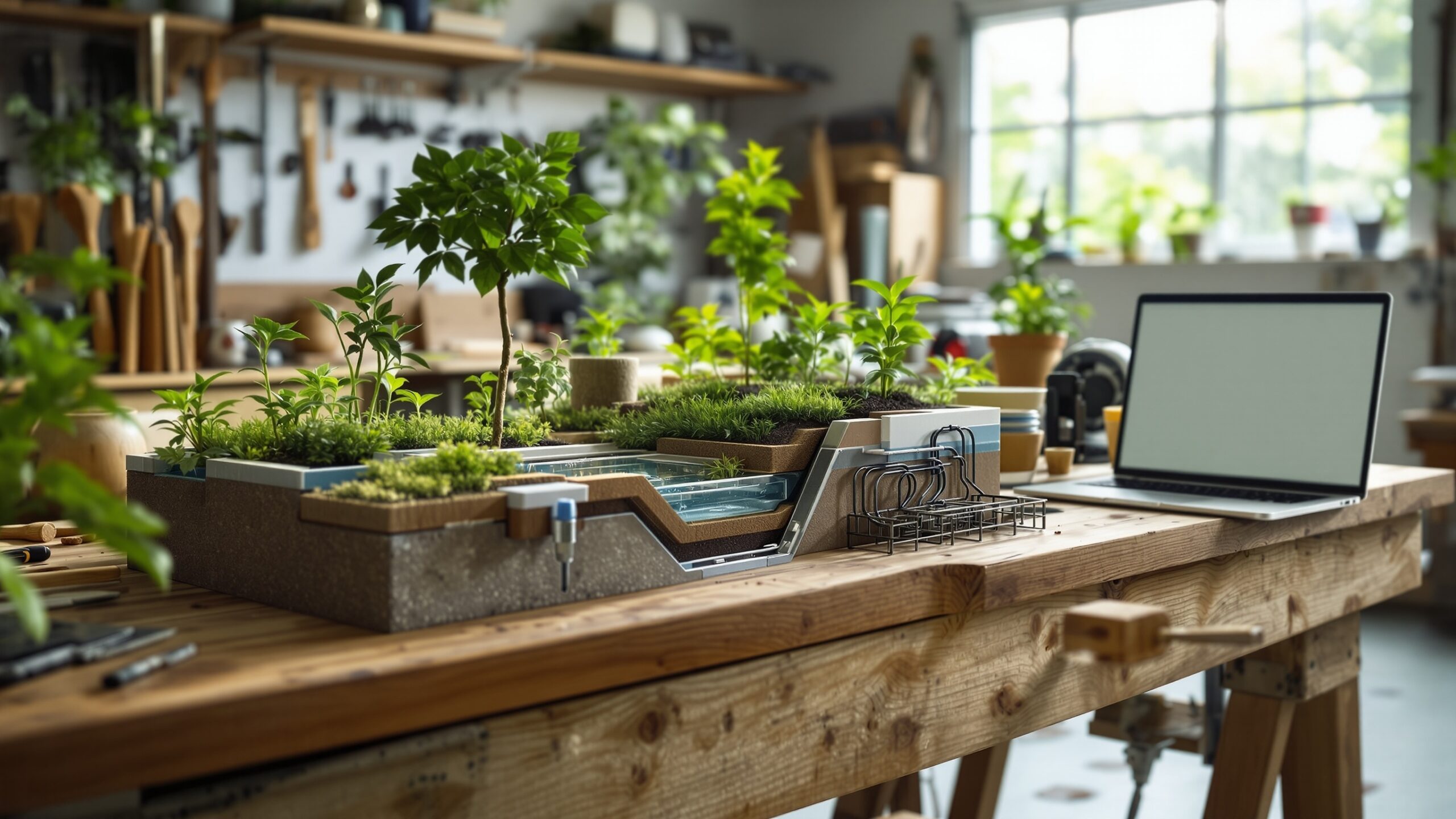
Welcome to Eco-Engineering Solutions on Crank Street—where clever design meets the living planet. Here you’ll find a toolbox of ideas that turn sustainability from a slogan into a working prototype: stormwater that becomes a neighborhood resource, materials that store carbon instead of creating it, and energy systems that sip instead of gulp. We spotlight the real-world maker mindset—iterate, test, measure, improve—applied to rain gardens, living shorelines, green roofs, bioswales, and high-efficiency builds. Dive into solar microgrids, heat-pump retrofits, and smart controls that cut waste without killing comfort. Explore biomimicry, low-tox finishes, and circular design strategies that keep components in use, not in landfills. Along the way we’ll talk trade-offs: cost versus payback, durability versus biodegradability, and performance versus complexity. Whether you’re upgrading a home shop, prototyping a campus project, or just collecting inspiration, these articles keep things practical and hopeful. Expect clear explainers, build notes, field-tested lessons, and case studies you can remix—then share back with the Street. Start anywhere, follow your curiosity, and let every small fix stack into a bigger climate win today.
A: Do a quick baseline: energy bills, water use, and a walkthrough for leaks and drafts.
A: Air sealing + insulation + smart thermostat tuning typically deliver immediate comfort and savings.
A: Barrels help small storms; rain gardens manage bigger events by infiltrating water on-site.
A: Measure before/after and document trade-offs—materials, longevity, and maintenance.
A: Not always—some save money via durability, reduced waste, or simpler installation.
A: Skipping maintenance planning—filters clog, plants die, sensors drift, and performance drops.
A: Absolutely—pair passive design with targeted tech where it gives the biggest return.
A: Ask: “What happens during outages, heat waves, storms, and supply delays?” then design accordingly.
A: Start simple: temperature, humidity, and energy draw—then add water flow or soil moisture as needed.
A: Build like a scientist: test small, learn fast, scale what works, and keep improving.