
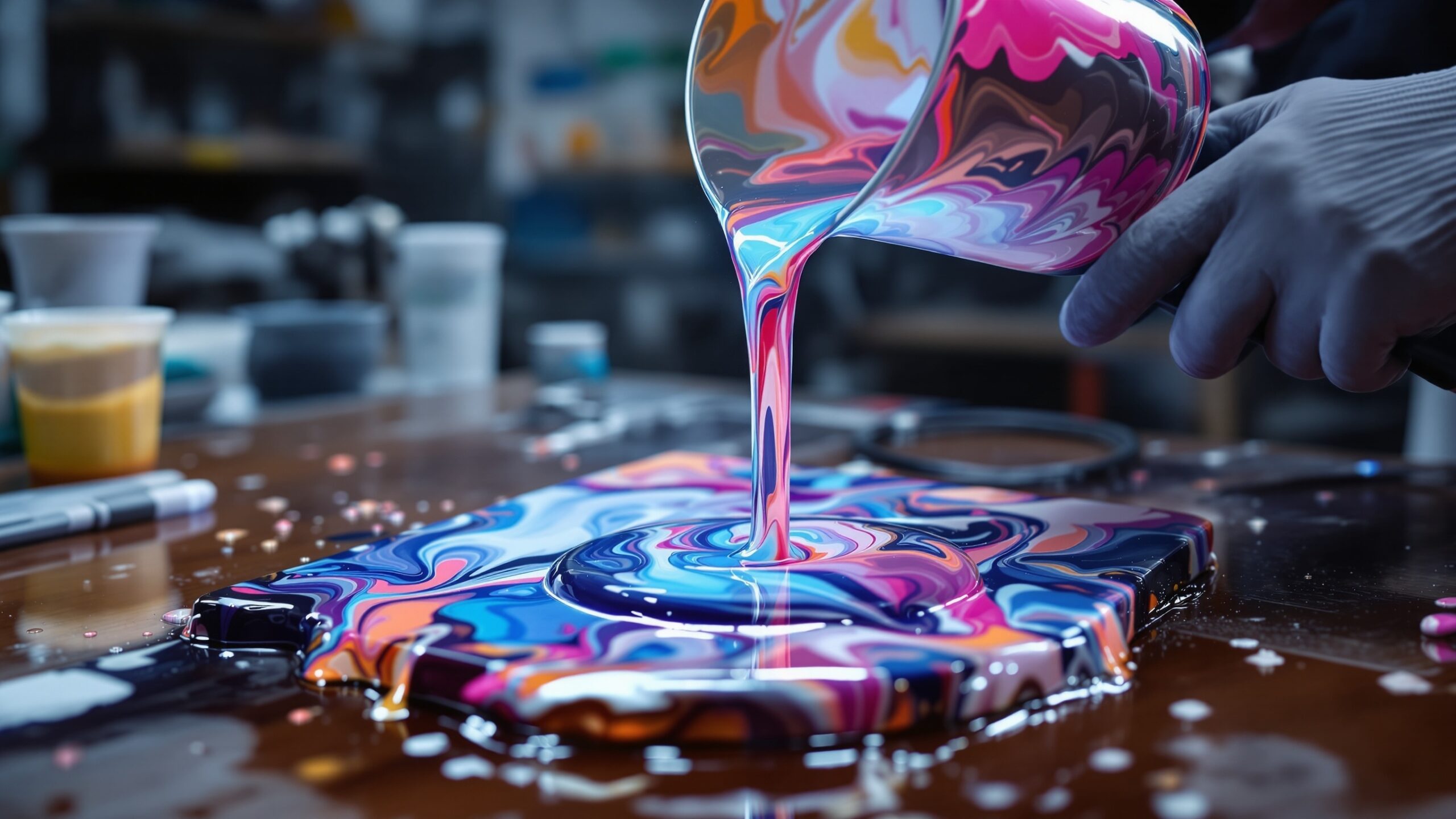
Resin & Epoxy Creations on Crank Street is where liquid turns into legend. This is the category for makers who love glassy depth, suspended detail, and that satisfying moment when a pour levels out and the surface becomes a mirror. Resin can be bold and dramatic—river-table vibes, crystal-clear casts, smoky pigments, metallic swirls—or subtle and technical, acting as the perfect bond, seal, or protective skin for mixed media builds. Here you’ll find articles that cover the full workflow: choosing the right resin for casting vs. coating, measuring and mixing cleanly, controlling bubbles, building molds, sealing porous materials, adding pigments and inclusions, and finishing to a flawless polish. We’ll also dig into the “why” behind common issues like tacky cures, cloudy pours, fisheyes, and overheated mixes, so you can troubleshoot fast and get back to creating. Whether you’re casting small parts, encapsulating keepsakes, or building glossy, durable surfaces that look impossible, this lane is built for curiosity, precision, and a little controlled chaos. Pour smart, finish clean, and let the depth do the talking.
A: Casting resins handle thick pours; coating/tabletop resins are for thin, glossy surfaces.
A: Usually ratio or mixing—measure carefully, scrape thoroughly, and double-cup mix.
A: Warm resin, mix slowly, seal porous items, and use light heat passes on the surface.
A: Yes—pre-seal first to stop air release and uneven absorption.
A: Use a clean curing tent or cover with enough clearance to avoid touching the surface.
A: When it’s firm and cool, but wait longer for full strength—patience prevents warping.
A: Likely overheating—use deep-pour resin and pour in layers.
A: Wet-sand progressively, then polish; or apply a thin clear top coat.
A: A little goes far—overloading can affect curing, so test small batches first.
A: Full cure, wet-sand through grits, then compound and finish polish for clarity.