
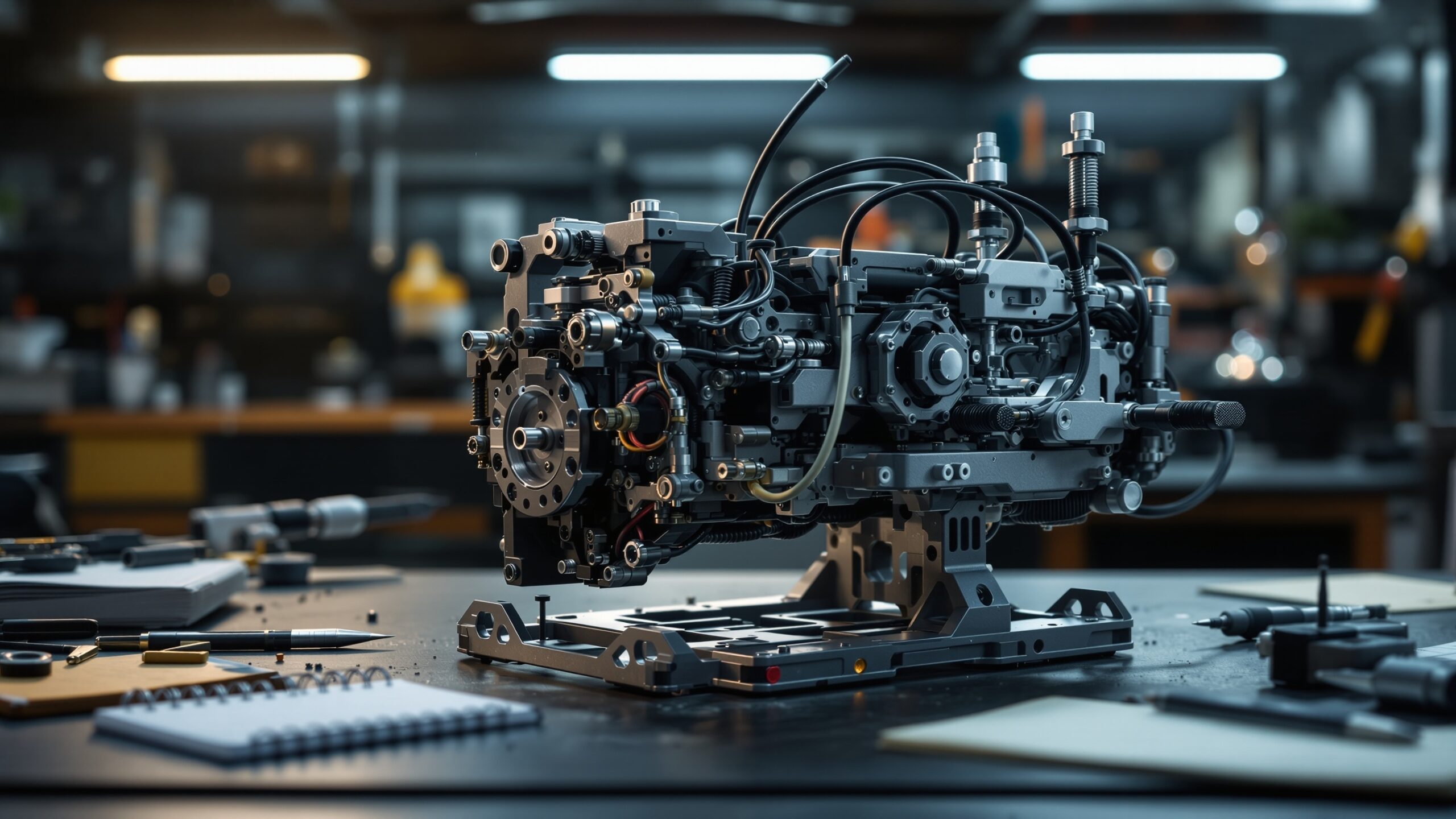
Welcome to Experimental Builds on Crank Street—where curiosity gets a workbench and every “what if?” becomes a prototype. This sub-category is for makers who love pushing past the obvious: hybrid machines, odd mechanisms, hacked-together test rigs, and bold one-off builds that don’t fit neatly into a manual. Here, success isn’t just a finished project—it’s a breakthrough insight, a cleaner iteration, or a hard-earned lesson that makes the next version smarter. You’ll find articles that explore rapid prototyping, unconventional materials, wild geometry, control experiments, sensor mashups, and the beautiful chaos of debugging in real time. We’ll talk about building safely while experimenting fast: how to isolate risks, test subsystems, validate assumptions, and design experiments that actually answer questions instead of creating confusion. Expect creative workflows, failure-proof planning, instrumentation tips, and the practical art of documenting changes so you can repeat the good and ditch the bad. Whether you’re crafting a new mechanism, exploring weird energy transfer, inventing a tool nobody sells, or remixing electronics into something surprising, this hub is your sandbox with standards. Bring your sketchbook, your clamps, and your curiosity—Crank Street is where experiments turn into engineered possibilities.
A: Anything built to test an idea—new mechanism, new workflow, or unusual combination of systems.
A: Define one clear question and build the smallest rig that answers it.
A: Vibration, heat, and power stability change in real environments—test under real conditions.
A: Add fuses, guards, current limits, and a kill switch—then test in controlled steps.
A: Reduce variables, log data, and change only one thing per test.
A: No—basic measuring, clamping, and power tools plus good documentation go far.
A: Label parts, take photos, and record settings so results are repeatable.
A: When your test consistently meets the goal and failure modes are understood.
A: That’s still data—use it to refine assumptions and redesign the next iteration.
A: Lock requirements, upgrade materials, validate durability, and simplify the design.