The Tiny Brain Behind Modern Devices
A microcontroller is one of the most important building blocks in modern electronics, even though most people never notice it. Hidden inside thermostats, washing machines, key fobs, drones, coffee makers, fitness bands, and industrial controls, microcontrollers act like tiny decision-making centers. They receive information from the world around them, process it according to programmed instructions, and trigger specific actions. In practical terms, that means they can read a button press, measure temperature, detect motion, control a motor, flash an LED, or send data to another system. What makes microcontrollers so fascinating is their efficiency. Unlike large general-purpose computers, they are not built to do everything. They are designed to do a defined set of tasks reliably, repeatedly, and often with extremely low power use. That focused design is what makes them ideal for embedded systems, where hardware and software must work together in a compact, dependable way.
A: It reads inputs, processes logic, and controls outputs inside a device.
A: It is a small computer, but it is built for dedicated embedded tasks.
A: A microcontroller includes memory and peripherals on one chip, while a microprocessor usually needs more external components.
A: Firmware is the low-level software programmed into the microcontroller.
A: Yes, they are found in appliances, cars, toys, wearables, and tools.
A: Many do not; they often run code directly for fast, predictable behavior.
A: They are designed for low power use and efficient sleep modes.
A: Yes, development boards and starter projects make them approachable.
A: C and C++ are common, though some platforms support Python and other languages.
A: They bring reliable control and programmable intelligence to modern electronics.
A Simple Definition of a Microcontroller
At its core, a microcontroller is a compact integrated circuit that contains a processor, memory, and input/output peripherals on a single chip. In plain language, it is a small computer built to control a device or system. Instead of sitting on a desk and running a web browser, a microcontroller usually lives inside a product and handles a dedicated job.
That definition matters because it separates microcontrollers from other types of computing hardware. A laptop or desktop computer is meant for flexible, user-driven tasks. A microcontroller is meant for embedded control. It is programmed for a specific role, and once installed, it often performs that role for years with little or no direct interaction from the user.
Why Microcontrollers Matter in Everyday Technology
Microcontrollers are everywhere because they make electronics smarter without making them unnecessarily complex. A traditional mechanical system can only react in fixed ways, but a system with a microcontroller can measure conditions, make logical decisions, and adapt its behavior. That is why appliances can optimize energy use, cars can monitor sensors in real time, and smart home products can automate routines. Their importance also comes from scale. Many of the world’s most widely used devices do not need the horsepower of a full computer. They need low cost, low power, compact size, and predictable behavior. Microcontrollers deliver exactly that combination. They make intelligence practical at the edge of the system, where real-world inputs and outputs are constantly changing.
How a Microcontroller Differs from a Microprocessor
A common point of confusion is the difference between a microcontroller and a microprocessor. They sound similar, but they are built for different purposes. A microprocessor is primarily the central processing unit, or CPU, and usually depends on external memory, storage, and support chips to form a complete computing system. That is the model used in personal computers and many powerful embedded platforms.
A microcontroller is more self-contained. It typically includes the CPU, RAM, flash memory, timers, communication interfaces, and digital input/output features all on one chip. That integration makes it more compact and efficient for dedicated tasks. In simple terms, a microprocessor is usually part of a bigger computer, while a microcontroller is often the whole control system in miniature.
The Core Parts Inside a Microcontroller
To understand how a microcontroller works, it helps to break it into its main components. The CPU executes instructions and handles the logic of the program. Flash memory stores the firmware, which is the permanent code that tells the chip what to do. RAM provides temporary working space while the code is running. Input/output pins connect the chip to the outside world, allowing it to read sensors and control devices. Beyond those basics, most microcontrollers also include peripherals that make them especially useful in embedded design. Timers help with precise delays and repeated events. ADCs, or analog-to-digital converters, let the chip read analog signals such as temperature or voltage levels. Communication modules like UART, SPI, and I2C allow the microcontroller to exchange data with displays, sensors, memory devices, or other processors. These built-in features are what make a microcontroller such a powerful all-in-one control platform.
How Microcontrollers Actually Work
A microcontroller works by running a program in a continuous cycle. Once power is applied, the chip starts executing the firmware stored in its memory. That firmware may initialize hardware, configure pins, read incoming data, and make decisions based on programmed logic. It can then send signals out to other components, such as turning a relay on, moving a servo, or updating a screen.
This process often happens extremely fast and repeats constantly. In many embedded systems, the microcontroller is checking sensor values, timing events, and updating outputs thousands or even millions of times per second. Even when the behavior seems simple from the outside, such as a fan turning on when temperature rises, the internal control loop can be precise, responsive, and highly structured.
Inputs, Outputs, and Real-World Interaction
What truly defines a microcontroller is its role as a bridge between software and the physical world. Inputs allow it to receive information. These inputs can come from buttons, switches, pressure sensors, light sensors, microphones, or motion detectors. Outputs allow it to respond. Those outputs might drive LEDs, buzzers, motors, displays, valves, or wireless modules. This input-output relationship is the heart of embedded control. A microcontroller is not valuable just because it can compute; it is valuable because it can observe conditions and act on them. That makes it essential in systems where physical behavior must be measured, timed, adjusted, or automated. It is not simply running code in isolation. It is actively participating in how a device behaves.
Firmware: The Software That Lives Inside the Hardware
The software that runs on a microcontroller is usually called firmware. This term reflects the fact that it sits between hardware and traditional software. Firmware is more tightly connected to the underlying electronics because it often deals with registers, pin states, timers, memory limitations, and exact execution timing.
Good firmware is designed around constraints. It must be efficient, reliable, and predictable. Unlike software running on a desktop computer, firmware often has limited memory, limited processing power, and direct responsibility for hardware control. That does not make it less sophisticated. In many cases, it demands greater discipline because every byte, cycle, and electrical signal matters.
Common Types of Microcontrollers
Microcontrollers come in many forms, ranging from very simple 8-bit chips to far more capable 32-bit architectures. Entry-level devices are often used for basic control tasks, educational projects, and low-cost appliances. More advanced models support wireless communication, high-speed processing, real-time operating systems, and complex sensor integration. Popular microcontroller families include AVR, PIC, ARM Cortex-M, and ESP-series devices. Each family has its own strengths, ecosystem, and typical use cases. Some are prized for simplicity and low power consumption, while others are selected for connectivity, performance, or broad development support. The right choice depends on the application rather than any single universal standard.
Popular Platforms Beginners Encounter First
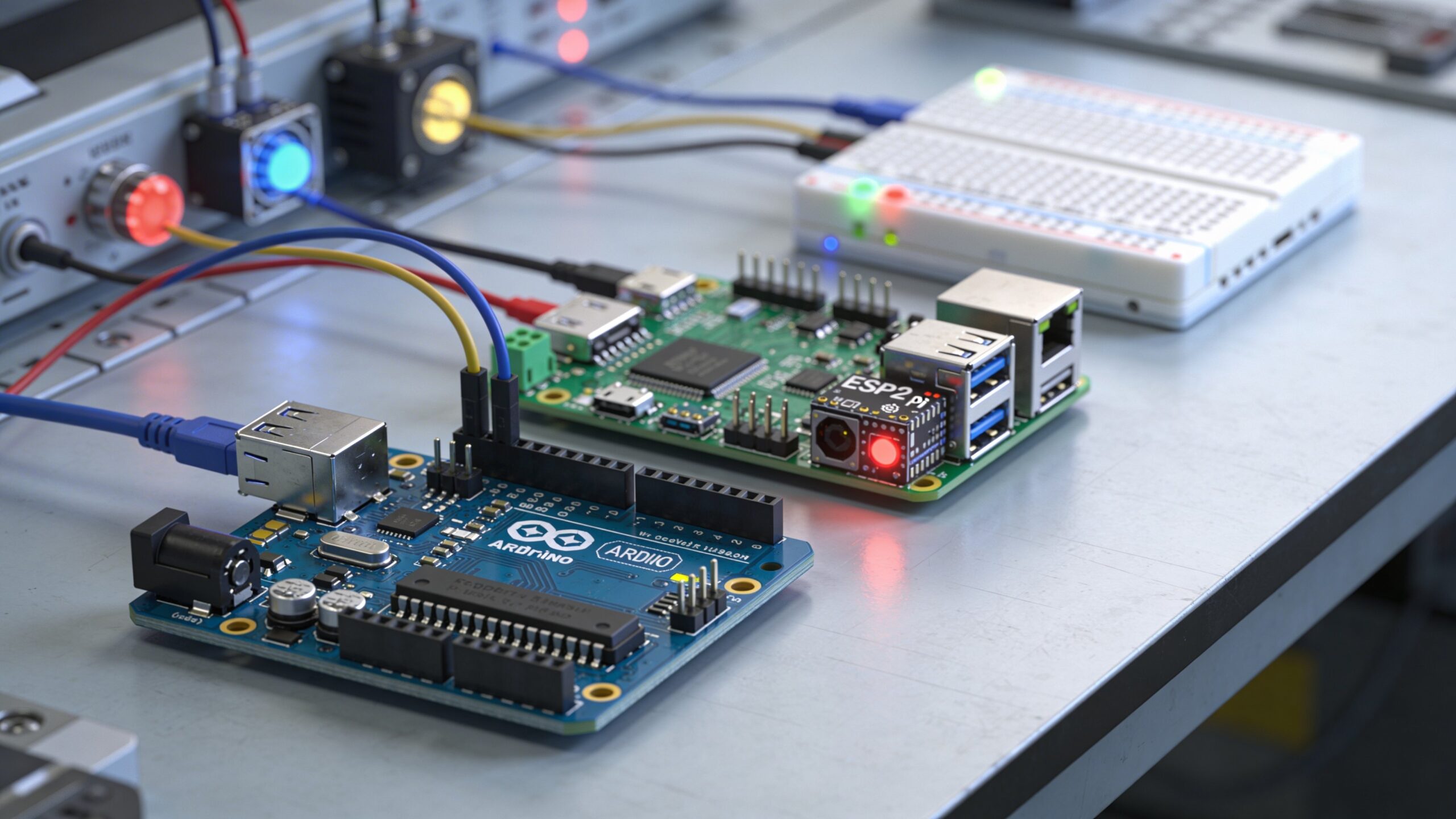
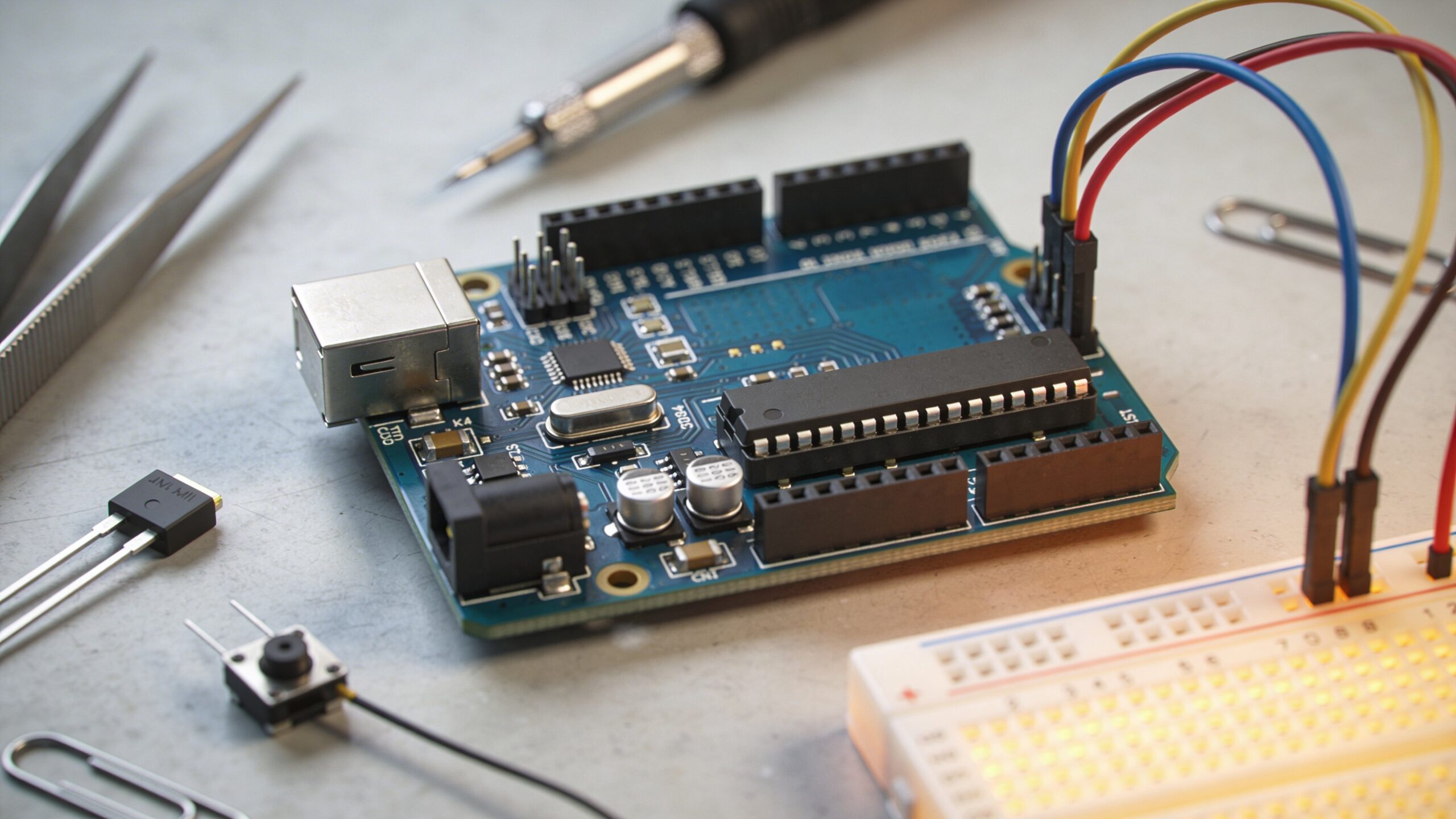
For many learners, the first encounter with microcontrollers comes through development platforms such as Arduino, ESP32 boards, or STM32 discovery kits. These boards make microcontrollers easier to use by adding USB programming interfaces, voltage regulation, accessible pins, and beginner-friendly tooling. They help bridge the gap between abstract electronics concepts and hands-on experimentation.
Arduino, in particular, became influential because it simplified programming and hardware prototyping for newcomers. It made embedded development feel approachable. ESP32 platforms added built-in Wi-Fi and Bluetooth, which opened the door to connected devices and IoT projects. These ecosystems have helped millions of users move from curiosity to practical embedded design.
Where Microcontrollers Are Used
The range of microcontroller applications is enormous. In consumer electronics, they manage displays, buttons, power regulation, and sensor input. In automotive systems, they oversee engine control, lighting logic, safety monitoring, and climate management. In industry, they are used in automation, instrumentation, robotics, and machine control. They are also central to medical devices, home automation, energy systems, toys, security products, and agricultural technology. Whenever a product needs a compact control unit that can sense, decide, and respond, a microcontroller is a likely candidate. Their widespread presence is one reason embedded systems remain such a foundational part of modern engineering.
Why Microcontrollers Are Ideal for Embedded Systems
Microcontrollers are especially suited to embedded systems because they are purpose-built for focused control. They can boot quickly, run continuously, and respond predictably. They also tend to be cost-effective and power-efficient, which matters enormously when a product is produced at scale or expected to run on batteries.
Another advantage is integration. Because so many useful features are already built into the chip, designers can create compact systems without adding large amounts of external hardware. This reduces board complexity, lowers cost, and often improves reliability. In a well-designed embedded product, the microcontroller acts as the quiet coordinator that keeps everything synchronized.
Timing, Determinism, and Real-Time Behavior
One of the most valuable qualities of a microcontroller is deterministic behavior. In many systems, it is not enough to execute code eventually. The code must execute at the right moment and in the right order. A motor controller, for example, may need precise pulse timing. A sensor system may need to sample data at exact intervals. A safety system may need immediate response to a fault condition. Because microcontrollers often run without a heavy operating system, they can deliver more predictable timing than larger computing platforms. This does not automatically make every design real-time, but it makes real-time control more achievable. That is why microcontrollers remain central in robotics, automation, instrumentation, and countless forms of control engineering.
Power Efficiency and Always-On Intelligence
Many microcontrollers are designed to operate with remarkably low power consumption. Some can spend most of their life in sleep mode, waking only when a timer expires or an external event occurs. This makes them ideal for battery-powered devices, remote sensors, wearables, and energy-conscious products.
That low-power behavior allows products to be both intelligent and practical. A device can monitor its environment, respond to changes, and still preserve battery life for months or even years. In a world filled with connected objects, that balance between intelligence and efficiency is one of the reasons microcontrollers remain so important.
Communication Protocols and Connected Devices
Modern microcontrollers do not work alone. They often communicate with displays, memory chips, wireless modules, sensors, or cloud-connected gateways. To do this, they rely on standard protocols such as UART, SPI, and I2C for local communication, and in some cases Wi-Fi, Bluetooth, or CAN for broader system connectivity. These communication capabilities expand what a microcontroller can do. A simple control chip can become part of a sensor network, a remote monitoring system, a smart appliance, or an industrial bus. Once connectivity is added, the microcontroller is no longer just controlling a device. It is participating in a larger flow of information across the system.
From Beginner Projects to Advanced Embedded Design
For beginners, microcontrollers are often introduced through approachable projects such as blinking LEDs, reading temperature sensors, or controlling small motors. These exercises may seem simple, but they teach the essential pattern of embedded systems: read input, process logic, and control output. That pattern scales upward into far more sophisticated designs.
At the expert level, microcontroller work may involve low-level optimization, real-time scheduling, secure boot, hardware abstraction layers, fault handling, and production-ready firmware architecture. The same core concept remains in place, but the complexity grows with the demands of the system. This is one of the reasons microcontrollers are such a powerful learning pathway. They reward curiosity at every level.
Choosing the Right Microcontroller
Selecting a microcontroller involves balancing many factors, including processing speed, memory size, power consumption, available peripherals, cost, package size, and software ecosystem. A project that reads a button and drives a small display does not need the same resources as a connected industrial controller or advanced wearable device. The smartest choice is not always the most powerful chip. In embedded systems, overbuilding can waste cost, energy, and development time. The best microcontroller is the one that fits the requirements cleanly and reliably. Experienced designers often choose based on constraints first, then optimize for features and future flexibility.
The Future of Microcontrollers
Microcontrollers continue to evolve as products become more connected, more efficient, and more intelligent. New generations of chips offer stronger security, lower power modes, faster communication, integrated wireless features, and even support for lightweight machine learning workloads. That means the line between simple control devices and smarter edge systems is becoming increasingly dynamic.
Even as larger computing platforms advance, microcontrollers remain indispensable because they solve a different class of problem. They are the devices that live closest to the real world, translating signals, managing behavior, and keeping systems responsive. As long as electronics need precise control, efficient sensing, and reliable automation, microcontrollers will remain at the center of modern design.
The Bottom Line
A microcontroller is a compact computer built to control specific tasks inside electronic systems. It combines processing, memory, and hardware interfaces into a single chip, allowing products to sense the world, make decisions, and respond in real time. That combination of focus, efficiency, and reliability is what makes microcontrollers foundational to embedded technology. For beginners, microcontrollers offer an accessible entry point into electronics, coding, and system design. For advanced engineers, they remain essential tools for building dependable products at scale. Understanding what a microcontroller is, how it works, and why it matters is not just useful knowledge. It is a gateway into the logic that powers the connected world.