Understanding the Landscape of Embedded Platforms
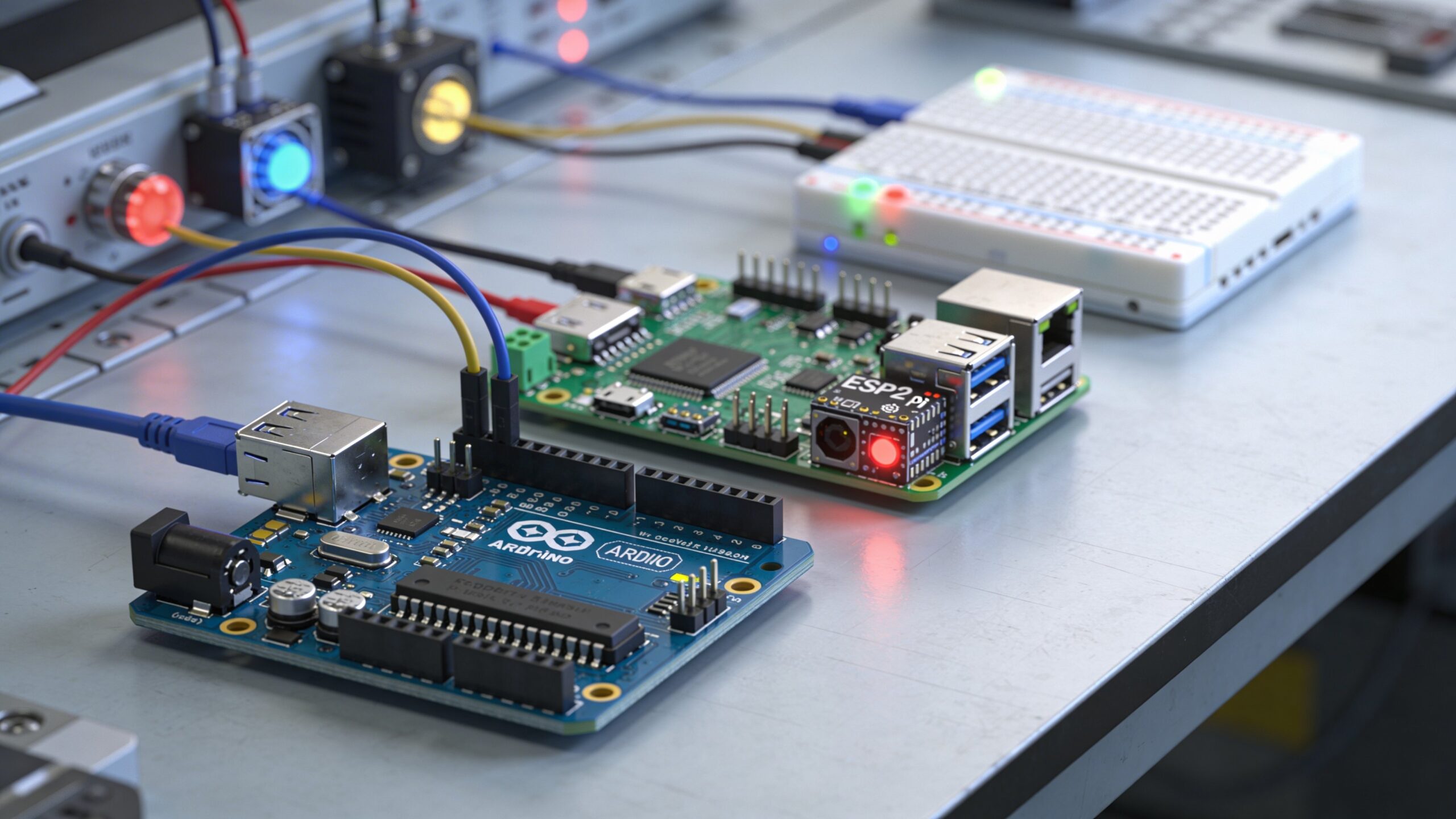
The modern maker and embedded development ecosystem is defined by accessibility, flexibility, and specialization. Arduino, Raspberry Pi, and ESP32 each represent distinct philosophies in how hardware and software interact, and understanding those philosophies is essential before choosing between them. While they often appear interchangeable in beginner projects, they are fundamentally different tools designed for different levels of complexity and control. At a systems level, the distinction begins with how each platform approaches computation. Arduino is built for deterministic control and simplicity, Raspberry Pi operates as a full computing environment, and ESP32 sits between them, blending microcontroller precision with wireless capability. Choosing the right platform depends less on popularity and more on how your project needs to behave in real time, handle data, and interact with the outside world.
A: Arduino offers the simplest entry point.
A: ESP32 is optimized for wireless connectivity.
A: Yes, but not with real-time precision.
A: Raspberry Pi has the highest processing capability.
A: Arduino and ESP32 are more energy-efficient.
A: Often yes, with added wireless features.
A: Yes, firmware or software defines behavior.
A: Arduino or ESP32 for real-time control.
A: Yes, it supports advanced computing tasks.
A: No, each serves different system roles.
What Is Arduino and What Does It Do Best?
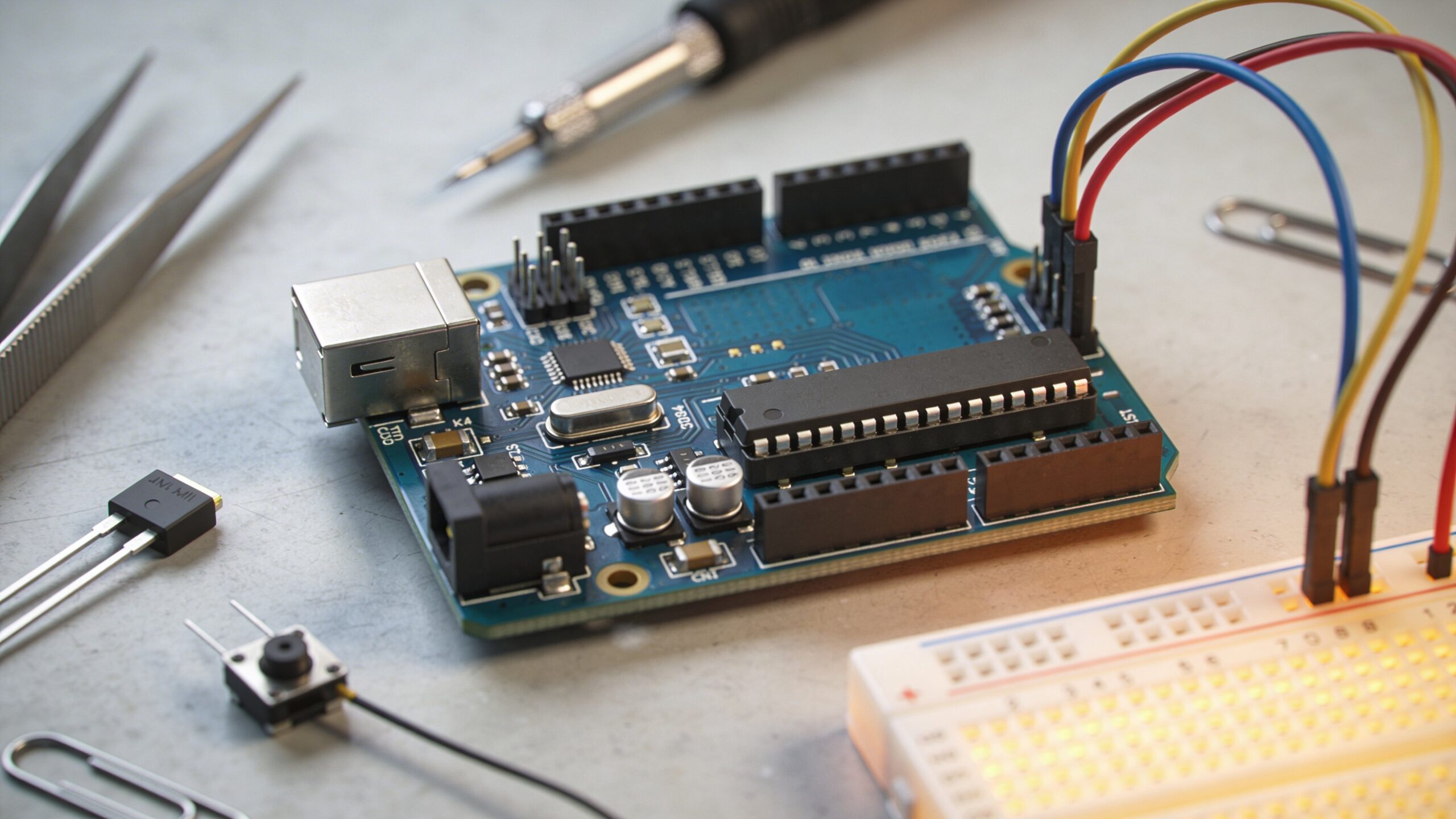
Arduino is a microcontroller platform designed for direct interaction with hardware. It excels in situations where precise timing, predictable behavior, and low-level control are required. When you write code for Arduino, it runs directly on the hardware without an operating system, allowing it to respond instantly to inputs and outputs.
This makes Arduino ideal for controlling motors, reading sensors, and building systems where reliability and timing are critical. Its simplicity is one of its greatest strengths. The development environment is intentionally streamlined, allowing users to focus on logic rather than system overhead. For projects like robotics, automation, or simple control systems, Arduino provides a stable and efficient foundation.
What Is Raspberry Pi and How Is It Different?
Raspberry Pi is fundamentally different from Arduino because it is not a microcontroller—it is a full single-board computer. It runs an operating system, typically a Linux distribution, which allows it to handle complex tasks such as multitasking, networking, and graphical interfaces. This capability makes Raspberry Pi suitable for projects that require high-level processing, such as media servers, web applications, or AI-based systems. However, this added complexity introduces latency and unpredictability in timing. Unlike Arduino, Raspberry Pi is not designed for real-time control, which can limit its effectiveness in precision hardware interactions without additional layers or external controllers.
What Is ESP32 and Why Has It Gained Popularity?
ESP32 represents a hybrid approach, combining the strengths of microcontrollers with built-in wireless connectivity. It is a powerful microcontroller with integrated Wi-Fi and Bluetooth, enabling it to function as both a control unit and a connected device.
Its popularity stems from its versatility. ESP32 can handle real-time tasks like Arduino while also supporting network communication, making it ideal for IoT applications. It offers significantly more processing power than traditional microcontrollers, allowing for more complex firmware while maintaining efficient hardware control. This balance positions ESP32 as a modern solution for connected embedded systems.
Performance and Processing Power Compared
Performance is one of the most visible differences between these platforms. Arduino boards typically operate at lower clock speeds and are designed for efficiency rather than raw power. They handle simple, repetitive tasks exceptionally well but are not intended for heavy computation. Raspberry Pi, on the other hand, delivers desktop-level processing capabilities within a compact form factor. It can run multiple processes simultaneously, handle high-resolution media, and support advanced programming environments. ESP32 falls between these extremes, offering enough power for complex embedded tasks while maintaining real-time responsiveness.
Real-Time Control vs Operating System Flexibility
One of the most important distinctions lies in how each platform handles time-sensitive operations. Arduino and ESP32 operate without a full operating system, allowing them to execute instructions with precise timing. This makes them ideal for applications where delays or unpredictability cannot be tolerated.
Raspberry Pi’s operating system introduces variability in execution timing. While it enables advanced features, it can interrupt or delay processes due to system scheduling. This tradeoff is acceptable for applications focused on data processing or user interaction but becomes a limitation in systems requiring strict timing control.
Connectivity and Communication Capabilities
Connectivity is where ESP32 stands out most clearly. With built-in Wi-Fi and Bluetooth, it eliminates the need for additional modules, simplifying design and reducing cost. This makes it particularly effective for IoT systems where devices must communicate with networks or other devices. Arduino typically requires external components to achieve similar connectivity, which adds complexity but allows for customization. Raspberry Pi offers extensive connectivity options through its operating system, including Ethernet, Wi-Fi, and USB peripherals, making it well-suited for network-heavy applications.
Power Consumption and Efficiency
Power consumption plays a critical role in embedded design, especially for battery-powered systems. Arduino and ESP32 are optimized for low-power operation, with ESP32 offering advanced sleep modes that significantly extend battery life.
Raspberry Pi consumes considerably more power due to its full operating system and processing capabilities. This makes it less suitable for portable or energy-constrained projects unless additional power management strategies are implemented.
Development Experience and Learning Curve
The development experience varies widely between these platforms. Arduino is designed for simplicity, making it highly accessible for beginners while still powerful enough for advanced users. Its ecosystem of libraries and examples accelerates development and reduces complexity. Raspberry Pi introduces a more traditional computing environment, requiring familiarity with operating systems, file systems, and networking. ESP32 occupies a middle ground, offering flexibility while still maintaining a relatively approachable development process, especially when using Arduino-compatible frameworks.
Use Cases: Matching Platform to Project Type
Each platform excels in different scenarios. Arduino is best suited for direct hardware control, robotics, and simple automation systems. Raspberry Pi is ideal for applications requiring multimedia processing, user interfaces, or complex software environments.
ESP32 is particularly strong in connected devices, smart home systems, and wireless sensor networks. Its ability to handle both control and communication tasks makes it a versatile choice for modern embedded applications.
Cost Considerations and Scalability
Cost is often a deciding factor in project design. Arduino boards are generally affordable and scalable, especially in production environments. ESP32 offers similar cost advantages while providing additional features like wireless connectivity. Raspberry Pi tends to be more expensive, reflecting its increased capabilities. While this cost is justified for certain applications, it may not be necessary for simpler systems where a microcontroller would suffice.
Ecosystem and Community Support
All three platforms benefit from strong communities, but their ecosystems differ in focus. Arduino has a vast library of beginner-friendly resources and tutorials. Raspberry Pi’s community is centered around computing and software development, offering extensive documentation and support.
ESP32’s ecosystem is rapidly growing, driven by the rise of IoT and connected devices. Its community combines elements of both Arduino and advanced embedded development, making it increasingly accessible.
Choosing the Right Platform for Your Needs
Selecting between Arduino, Raspberry Pi, and ESP32 ultimately comes down to understanding your project’s requirements. If your system depends on precise control and predictable timing, Arduino or ESP32 will provide the reliability you need. If your project involves complex software, networking, or multimedia, Raspberry Pi offers the necessary capabilities. ESP32 stands out as a flexible middle ground, particularly for projects that require both control and connectivity. Its balance of power, efficiency, and features makes it one of the most compelling options for modern embedded systems.
The Bottom Line
Arduino, Raspberry Pi, and ESP32 are not competitors in the traditional sense—they are complementary tools designed for different roles within the embedded ecosystem. Understanding their strengths and limitations allows you to select the right platform with confidence, ensuring your project is built on a foundation that aligns with its technical demands.
Choosing correctly is less about following trends and more about aligning system requirements with platform capabilities. When that alignment is achieved, development becomes more efficient, performance improves, and the final system behaves exactly as intended.