Why the Right Tools Matter at the Start
Every maker begins with an idea, but turning that idea into something real depends on having the right tools within reach. The early stages of building a workshop can feel overwhelming, especially when faced with endless options, brands, and specialized equipment. What matters most, however, is not having everything—it’s having the right essentials that allow you to learn, experiment, and grow without friction. The best beginner toolkits focus on versatility and reliability. Instead of chasing advanced or niche equipment, a new maker benefits more from tools that perform multiple functions and build foundational skills. With the right selection, even a modest workspace can become a place of precision, creativity, and momentum.
A: A cordless drill offers the most versatility for beginners.
A: No, focus on reliable basics before upgrading.
A: A small core set is enough to start building projects.
A: Yes, they provide precision and control.
A: Use simple storage like toolboxes or wall racks.
A: Safety glasses and gloves are a must.
A: Start with a small kit, then expand individually.
A: Keep them clean, dry, and properly stored.
A: When your projects demand more precision or power.
A: Yes, many great builds start with simple equipment.
The Foundation: Core Hand Tools Every Maker Needs
Hand tools are the backbone of any workshop. They provide control, accuracy, and a direct connection between the maker and the material. Even in modern workshops filled with power tools, hand tools remain indispensable for fine adjustments, measuring, and finishing work.
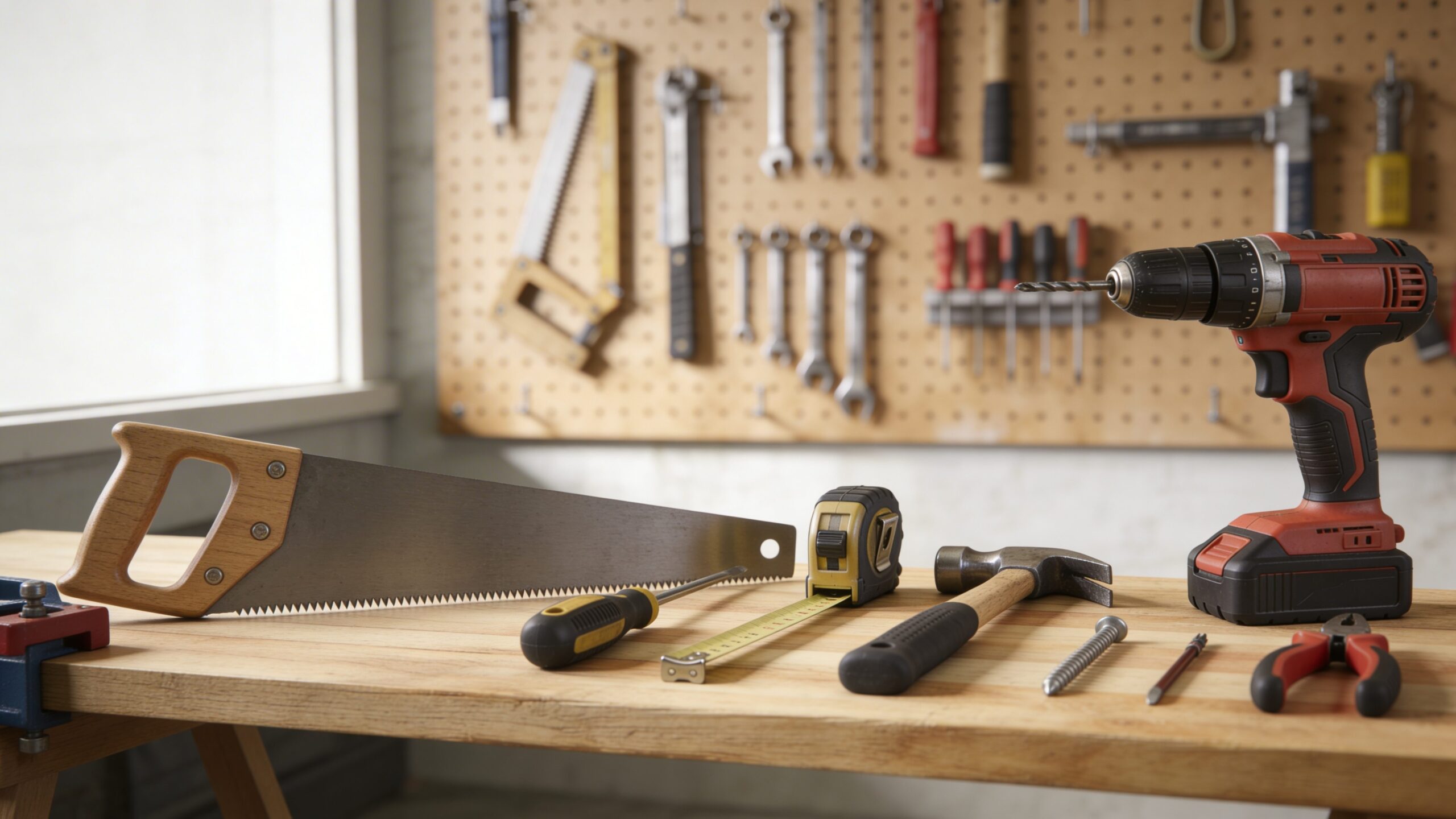
A beginner maker should start with a dependable set of essentials such as a hammer, screwdrivers, a tape measure, pliers, and a utility knife. These tools cover the majority of early tasks, from assembling simple projects to making quick fixes and adjustments. Their simplicity is their strength, allowing makers to develop technique and confidence without relying on automation.
Measuring and Marking: Precision Starts Here
Accuracy is what separates a rough project from a refined one. Measuring and marking tools are often overlooked by beginners, yet they play a critical role in ensuring that every cut, joint, and alignment is correct from the start. A quality tape measure, a combination square, and a marking pencil or knife are essential for establishing precision. These tools allow you to translate your ideas into exact dimensions, reducing mistakes and wasted materials. Over time, mastering measurement becomes one of the most valuable skills a maker can develop.
Cutting Tools: Shaping Materials with Confidence
Cutting is one of the most fundamental actions in any maker’s workflow. Whether working with wood, plastic, or light metal, having the right cutting tools ensures clean results and efficient progress.
A beginner toolkit should include a handsaw or compact saw, along with a utility knife for smaller, detailed cuts. These tools offer flexibility and control, making them ideal for learning proper cutting techniques. As skills grow, these basics form the foundation for safely transitioning to more advanced cutting tools.
Fastening Tools: Bringing Projects Together
Once materials are cut and prepared, fastening becomes the next critical step. The ability to securely join components determines the strength and durability of any project. Basic fastening tools include screwdrivers, a set of screws and fasteners, and possibly a simple wrench or socket set. These tools allow for reliable assembly while teaching the importance of alignment, pressure, and material compatibility. For beginners, mastering fastening techniques is key to building projects that last.
The Role of Clamps in Every Workshop
Clamps are often underestimated, yet they are among the most useful tools a maker can own. They act as an extra set of hands, holding materials firmly in place during cutting, gluing, or assembly.
A few basic clamps can dramatically improve both accuracy and safety. By stabilizing materials, they reduce movement and allow for cleaner results. For beginners, clamps also make complex tasks more manageable, enabling better control and confidence during each step of a project.
Power Tools: Expanding Capability and Speed
While hand tools form the foundation, power tools introduce efficiency and expanded capabilities. For beginner makers, starting with a small selection of versatile power tools can significantly enhance productivity without overwhelming the learning process. A cordless drill is often the first and most important power tool to own. It handles drilling, fastening, and a variety of tasks with ease. As experience grows, additional tools such as a jigsaw or sander can be added, each expanding the range of possible projects.
Sanding and Finishing Tools: Refining the Final Product
The difference between a rough build and a polished piece often comes down to finishing. Sanding and surface preparation play a crucial role in improving both appearance and functionality.
Basic sanding tools, including sandpaper and a sanding block, allow beginners to smooth edges, refine surfaces, and prepare materials for finishing. These tools teach patience and attention to detail, reinforcing the idea that great results come from careful refinement as much as construction.
Safety Tools: Protecting Every Maker
Safety is not optional in a workshop—it is foundational. Even the simplest tools can pose risks if used without proper precautions, making safety equipment an essential part of any beginner toolkit. Protective gear such as safety glasses, gloves, and hearing protection should always be within reach. These items ensure that makers can work confidently and focus on their craft without unnecessary risk. Developing safe habits early creates a strong foundation for long-term success.
Tool Organization: Building an Efficient Workspace
An organized workspace is more than just visually appealing—it directly impacts productivity and workflow. Knowing where each tool is located reduces downtime and helps maintain focus during projects.
Simple storage solutions, such as toolboxes, wall-mounted racks, or pegboards, can transform a cluttered area into an efficient workshop. For beginners, organization also reinforces good habits, making it easier to maintain tools and extend their lifespan.
Choosing Quality Over Quantity
One of the most common mistakes new makers make is trying to acquire too many tools at once. A well-curated set of high-quality tools is far more valuable than a large collection of low-quality ones. Investing in durable, reliable tools ensures consistent performance and reduces frustration. Over time, a maker’s toolkit should grow naturally, guided by project needs rather than impulse purchases. This approach leads to a more efficient and purposeful workshop.
Growing Your Toolkit Over Time
A maker’s journey is defined by continuous growth, and the same applies to tools. As skills develop and projects become more complex, new tools will naturally become necessary.
The key is to expand thoughtfully. Each new addition should serve a clear purpose and enhance capability. By building a toolkit gradually, beginners can avoid overwhelm while steadily increasing their range of possibilities.
The Confidence That Comes from the Right Tools
At its core, having the right tools is about confidence. When a maker knows they have the equipment needed to complete a task, creativity flows more freely and challenges become opportunities rather than obstacles. A well-chosen set of essential tools empowers beginners to take on projects with clarity and control. It transforms ideas into tangible results and lays the groundwork for a lifelong journey of making, building, and creating.