Why This Question Matters So Much
Every maker starts with excitement, ideas, and a head full of possibilities. Maybe it is a simple shelf, a custom organizer, a small electronics project, or a one-of-a-kind prototype that only exists in your imagination. But very quickly, every beginner runs into the same fork in the road: should you focus on buying better tools, or should you focus on choosing better materials? It seems like a basic question at first, yet it shapes almost everything that comes after, from the quality of your work to the speed of your progress. That is why understanding the difference between materials and tools is one of the smartest first steps any beginner maker can take. Tools help you shape, measure, cut, fasten, smooth, and assemble. Materials are what become the project itself. One gives you capability. The other gives you substance. If you only focus on one side of that equation, you can end up frustrated, waste money, and slow down your growth. When you understand how both work together, your projects become better, your decisions become easier, and your workshop starts to feel less intimidating.
A: Start with a small core toolkit, then choose materials based on the specific project.
A: Not usually; poor material quality often creates problems no tool can fully solve.
A: Yes, but the basics should still be reliable, accurate, and comfortable to use.
A: Different materials respond differently to cutting, drilling, fastening, and finishing.
A: Buy essential tools first, then purchase materials that match your current build plan.
A: Forgiving, stable materials are usually easier to learn on than brittle or warped stock.
A: Accurate layout improves cuts, fit, and material efficiency from the very start.
A: Match tool purchases to real projects and avoid low-quality materials that cause rework.
A: No, a small set of versatile essentials can handle many beginner projects.
A: Great results come from pairing the right material with the right tool and technique.
What Tools Actually Do in a Maker Workflow
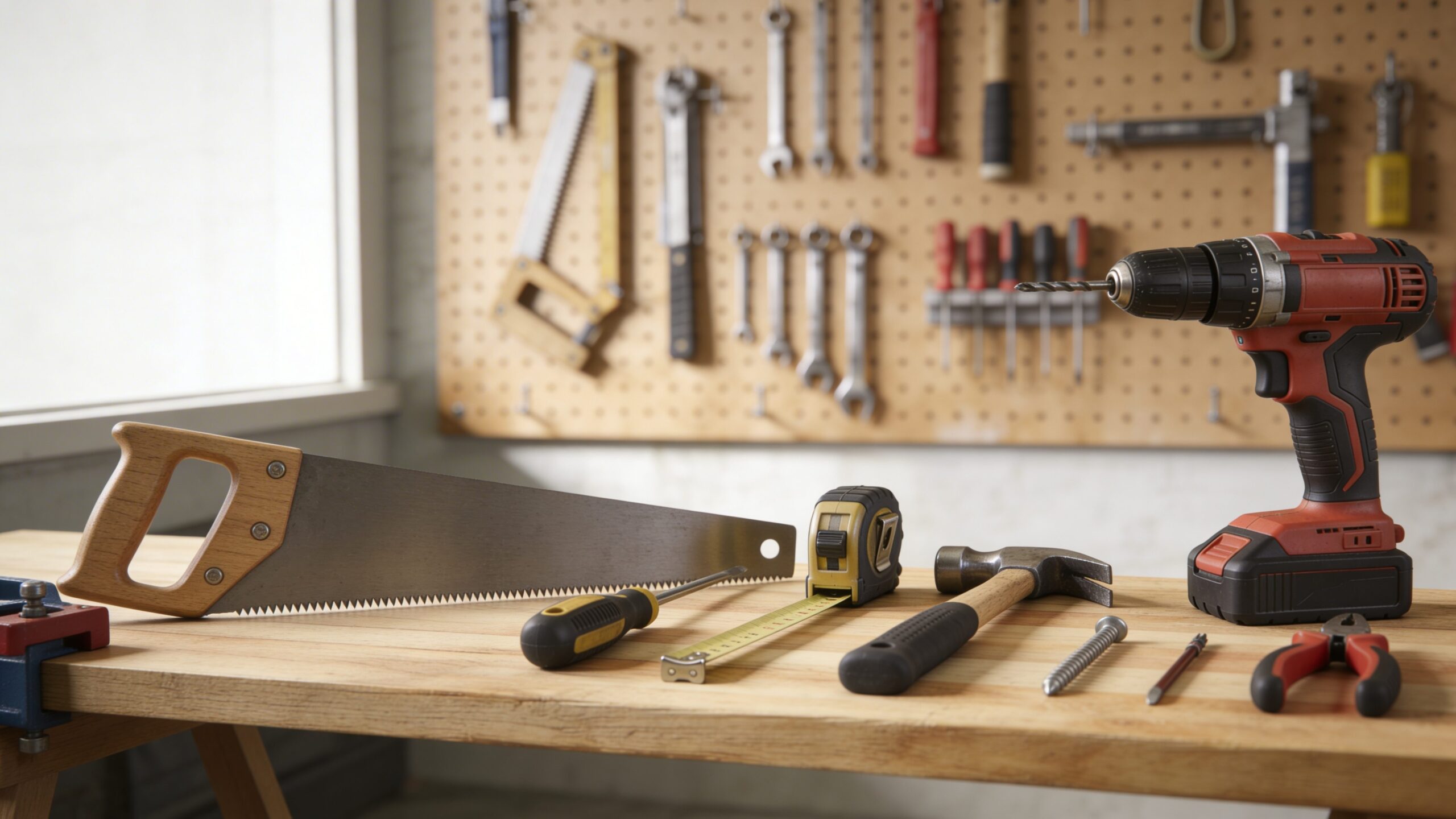
Tools are the means of action in any build. They are what allow a maker to turn intention into movement and raw stock into something precise. A tape measure defines size. A square checks alignment. A saw creates shape. A drill makes openings and connections possible. A clamp holds everything still while the work happens. Each tool does not just perform a task. It creates control over a task, and that control is where craftsmanship begins.
For beginners, tools often feel more exciting than materials because they seem powerful and permanent. A drill, saw, or set of screwdrivers feels like an investment in future capability. That is true, but tools do not make good projects automatically. A great tool in unsteady hands or paired with the wrong material can still lead to poor results. Tools matter because they influence precision, efficiency, safety, and repeatability. They are essential, but they are only half the story.
What Materials Bring to the Table
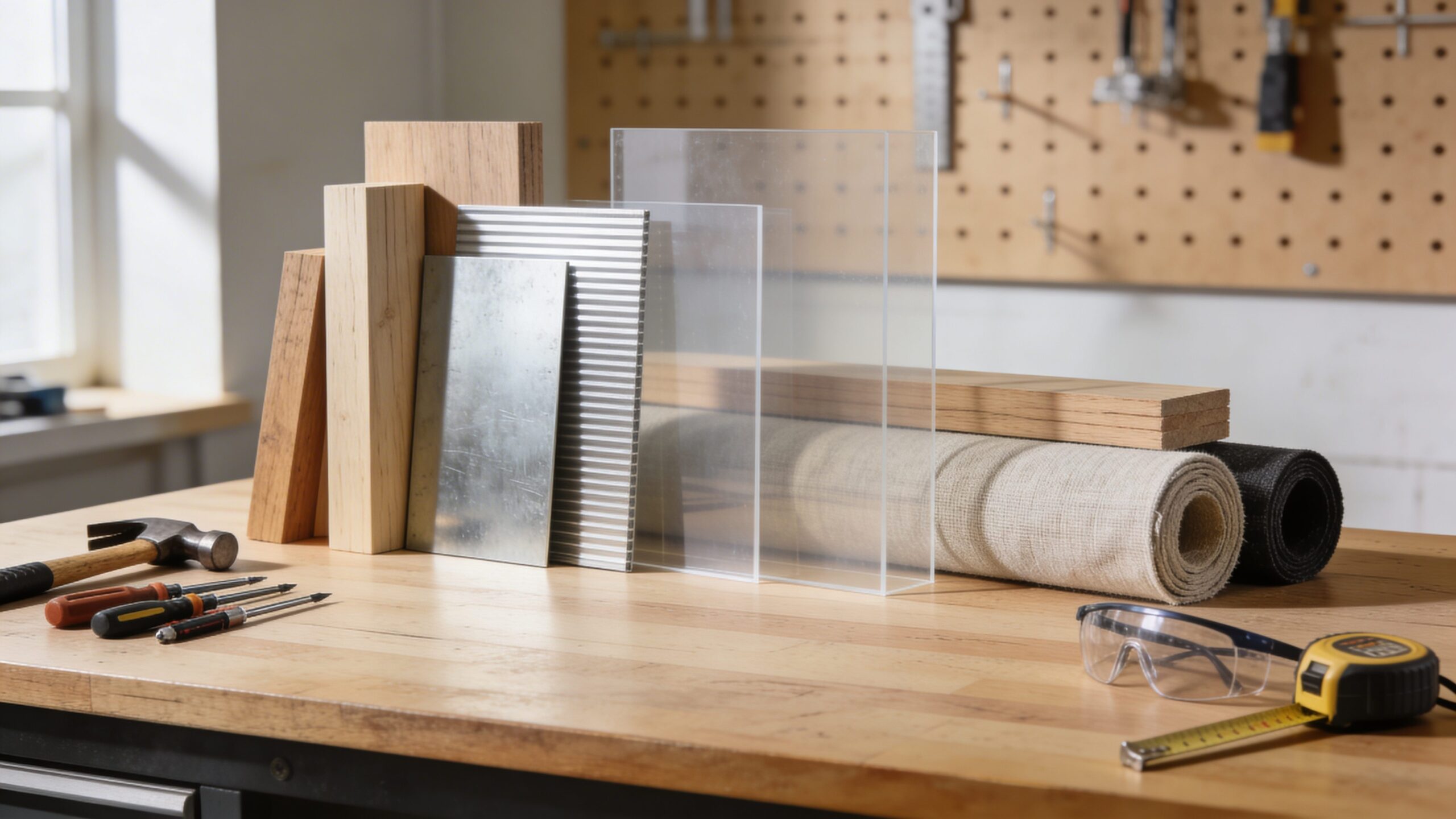
If tools are the means of action, materials are the reality you are acting on. They determine weight, strength, flexibility, durability, appearance, cost, and ease of construction. A beginner can build the same basic project using plywood, solid wood, acrylic, aluminum, or foam board, and each version will behave differently. The cuts will feel different, the fasteners will grip differently, the finish will look different, and the final use will change. Materials also shape what kind of tool experience you will have. Soft pine is forgiving and approachable for a beginner. Hardwood demands more patience and cleaner technique. Thin plastic can crack if cut incorrectly. Sheet metal can bend and burr in ways new makers do not expect. In other words, materials are not passive. They influence every step of the process. A smart maker learns early that choosing the right material can make an average tool feel more capable, while choosing the wrong material can make even a good setup feel difficult.
The Real Difference Between Materials and Tools
The simplest way to think about it is this: tools are how you work, and materials are what you work on. Tools affect your process. Materials affect your outcome. Tools help determine how cleanly, safely, and efficiently you can build something. Materials help determine how strong, attractive, affordable, or practical that thing becomes.
This difference matters because beginners often confuse project success with tool ownership. It is easy to believe that once you own enough equipment, better results will automatically follow. But many project problems begin much earlier, at the material selection stage. Warped lumber, brittle plastics, low-quality hardware, or material thickness mismatched to the job can create headaches that no tool can fully solve. The best maker mindset is not tool-first or material-first. It is understanding when each side deserves more attention.
Why Beginners Often Overbuy Tools
There is a reason new makers tend to focus heavily on tools. Tools feel like progress. They look impressive on a bench, they promise capability, and they are marketed as solutions. Buying a new drill or multi-tool creates a sense of momentum before a project even starts. That emotional pull is real, and it is one of the biggest reasons beginners often end up with too many mediocre tools and not enough understanding of what they actually need. A beginner workshop does not need to be packed from day one. It needs to be functional. A few dependable tools that cover measuring, cutting, drilling, fastening, and finishing can take you surprisingly far. When makers buy too many tools too early, they often spread their budget thin and skip over the equally important question of what materials they plan to use most often. That can lead to a strange imbalance: plenty of gear, but no clear project direction. Starting smaller, with purpose, almost always leads to better long-term growth.
Why Material Selection Can Make or Break a Project
Materials have a quiet power in project work. They do not always get the same attention as tools, but they often determine whether the build feels smooth or frustrating. The right material makes measuring easier, cutting cleaner, fastening stronger, and finishing more satisfying. The wrong material can split, warp, chip, sag, or wear out faster than expected, even if the build itself was done carefully.
For a beginner, this is especially important because learning technique is already challenging enough. Good material choice removes unnecessary obstacles. If you are building a first storage box, for example, working with stable sheet goods may be far easier than wrestling with rough lumber that twists or cups. If you are learning to drill clean holes, a forgiving material will help you understand the tool rather than forcing you to fight the stock. Good projects are not just built with skill. They are built with cooperation between skill and material choice.
The Relationship Between Tools and Materials
The best way to think about making is not as a battle between materials and tools, but as a partnership between them. Every material responds differently to every tool. A saw blade that performs beautifully in one material may leave rough edges in another. A fastener that works well in softwood may split a brittle board or fail in thin sheet stock. A clamp may hold a rigid panel securely but mar a delicate finished surface if used carelessly. Once a beginner sees this relationship clearly, project planning becomes much smarter. Instead of asking, “What tool should I buy next?” the better question often becomes, “What do I want to build, and what materials will it require?” That single shift changes everything. It connects purchases to actual goals. It helps a maker understand not only what tool is needed, but why it is needed and what kind of performance the material will demand from it.
Which Should You Prioritize First?
For most beginners, tools should come first in a modest, practical way, while materials should drive project-by-project decisions. That means building a small core toolkit you can rely on, then spending carefully on the best materials you can reasonably afford for the specific build in front of you. This approach avoids both extremes. You do not overspend on tools you rarely use, and you do not treat materials as an afterthought.
A strong beginner setup usually starts with measuring tools, marking tools, basic cutting tools, a drill, clamps, sanding supplies, and safety gear. Once those basics are in place, your material choices become much easier to act on. You can buy wood, plastic, hardware, or sheet stock with a clear idea of how you will work with it. In that sense, tools create readiness, while materials create direction. You need both, but not in equal ways at every stage.
How Budget Changes the Equation
Budget is where the materials-versus-tools question becomes very real. Most new makers do not have unlimited funds, so every purchase has to do more work. A balanced budget matters because both bad tools and bad materials can waste money. Cheap tools may fail, frustrate, or deliver inaccurate results. Cheap materials may ruin hours of work by warping, breaking, or refusing to hold fasteners properly. The smartest budget strategy is usually to buy a small number of solid tools and then avoid the lowest tier of materials when project quality matters. That does not mean everything must be premium. It means you should understand where quality actually affects results. For example, a reliable measuring tool is worth more than a drawer full of gimmicky accessories. Likewise, straight, stable material is worth more than bargain stock that introduces errors from the beginning. Good budgeting in a maker workflow is less about spending more and more about spending in the right places.
Materials Teach Different Lessons Than Tools
One of the most exciting parts of learning to make is realizing that materials and tools teach you different kinds of knowledge. Tools teach technique. They teach control, rhythm, pressure, speed, and accuracy. You learn how to hold, guide, adjust, and maintain them. You build muscle memory and confidence through repetition.
Materials teach interpretation. They teach you how things behave under force, heat, cutting, fastening, sanding, and finishing. They teach you patience and observation. A maker who understands materials learns to notice grain direction, thickness, edge quality, flexibility, hardness, and surface condition. This knowledge becomes incredibly valuable over time because it improves every decision before the tool ever touches the workpiece.
Common Beginner Mistakes with Tools
One of the most common mistakes beginners make is assuming more power equals better performance. Bigger tools can feel appealing, but many early projects benefit more from control than raw force. Another frequent mistake is ignoring maintenance. Dull blades, weak batteries, poor alignment, or neglected bits can make even a good tool feel disappointing. The problem is not always the product. Sometimes it is setup or upkeep. Beginners also sometimes buy tools without matching them to the projects they actually plan to build. A workshop should grow with purpose. That means every new tool should answer a real need, not just a passing impulse. When tool purchases are tied to specific builds, the workshop becomes more efficient, more personal, and far more useful.
Common Beginner Mistakes with Materials
On the material side, beginners often focus too much on appearance and not enough on workability. A beautiful board, glossy plastic, or polished sheet stock may look ideal, but if it is difficult to cut, prone to cracking, or unsuitable for the intended use, it can create disappointment fast. Another common problem is choosing materials without thinking about environment. Indoor and outdoor projects, high-moisture spaces, and load-bearing builds all place different demands on material performance.
Beginners also tend to underestimate how much project quality depends on material consistency. Straight edges, flat surfaces, proper thickness, and clean stock matter more than many people realize. Material quality affects layout, joinery, finishing, and assembly. Starting with stable, appropriate material makes every tool in your workshop feel more effective.
Building a Smarter Maker Mindset
The most capable makers are not necessarily the ones with the biggest shops or the most expensive equipment. They are the ones who think clearly about process. They know that every successful project begins with a chain of choices, and they understand where materials and tools fit into that chain. They do not treat one as more glamorous than the other. They respect both. For beginners, this mindset is a huge advantage. It keeps you from chasing the wrong upgrades. It helps you stay focused on outcomes instead of appearances. It encourages thoughtful planning, better budgeting, and stronger project execution. Most importantly, it builds confidence rooted in understanding rather than guesswork. That confidence compounds with every project.
How to Choose Better from the Start
A simple way to start strong is to ask three questions before any project begins. What am I building? What material makes the most sense for it? What tools do I need to shape and assemble that material well? These questions prevent wasted motion and wasted money. They turn making into a system instead of a scramble.
When you approach your workshop this way, you begin to see how progress really happens. You stop looking for a single magic purchase. You start thinking in combinations. A tool is useful because of the material it can handle. A material becomes practical because you have the means to work with it. This balance is where smart making begins, and it is one of the most important lessons any beginner can learn.
Final Thoughts on Materials vs Tools
So what does every maker need to know first? Materials and tools are not competitors. They are partners. Tools expand what you can do. Materials shape what you ultimately create. Ignore tools, and your process becomes limited. Ignore materials, and your results become unpredictable. Understanding both from the beginning gives you a stronger foundation than any single purchase ever could. That is the real secret behind better making. You do not need a massive shop to start well. You need a clear understanding of how projects come together. When you choose materials with intention and tools with purpose, even simple builds begin to feel more professional, more efficient, and more rewarding. For any beginner stepping into the maker world, that knowledge is not just helpful. It is the foundation everything else stands on.