Why Product Innovation Needs More Speed
Product innovation has always been a race between imagination and execution, but in today’s market, that race moves faster than ever. Consumer expectations shift quickly, competitors launch updates constantly, and new technologies can make yesterday’s roadmap feel outdated almost overnight. In that environment, the companies that win are not always the ones with the biggest teams or the largest budgets. They are often the ones that learn the fastest. That is exactly why rapid iteration has become one of the most important strategies in modern product development. Rather than spending months polishing one version of a product behind closed doors, teams build early, test quickly, gather feedback, and improve continuously. This approach compresses the distance between idea and insight, allowing innovators to refine products with real evidence instead of assumptions. The result is not just faster work. It is faster learning, better decisions, and stronger innovation.
A: It is the process of quickly creating, testing, and refining product ideas through short repeated cycles.
A: It helps teams learn sooner, fix problems earlier, and improve products before major time and money are committed.
A: No. It also benefits hardware, manufacturing, UX, research, education, and creative product development.
A: A prototype turns an idea into something testable so teams can gather real feedback and make better decisions.
A: They should be short enough to maintain momentum but long enough to produce useful feedback.
A: A clear hypothesis, a testable version, quality feedback, and a defined next action.
A: Yes. It reveals weak assumptions early, before they become expensive or deeply embedded.
A: Moving fast without learning clearly, or improving features before validating the real user problem.
A: Yes. It encourages experimentation, adaptability, collaboration, and smarter decision-making.
A: It shortens the distance between an initial idea and the insight needed to build a better product.
What Rapid Iteration Really Means
Rapid iteration is the process of developing a product through short, repeated cycles of building, testing, learning, and refining. Instead of aiming to launch a fully perfected solution in one massive effort, teams create smaller versions, evaluate their performance, and improve them based on what they discover. Each cycle moves the product one step closer to a stronger market fit.
The beauty of rapid iteration is that it treats uncertainty as something to be explored rather than feared. Product teams do not need to know every answer at the start. They need to know what question to test next. That mindset changes everything. It creates a development culture where progress is measured not only by features shipped, but by insight gained.
The Link Between Iteration and Innovation
Innovation often sounds dramatic, as if it arrives in one brilliant flash. In reality, most successful products are shaped through repeated refinement. The original idea may contain promise, but the final version becomes powerful because it has been tested, challenged, adjusted, simplified, and strengthened. Rapid iteration accelerates that journey. By moving quickly through cycles of experimentation, teams uncover hidden friction points, unexpected opportunities, and user behaviors that planning documents alone cannot predict. Innovation improves when products are exposed to reality early. That is where assumptions get tested, rough edges become visible, and better directions emerge. Rapid iteration does not replace creativity. It gives creativity a faster path to proof.
From Assumptions to Evidence
One of the biggest obstacles to product innovation is assumption-driven development. Teams believe they understand the customer, believe they know which features matter most, and believe their original vision is correct. Sometimes they are right. Often they are only partially right. The longer those assumptions go untested, the more expensive they become.
Rapid iteration breaks that pattern by turning guesses into evidence. A simple mockup, prototype, or minimum viable product can reveal whether users understand the concept, value the feature, or even care about the problem being solved. Instead of waiting until the end of development to discover the truth, teams learn early when changes are still affordable. That shift from assumption to evidence is one of the biggest reasons rapid iteration accelerates innovation.
Why Faster Feedback Creates Better Products
Feedback is the fuel of iteration. Without feedback, teams are simply moving quickly in circles. With feedback, each cycle becomes smarter than the one before it. Rapid iteration shortens the time between building something and learning how it performs, which means product quality improves faster. This matters because product innovation is not just about inventing something new. It is about creating something useful, usable, and desirable. Customers reveal those dimensions in ways internal teams often cannot predict. They show where interfaces confuse them, where features feel unnecessary, and where the product delivers real value. The faster that information reaches the team, the faster the product can improve in the right direction.
The Role of Prototypes in Speeding Innovation
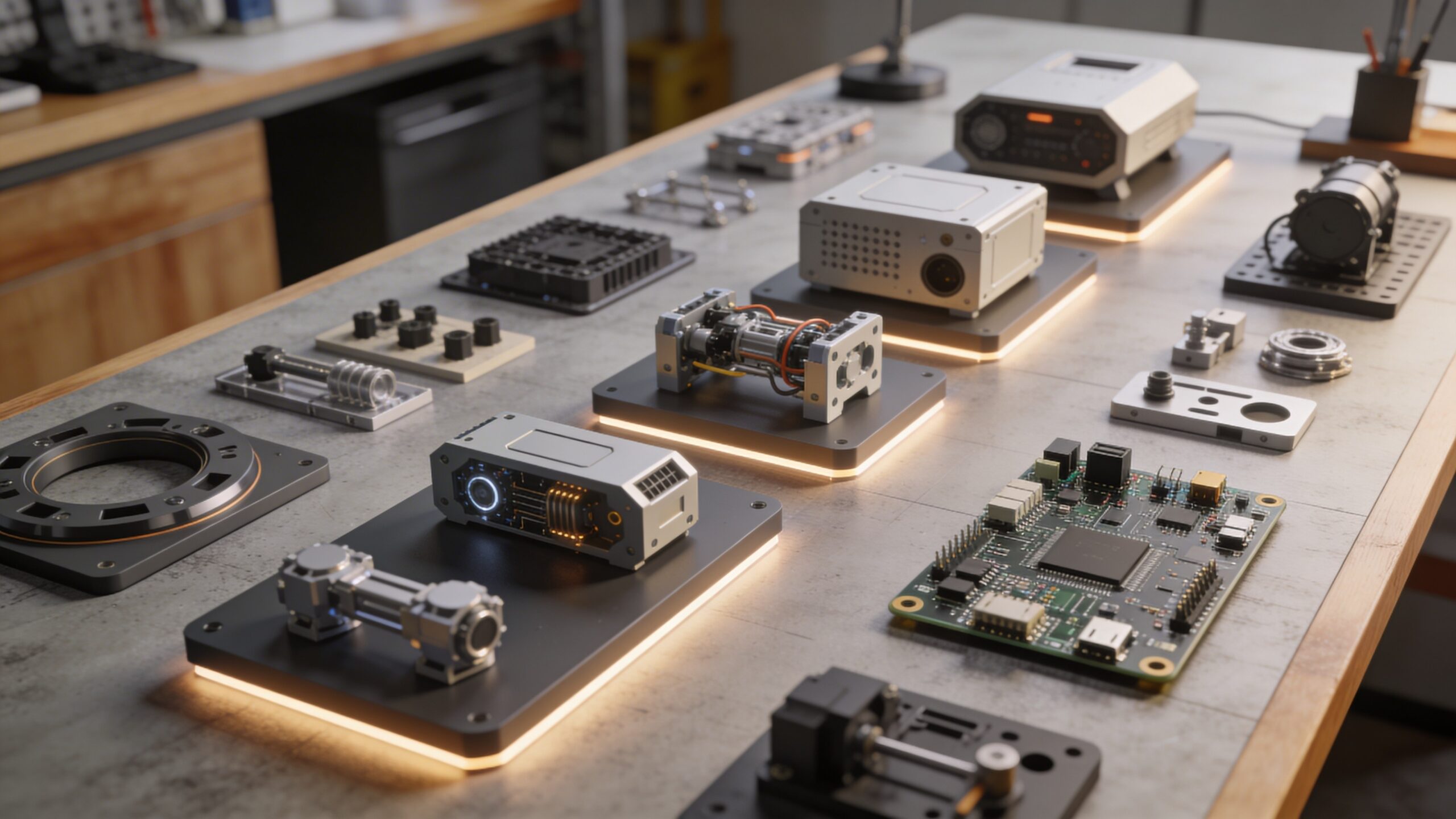
Prototypes are the working language of rapid iteration. They turn abstract thinking into something concrete enough to test. Whether the prototype is a rough interface wireframe, a clickable mockup, a 3D-printed object, or a stripped-down product build, it gives the team something real to evaluate.
The key is that prototypes do not have to be perfect to be useful. In fact, the most effective prototypes are often intentionally lightweight. They are designed to answer specific questions quickly. Does the layout make sense? Does the physical form feel right in the hand? Does the core experience solve the problem? By answering those questions in days instead of months, prototypes dramatically accelerate the pace of product innovation.
How Rapid Iteration Reduces Product Risk
Innovation is exciting, but it is also risky. Teams can spend large amounts of time, budget, and energy on features that fail to resonate. They can overbuild solutions before validating demand. They can miss usability issues until they are deeply embedded in the product. Rapid iteration reduces those risks by exposing weakness earlier in the process. When development happens in short cycles, problems appear sooner and are easier to fix. A weak feature can be cut before it consumes more resources. A flawed workflow can be simplified before it becomes part of a broader architecture. A product concept that lacks real demand can be redirected before launch. This makes rapid iteration not only a speed strategy, but also a risk management strategy that protects innovation from becoming expensive guesswork.
Why Cross-Functional Teams Iterate Better
The fastest iteration systems are rarely driven by one department alone. Product innovation accelerates most when design, engineering, research, marketing, and support work together in tight loops. Each function brings a different perspective on the product, and those combined perspectives create stronger decisions.
Design may identify usability friction, engineering may spot scalability issues, support may understand recurring pain points, and marketing may recognize messaging gaps. When those insights are shared early, the next iteration becomes more complete and more intelligent. Cross-functional collaboration prevents teams from optimizing in isolation. It helps products evolve in a way that reflects both customer needs and business reality.
The Power of Small Changes Over Time
Many people assume innovation must arrive in giant leaps, but in practice, some of the biggest product improvements come from small changes made consistently. A clearer onboarding step, a simpler navigation pattern, a better button placement, a faster load time, a more intuitive setup flow—each one may seem minor on its own, but together they can transform the product experience. Rapid iteration makes those compounding gains possible. Because changes are tested and refined continuously, product teams do not need to wait for major overhauls to improve performance. They can strengthen the experience one cycle at a time. Over weeks and months, that accumulation of small validated improvements becomes a significant competitive advantage.
Rapid Iteration and the Minimum Viable Product
The minimum viable product, or MVP, is one of the clearest examples of rapid iteration in action. Instead of building a fully featured product from day one, teams release a simplified version that delivers the core value proposition and allows them to learn from real use. The MVP is not unfinished for the sake of cutting corners. It is intentionally focused so the team can validate the essentials first.
This approach accelerates product innovation by helping teams avoid overbuilding. Rather than packing in every possible feature, they discover which elements actually matter to users. The MVP becomes the first meaningful checkpoint in a longer process of product refinement. It is the beginning of the iteration engine, not the end of development.
How Rapid Iteration Supports Better Decision-Making
Product development is full of decisions, and poor decisions often come from weak or delayed information. Rapid iteration improves decision-making by creating a constant stream of fresh evidence. Instead of relying on opinions, internal politics, or overly polished presentations, teams can point to actual user interactions, test results, and performance data. This kind of evidence-based product development creates clarity. It helps teams know when to continue, when to pivot, when to simplify, and when to invest further. It also helps leaders make faster strategic calls because the product is being shaped in visible, measurable ways. Innovation becomes less about persuasion and more about proof.
The Emotional Advantage of Iterative Work
Rapid iteration does not only improve the product. It also changes how teams feel about the work. Long development cycles can create anxiety because so much depends on a single major release. If the product misses the mark, the cost feels enormous. Iterative work distributes that pressure across many smaller cycles.
This creates a healthier innovation rhythm. Teams can see progress sooner. They can recover from mistakes faster. They can celebrate learning, not just launch day. That emotional shift matters because confident, curious teams tend to build better products than teams that are frozen by perfectionism. Rapid iteration gives innovators permission to improve in motion.
Common Mistakes That Slow Innovation Down
Rapid iteration is powerful, but only when practiced with discipline. Some teams move quickly without asking clear questions, which leads to activity without insight. Others collect feedback but fail to act decisively on what they learn. Some iterate endlessly on surface details while ignoring deeper questions about customer value or product strategy. To accelerate innovation, rapid iteration must remain intentional. Each cycle should have a purpose. Each prototype should test something meaningful. Each round of feedback should lead to a real decision. Speed alone is not the goal. Useful learning at speed is the goal. When that distinction is understood, iteration becomes a true innovation advantage instead of just a busy workflow.
The Future of Product Innovation Is Iterative
As digital tools, AI systems, simulation platforms, and prototyping technologies continue to improve, the pace of iteration will only increase. Teams can already design, test, revise, and collaborate faster than ever before. What once took months can now happen in days. What once required full production can now be explored through lightweight experiments.
That means the future of product innovation will belong to teams that can learn rapidly and adapt intelligently. The market will continue rewarding organizations that do not cling too tightly to first drafts. Instead, it will favor those that turn ideas into evolving systems, shaped continuously by feedback, evidence, and improvement.
Final Thoughts
Rapid iteration accelerates product innovation because it replaces slow uncertainty with fast learning. It helps teams move from concepts to prototypes, from prototypes to feedback, and from feedback to better products with remarkable speed. Instead of betting everything on a single polished idea, innovators build progress through repeated cycles of discovery. In the end, the greatest value of rapid iteration is not just that it speeds up development. It speeds up understanding. And in product innovation, understanding is everything. The faster a team understands its users, its product, and its market, the faster it can build something that truly matters.