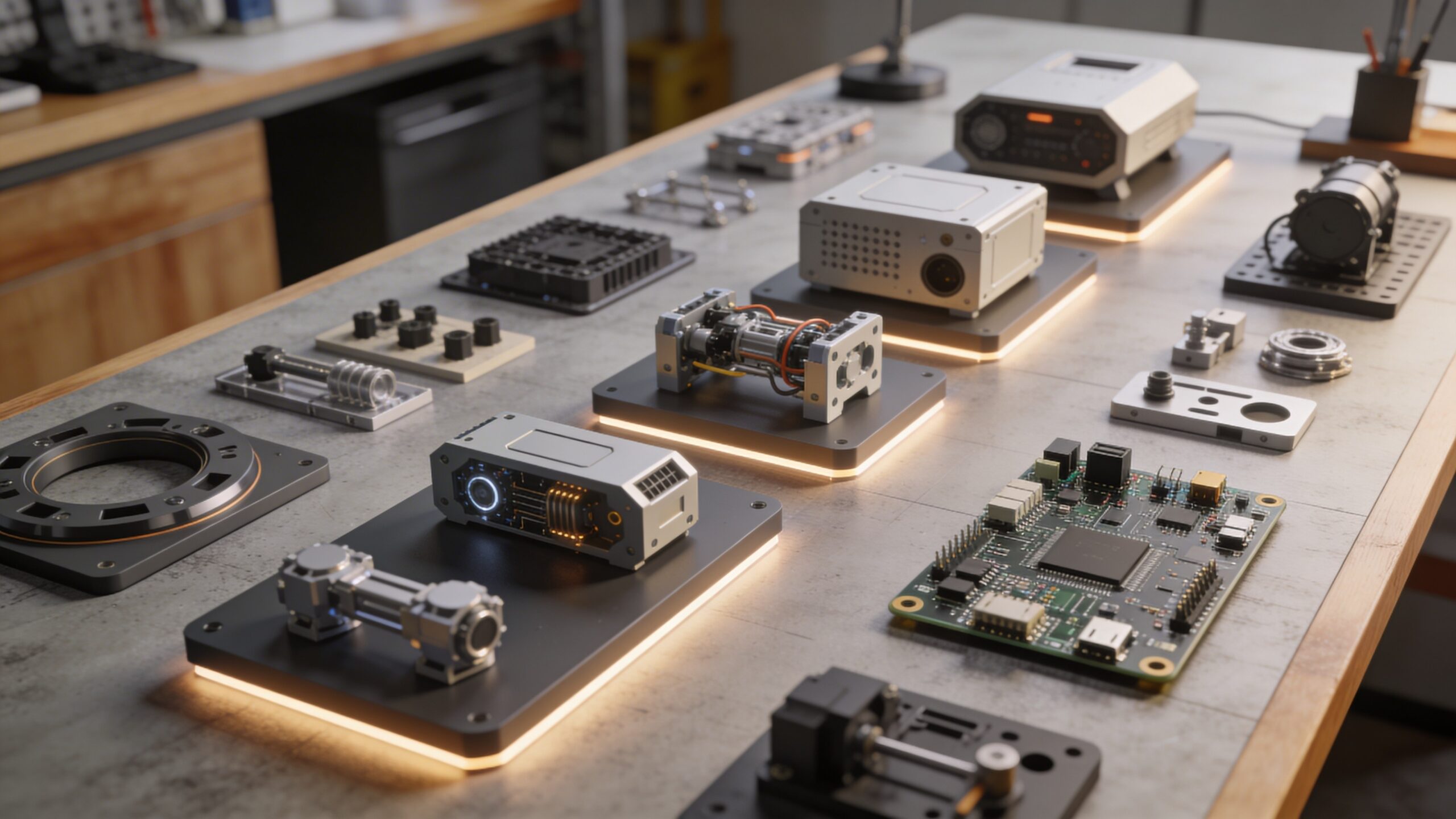
The Innovation Race Has Changed
Innovation used to follow a slower rhythm. Companies would spend months or even years designing a product, perfecting its specifications, and carefully planning its release before anyone outside the organization saw it. In stable industries, that method worked well. But today’s competitive landscape moves far faster. New technologies emerge constantly, customer expectations shift rapidly, and competitors can appear from anywhere in the world. In this environment, speed is no longer just an advantage—it is a requirement. The organizations that thrive today are not always those with the biggest budgets or the longest planning cycles. Instead, they are the ones that learn faster than everyone else. Rapid iteration has become the engine that powers that learning. It allows innovators to test ideas quickly, gather feedback continuously, and refine their products before slower competitors even finish their first plan.
A: It is a development approach where products are built, tested, and improved repeatedly through short learning cycles.
A: Because it allows them to learn quickly and improve products based on real feedback.
A: No. It means learning quickly through experimentation rather than waiting for perfection.
A: It uncovers insights earlier, allowing teams to refine ideas continuously.
A: Prototypes act as early learning tools that reveal strengths and weaknesses.
A: Yes, many large companies now use iterative methods alongside structured planning.
A: No, it is used in hardware design, product development, engineering, and research.
A: It dramatically shortens the time between idea and meaningful feedback.
A: Because it reveals how users actually experience a product.
A: The ability to learn continuously and improve faster than competitors.
Understanding the Core Idea of Rapid Iteration
Rapid iteration is a development approach built around repeated cycles of experimentation and improvement. Instead of trying to create a perfect product in one long development phase, teams build early versions quickly, test them, gather feedback, and refine them again and again. Each cycle reveals new insights that guide the next step forward.
This process is not about rushing blindly. It is about shortening the distance between idea and learning. When innovators move quickly from concept to prototype, they gain real information about how a product behaves, how users respond to it, and where improvements are needed. Over time, those cycles compound into dramatic progress, allowing teams to reach high-quality solutions far faster than traditional development methods often allow.
The Power of Learning Faster Than Competitors
At the heart of rapid iteration is a simple but powerful principle: the fastest learner often wins. In competitive markets, success rarely belongs to the team that starts with the best guess. It belongs to the team that tests assumptions quickly and adapts based on evidence. Rapid iteration creates a learning advantage because every experiment produces information. A prototype might reveal usability problems. A small release might uncover customer preferences. A test build might expose performance limitations. Each discovery becomes fuel for improvement. Instead of relying on predictions alone, teams build knowledge through action. Over many cycles, this process produces products that are not only better but also more closely aligned with real user needs.
From Idea to Prototype in Record Time
One of the most powerful aspects of rapid iteration is how quickly ideas can become tangible. In traditional development environments, teams might spend weeks debating specifications before anything physical or digital appears. With iterative development, the goal is often to build something quickly enough that it can be tested and improved immediately.
Modern tools have made this process easier than ever. Digital design platforms, rapid prototyping technologies, simulation tools, and agile software frameworks allow innovators to create early versions in days instead of months. Even simple prototypes can reveal valuable insights about usability, functionality, and feasibility. By accelerating the transition from idea to experiment, rapid iteration keeps teams moving forward instead of getting stuck in endless planning.
Innovation Through Experimentation
Experimentation lies at the center of the rapid iteration philosophy. Instead of trying to eliminate uncertainty through analysis alone, innovators embrace uncertainty as an opportunity to learn. Every prototype, feature test, or design variation becomes a small experiment designed to answer a specific question. This experimental mindset encourages curiosity. Teams are free to explore possibilities, test bold ideas, and uncover unexpected solutions. Even when experiments fail, they generate knowledge that guides the next attempt. Over time, this culture of experimentation builds confidence and creativity, turning innovation into a continuous process rather than a rare breakthrough.
Why Rapid Iteration Reduces Risk
At first glance, moving quickly might seem risky. Yet in many cases, rapid iteration actually reduces risk compared to slower development models. The reason is simple: problems appear earlier. Instead of discovering a major flaw near the end of a long project, teams encounter challenges during early prototype cycles when solutions are easier and cheaper to implement.
Early testing also protects teams from investing too heavily in the wrong idea. A concept that seems promising in theory might perform poorly in real use. Rapid iteration reveals those weaknesses before large resources are committed. By identifying issues early, innovators can pivot quickly and redirect their efforts toward stronger opportunities.
Customer Feedback as a Development Tool
One of the greatest strengths of rapid iteration is its ability to involve users throughout the development journey. Instead of waiting for a final release, teams gather feedback continuously. Customers interact with early versions, share their experiences, and help shape the product’s evolution. This ongoing conversation creates stronger alignment between the product and the people who will ultimately use it. When designers and engineers see how real users behave, they gain insights that no planning document could provide. Features can be refined, interfaces improved, and priorities adjusted in response to real needs rather than assumptions. The result is often a product that feels intuitive and valuable from the moment it launches.
Building Momentum Through Small Wins
Rapid iteration also generates psychological momentum within teams. Each completed cycle represents progress. A prototype works better than the previous one. A feature performs more smoothly. A design becomes clearer. These improvements may seem small individually, but together they create a sense of forward motion that motivates teams to keep pushing.
This steady momentum contrasts with the long waiting periods often associated with traditional development cycles. When teams see visible results frequently, collaboration becomes more energetic and focused. Success feels achievable because progress is happening in real time. Over weeks and months, those small wins accumulate into substantial breakthroughs.
The Role of Modern Technology
The rise of rapid iteration would not have been possible without advances in technology. Tools that support fast development and testing have transformed how innovators work. Software platforms enable instant deployment and user analytics. Digital design environments allow teams to experiment with interfaces and features quickly. Prototyping tools make it easier to visualize ideas and evaluate their potential. Even in hardware industries, new fabrication technologies and simulation tools have dramatically shortened development cycles. Designers can produce experimental parts quickly, test them under realistic conditions, and refine their designs with greater precision. These technologies remove many of the barriers that once slowed innovation, allowing teams to iterate at unprecedented speed.
Cultivating the Rapid Iteration Mindset
Rapid iteration is not only a process; it is also a mindset. Teams must be comfortable with learning through experimentation rather than expecting immediate perfection. This requires humility and openness. Early versions may be rough, incomplete, or imperfect, but they are stepping stones toward stronger solutions.
Organizations that embrace this mindset often encourage collaboration across disciplines. Engineers, designers, researchers, and product leaders work together to interpret feedback and guide improvements. Instead of protecting ideas from criticism, teams invite insights that help them refine their work. Over time, this culture of continuous learning becomes a powerful advantage.
When Rapid Iteration Works Best
Rapid iteration works particularly well in environments where uncertainty is high and feedback can be gathered quickly. Technology startups, digital platforms, consumer applications, and emerging product categories often benefit from this approach. In these contexts, customer behavior may not be fully understood at the beginning of development. Iterative processes allow teams to explore possibilities and refine their direction as they learn. This adaptability makes rapid iteration especially valuable in competitive markets where speed and responsiveness determine success. When products must evolve alongside changing user expectations, a flexible development strategy becomes essential.
Balancing Speed With Strategy
While rapid iteration emphasizes speed, it does not mean abandoning strategy. The most successful innovators combine fast experimentation with clear goals. Each iteration cycle should answer meaningful questions about the product’s performance, usability, or value.
Strategic thinking ensures that experimentation remains purposeful. Instead of generating endless variations without direction, teams focus their efforts on areas that matter most. This balance between speed and strategy allows rapid iteration to produce meaningful progress rather than chaotic activity.
Lessons From Today’s Fastest Innovators
Many of the world’s most successful companies rely on rapid iteration to maintain their competitive edge. Technology platforms release frequent updates to refine user experiences. Product designers test multiple prototypes before finalizing a design. Engineering teams analyze real usage data to guide improvements. These innovators understand that the first version of a product is rarely the final answer. Instead, it is the starting point for a journey of refinement. By embracing continuous improvement, they create systems that evolve alongside their users and adapt to new opportunities.
The Future of Innovation
As industries continue to evolve, the importance of rapid iteration will likely grow even stronger. Markets are becoming more dynamic, technologies are advancing more quickly, and customer expectations are rising. Organizations that can learn rapidly will be better equipped to navigate this complexity.
Future innovators may combine rapid iteration with advanced analytics, artificial intelligence, and collaborative development platforms. These tools will help teams identify patterns faster and refine their products with greater precision. Yet the core principle will remain the same: progress comes from learning through action.
Final Thoughts
Rapid iteration has become the hidden engine behind many of today’s most successful innovations. By shortening the distance between idea and insight, it allows teams to adapt quickly, refine their solutions continuously, and build products that truly resonate with users. Instead of waiting for perfection, innovators move forward with curiosity and discipline. In a world where change is constant, the ability to learn faster than competitors may be the most valuable advantage of all. Rapid iteration transforms uncertainty into opportunity, turning each experiment into a step toward better ideas. For modern innovators, that approach is not just useful—it is essential.