Understanding Clean Cuts: Why Technique Matters
Cutting foam and plastic cleanly is more than a basic step—it defines the final quality, durability, and appearance of your project. Whether you’re building prototypes, crafting custom parts, or fabricating structural components, poor cuts lead to jagged edges, material waste, and time-consuming rework. Clean cuts, on the other hand, create tight joints, professional finishes, and predictable results. Both foam and plastic behave differently under stress, heat, and cutting pressure. Foam compresses and tears if mishandled, while plastic can crack, melt, or chip depending on the method used. Understanding how each material reacts is the foundation of achieving precision, regardless of whether you’re using hand tools or advanced machinery.
A: Likely due to a dull blade or too much pressure.
A: Use slower speeds and proper blades.
A: Hot wire for foam and scoring for thin plastics.
A: Yes, but use fine-tooth blades.
A: Sand and polish after cutting.
A: For precision and repeatability, yes.
A: Too much pressure or improper blade type.
A: Always use eye and respiratory protection.
A: Yes, hot wire cutters are ideal.
A: Utility knife with light passes.
Choosing the Right Material for the Job
Before making a single cut, selecting the correct type of foam or plastic plays a critical role in the outcome. Softer foams like EVA are forgiving and easy to cut, while rigid foams such as XPS demand more controlled techniques. Plastics vary even more—acrylic is brittle and prone to cracking, while ABS is more forgiving but can melt under friction.
Thickness also influences your approach. Thin sheets allow for scoring and snapping, while thicker materials require sawing or thermal cutting. By aligning your cutting method with the material’s density and structure, you reduce resistance, avoid damage, and improve overall precision.
Essential Tools for Clean Cutting
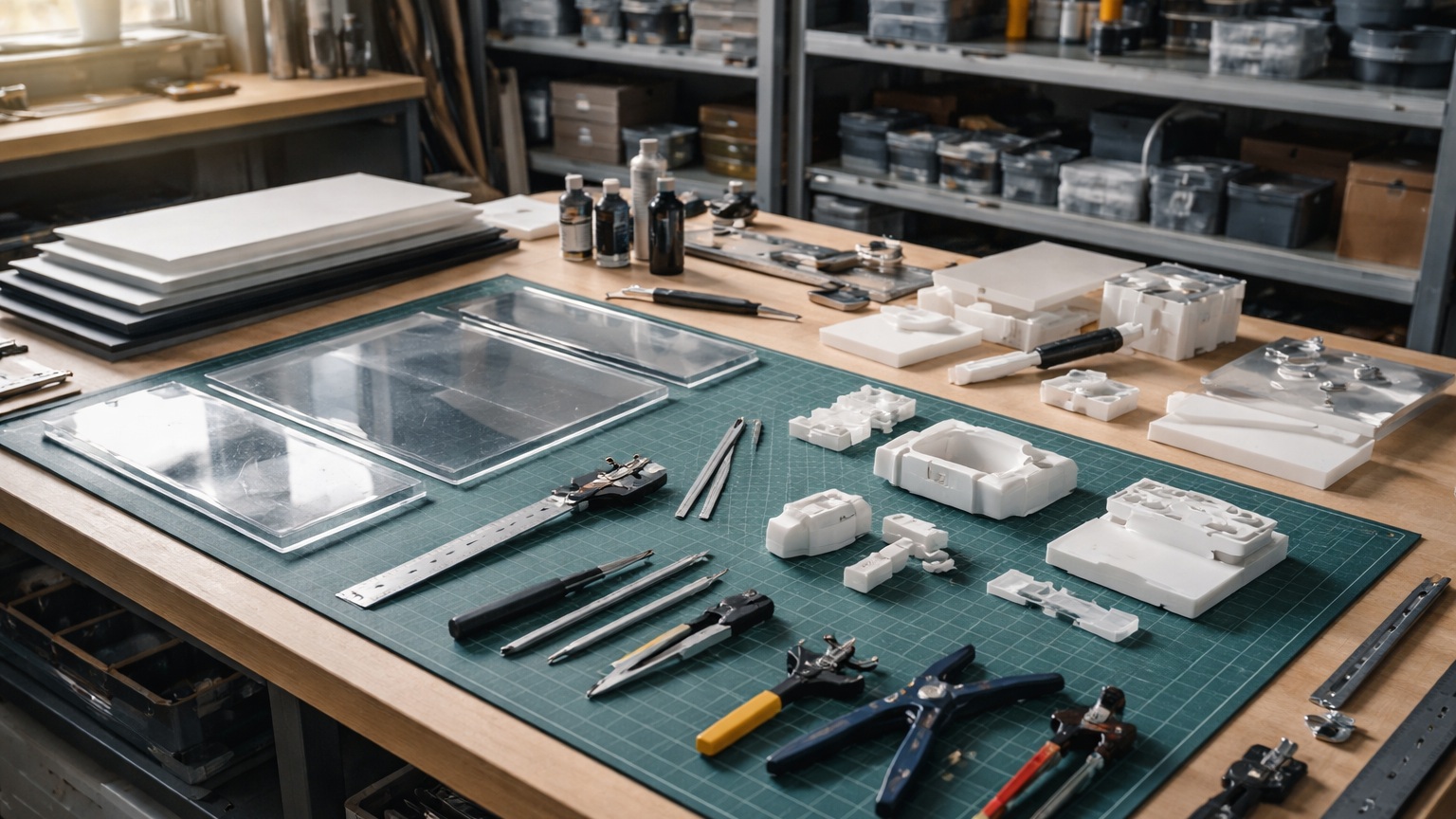
The tools you use directly impact the quality of your cuts. For foam, sharp utility knives, hot wire cutters, and fine-tooth saws are the most common options. Plastics require a broader range of tools, including scoring knives, circular saws, jigsaws, and specialized blades designed to minimize chipping. A key principle across all tools is sharpness and control. Dull blades tear foam and crack plastic, while high-speed tools without proper settings can generate heat that deforms edges. Investing in the right tool—and maintaining it properly—ensures consistent, repeatable results across projects.
Beginner Methods: Simple and Effective Techniques
For beginners, manual cutting techniques offer a controlled and accessible starting point. A sharp utility knife paired with a straight edge is ideal for foam and thin plastic sheets. The key is to use light, repeated passes instead of forcing the blade through in one motion. This approach reduces tearing and keeps edges clean.
Scoring is another effective method, particularly for plastics like acrylic. By making a deep, controlled score line and snapping the material along that line, you can achieve surprisingly clean edges. These beginner-friendly methods emphasize patience and precision over speed, helping build foundational skills that translate to more advanced techniques.
Intermediate Techniques: Improving Precision and Efficiency
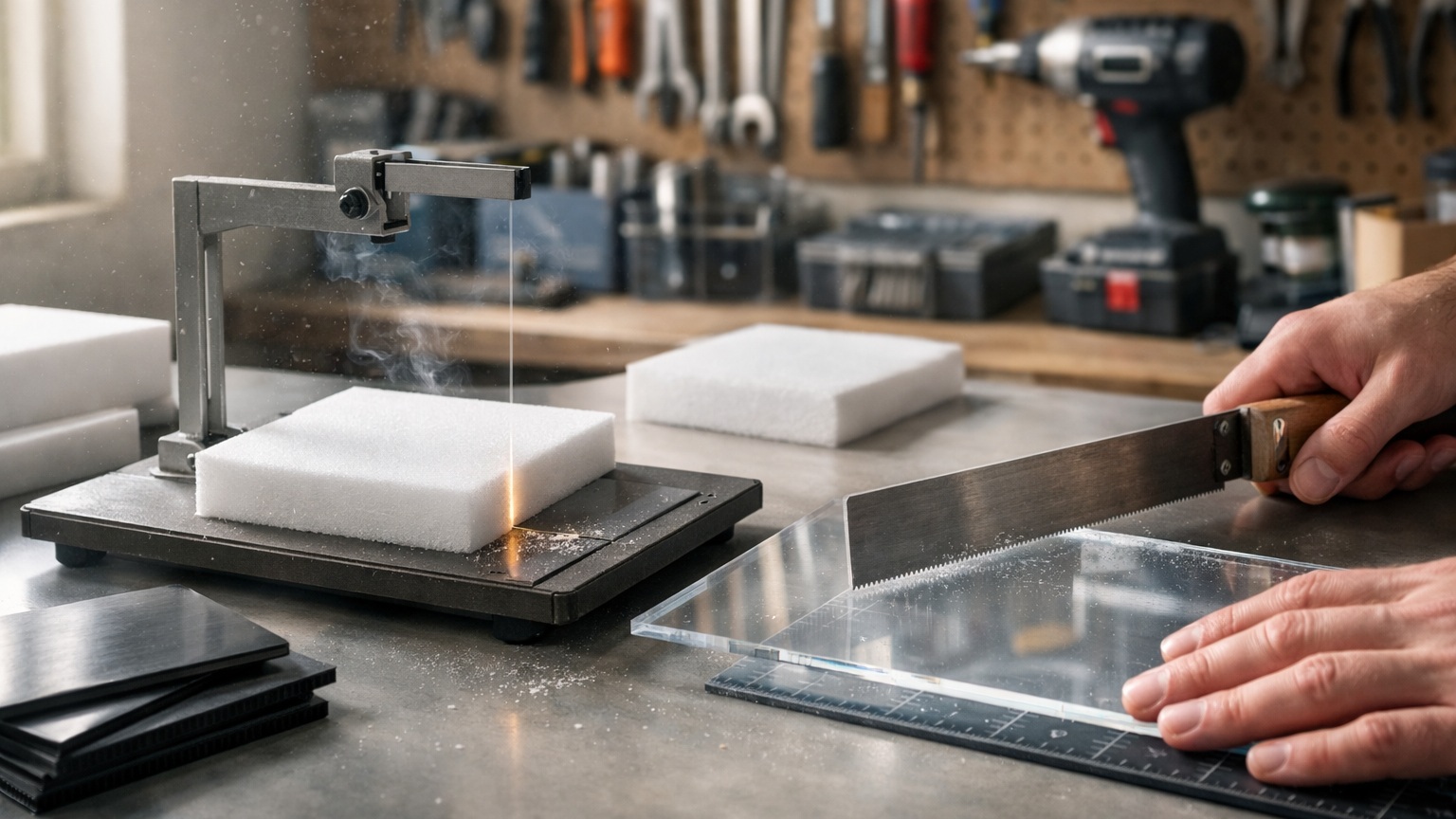
As projects become more complex, intermediate methods introduce greater accuracy and efficiency. Fine-tooth saws, including jigsaws and circular saws, allow for cutting thicker materials with controlled speed. Using the correct blade type—typically one designed for plastics—helps prevent chipping and overheating. For foam, hot wire cutting becomes increasingly valuable at this level. By using heat instead of mechanical force, hot wire tools glide through foam, producing smooth, sealed edges with minimal resistance. The key to success is maintaining a steady pace, as moving too quickly or too slowly can lead to uneven cuts or excessive melting.
Advanced Methods: Professional-Level Cutting
Professional fabrication often relies on advanced tools such as CNC routers, laser cutters, and industrial hot wire systems. These methods offer unmatched precision and repeatability, making them ideal for detailed designs, production runs, and complex geometries.
CNC cutting allows for highly accurate shaping of both foam and plastic, while laser cutting excels at producing clean, polished edges in compatible plastics. However, these methods require careful setup, including proper speed, feed rates, and cooling strategies. When used correctly, they deliver results that are difficult to achieve with manual techniques.
Preventing Common Cutting Problems
Even with the right tools, common issues can compromise your results. Foam often tears when blades are dull or pressure is uneven, while plastic can melt if cutting speeds are too high or blades generate excessive friction. Chipping, especially in brittle plastics like acrylic, is another frequent challenge. The solution lies in controlling heat, pressure, and tool speed. Slower, deliberate cuts produce better results than aggressive movements. Supporting the material properly and using backing boards can also reduce vibration and prevent edge damage. These small adjustments make a significant difference in the final finish.
Achieving Smooth Edges and Finishes
A clean cut is only the first step toward a professional result. Finishing techniques refine edges and enhance the overall appearance. Sanding is the most common method, using progressively finer grits to smooth imperfections and create a uniform surface.
For plastics, polishing techniques can take the finish even further. Flame polishing or buffing can restore clarity to acrylic edges, creating a glass-like appearance. Foam often benefits from sealing before finishing, which stabilizes the surface and prepares it for paint or coating. These finishing steps elevate a project from functional to professional.
Safety Considerations in Foam and Plastic Cutting
Working with foam and plastic involves specific safety considerations that should never be overlooked. Cutting generates dust, fumes, and debris that can be harmful if inhaled or exposed to skin. Proper ventilation, protective eyewear, and respirators are essential, especially when using heat-based tools or power equipment. Additionally, controlling heat sources is critical when working with plastics. Overheating can release toxic fumes and damage the material. Maintaining a clean, organized workspace reduces the risk of accidents and ensures that tools can be used effectively and safely throughout the project.
Building Consistency Through Practice
Consistency is what separates amateur results from professional fabrication. Developing a steady hand, understanding tool behavior, and learning how materials respond all come with practice. Each cut provides feedback that helps refine technique and improve accuracy over time.
Repeating simple cuts and gradually increasing complexity builds confidence and skill. Whether you’re cutting foam for a model or shaping plastic for a custom build, consistency ensures that each piece fits as intended and contributes to a polished final result.
Choosing the Right Method for Your Project
No single cutting method works for every situation. The best approach depends on material type, thickness, complexity, and the level of precision required. Simple projects benefit from manual techniques, while detailed or repetitive work may justify advanced tools like CNC machines. Understanding the strengths and limitations of each method allows you to choose the most efficient and effective approach. By matching the technique to the task, you not only improve results but also reduce wasted time and material.
Final Thoughts: From Clean Cuts to Professional Results
Cutting foam and plastic cleanly is a skill that blends knowledge, technique, and the right tools. From beginner methods like scoring and knife cutting to advanced CNC and thermal processes, each approach offers unique advantages. The key is understanding how materials behave and applying the correct method with precision and control.
As your skills develop, clean cuts become second nature, transforming your projects from rough builds into refined, professional-quality work. With the right approach, even the most basic materials can be shaped into precise, durable, and visually impressive results.