Re-Engineering Vintage Tools for the Digital Age

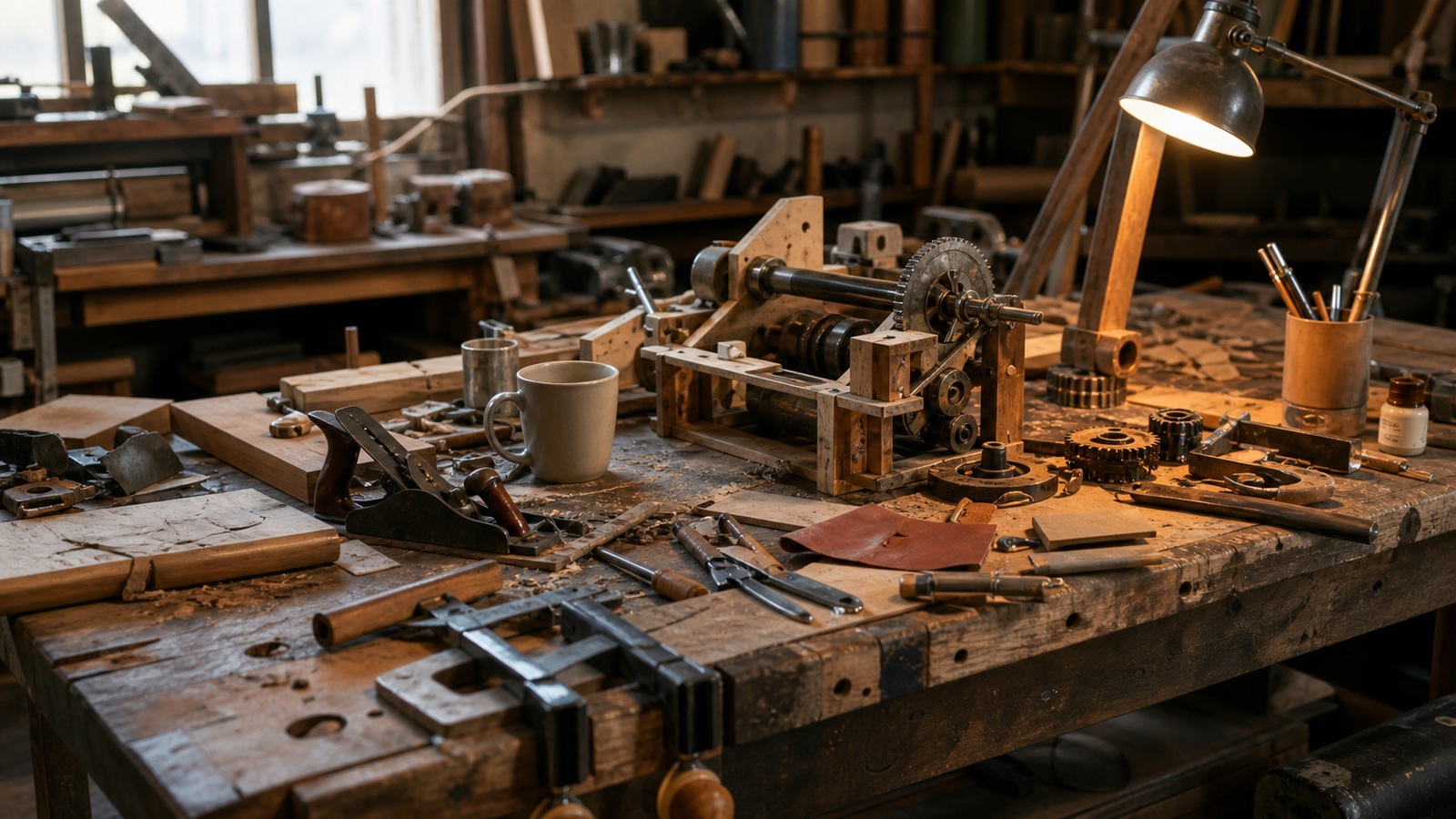
Ultra-photorealistic workshop scene for Re-Engineering Vintage Tools for the Digital Age

Re-Engineering Vintage Tools for the Digital Age is a reminder that modern making is both technical and deeply personal. A workshop can hold digital machines, old hand tools, salvaged parts, bright lights, and unfinished experiments, yet the real value comes from judgment. Builders have to restore details, question assumptions, and decide when a clever idea is ready to become a dependable object. For readers new to 3d printing 101, the topic becomes easier to understand when it is framed through real workshop behavior instead of buzzwords.

The First Sketch Is a Conversation

One useful way to approach this subject is to restore the simplest part before chasing the spectacular part. A builder who understands bench planes can usually make better choices about vises, because the two are connected by fit, force, timing, and touch. This is where 3d printing 101 becomes practical rather than abstract. The idea moves from inspiration into a repeatable habit, and the workshop starts to feel like a place where experiments have direction.

The First Sketch Is a Conversation matters because re-engineering vintage tools for the digital age is not only about a dramatic finished result. It is about the decisions that happen while a maker studies bench planes, tests a small change, and learns what the material will allow. In a real shop, progress often arrives through modest observations: a cleaner edge, a smoother motion, a safer fixture, or a layout that makes the next step less confusing. That kind of improvement is quiet, but it is the reason ambitious projects become believable.

Why Constraints Make Better Inventions

The best makers also know when to slow down. Rushing past drill presses can hide problems that become expensive later, especially when a build depends on alignment, heat, finish, or repeated motion. A careful pause gives the builder time to document the weak point, compare options, and decide whether the design needs a new part or simply a better sequence. That patience gives creative work a professional edge without draining the fun from it.

One useful way to approach this subject is to scan the simplest part before chasing the spectacular part. A builder who understands drill presses can usually make better choices about lathe parts, because the two are connected by fit, force, timing, and touch. This is where 3d printing 101 becomes practical rather than abstract. The idea moves from inspiration into a repeatable habit, and the workshop starts to feel like a place where experiments have direction.

The best makers also know when to slow down. Rushing past drill presses can hide problems that become expensive later, especially when a build depends on alignment, heat, finish, or repeated motion. A careful pause gives the builder time to document the weak point, compare options, and decide whether the design needs a new part or simply a better sequence. That patience gives creative work a professional edge without draining the fun from it.

Where Hand Tools Still Beat Automation

There is a human side to the process as well. People respond to builds that show evidence of thought, not just expense. When a project reveals smart use of measuring gauges, clean transitions, and a clear reason for every visible choice, it feels more convincing. The final piece may look effortless, but the appeal comes from many small judgments stacked together. That is why restoration and modern reuse remains central to this topic.

The best makers also know when to slow down. Rushing past vises can hide problems that become expensive later, especially when a build depends on alignment, heat, finish, or repeated motion. A careful pause gives the builder time to restore the weak point, compare options, and decide whether the design needs a new part or simply a better sequence. That patience gives creative work a professional edge without draining the fun from it.

How Digital Tools Change the Timing

How Digital Tools Change the Timing matters because re-engineering vintage tools for the digital age is not only about a dramatic finished result. It is about the decisions that happen while a maker studies lathe parts, tests a small change, and learns what the material will allow. In a real shop, progress often arrives through modest observations: a cleaner edge, a smoother motion, a safer fixture, or a layout that makes the next step less confusing. That kind of improvement is quiet, but it is the reason ambitious projects become believable.

There is a human side to the process as well. People respond to builds that show evidence of thought, not just expense. When a project reveals smart use of bench planes, clean transitions, and a clear reason for every visible choice, it feels more convincing. The final piece may look effortless, but the appeal comes from many small judgments stacked together. That is why studio planning for practical builders remains central to this topic.

The Quiet Importance of Fixtures

One useful way to approach this subject is to document the simplest part before chasing the spectacular part. A builder who understands measuring gauges can usually make better choices about drill presses, because the two are connected by fit, force, timing, and touch. This is where 3d printing 101 becomes practical rather than abstract. The idea moves from inspiration into a repeatable habit, and the workshop starts to feel like a place where experiments have direction.

The Quiet Importance of Fixtures matters because re-engineering vintage tools for the digital age is not only about a dramatic finished result. It is about the decisions that happen while a maker studies measuring gauges, tests a small change, and learns what the material will allow. In a real shop, progress often arrives through modest observations: a cleaner edge, a smoother motion, a safer fixture, or a layout that makes the next step less confusing. That kind of improvement is quiet, but it is the reason ambitious projects become believable.

One useful way to approach this subject is to document the simplest part before chasing the spectacular part. A builder who understands measuring gauges can usually make better choices about drill presses, because the two are connected by fit, force, timing, and touch. This is where 3d printing 101 becomes practical rather than abstract. The idea moves from inspiration into a repeatable habit, and the workshop starts to feel like a place where experiments have direction.

Testing Movement Before Decoration

The best makers also know when to slow down. Rushing past bench planes can hide problems that become expensive later, especially when a build depends on alignment, heat, finish, or repeated motion. A careful pause gives the builder time to calibrate the weak point, compare options, and decide whether the design needs a new part or simply a better sequence. That patience gives creative work a professional edge without draining the fun from it.

One useful way to approach this subject is to restore the simplest part before chasing the spectacular part. A builder who understands bench planes can usually make better choices about vises, because the two are connected by fit, force, timing, and touch. This is where 3d printing 101 becomes practical rather than abstract. The idea moves from inspiration into a repeatable habit, and the workshop starts to feel like a place where experiments have direction.

Choosing Surfaces People Want to Touch

There is a human side to the process as well. People respond to builds that show evidence of thought, not just expense. When a project reveals smart use of lathe parts, clean transitions, and a clear reason for every visible choice, it feels more convincing. The final piece may look effortless, but the appeal comes from many small judgments stacked together. That is why restoration and modern reuse remains central to this topic.

The best makers also know when to slow down. Rushing past drill presses can hide problems that become expensive later, especially when a build depends on alignment, heat, finish, or repeated motion. A careful pause gives the builder time to document the weak point, compare options, and decide whether the design needs a new part or simply a better sequence. That patience gives creative work a professional edge without draining the fun from it.

When a Workshop Needs Slower Thinking

When a Workshop Needs Slower Thinking matters because re-engineering vintage tools for the digital age is not only about a dramatic finished result. It is about the decisions that happen while a maker studies vises, tests a small change, and learns what the material will allow. In a real shop, progress often arrives through modest observations: a cleaner edge, a smoother motion, a safer fixture, or a layout that makes the next step less confusing. That kind of improvement is quiet, but it is the reason ambitious projects become believable.

There is a human side to the process as well. People respond to builds that show evidence of thought, not just expense. When a project reveals smart use of measuring gauges, clean transitions, and a clear reason for every visible choice, it feels more convincing. The final piece may look effortless, but the appeal comes from many small judgments stacked together. That is why studio planning for practical builders remains central to this topic.

When a Workshop Needs Slower Thinking matters because re-engineering vintage tools for the digital age is not only about a dramatic finished result. It is about the decisions that happen while a maker studies vises, tests a small change, and learns what the material will allow. In a real shop, progress often arrives through modest observations: a cleaner edge, a smoother motion, a safer fixture, or a layout that makes the next step less confusing. That kind of improvement is quiet, but it is the reason ambitious projects become believable.

How Collaboration Sharpens the Idea

One useful way to approach this subject is to calibrate the simplest part before chasing the spectacular part. A builder who understands lathe parts can usually make better choices about bench planes, because the two are connected by fit, force, timing, and touch. This is where 3d printing 101 becomes practical rather than abstract. The idea moves from inspiration into a repeatable habit, and the workshop starts to feel like a place where experiments have direction.

How Collaboration Sharpens the Idea matters because re-engineering vintage tools for the digital age is not only about a dramatic finished result. It is about the decisions that happen while a maker studies lathe parts, tests a small change, and learns what the material will allow. In a real shop, progress often arrives through modest observations: a cleaner edge, a smoother motion, a safer fixture, or a layout that makes the next step less confusing. That kind of improvement is quiet, but it is the reason ambitious projects become believable.

A Practical Way to Keep Improving

The best makers also know when to slow down. Rushing past measuring gauges can hide problems that become expensive later, especially when a build depends on alignment, heat, finish, or repeated motion. A careful pause gives the builder time to adapt the weak point, compare options, and decide whether the design needs a new part or simply a better sequence. That patience gives creative work a professional edge without draining the fun from it.

One useful way to approach this subject is to document the simplest part before chasing the spectacular part. A builder who understands measuring gauges can usually make better choices about drill presses, because the two are connected by fit, force, timing, and touch. This is where 3d printing 101 becomes practical rather than abstract. The idea moves from inspiration into a repeatable habit, and the workshop starts to feel like a place where experiments have direction.

The Last Turn of the Handle

Re-Engineering Vintage Tools for the Digital Age is not a closed subject. It keeps changing as tools improve, communities share more openly, and builders learn to respect both old craft and new technology. The smartest makers are not chasing novelty for its own sake. They are using new options to solve older problems with more care, more access, and more imagination.

For anyone beginning in this space, the best step is simple: choose one idea, make the first version, study what happened, and improve it. That rhythm turns intimidating subjects into workable practice. Over time, the shop becomes less about collecting equipment and more about building judgment.