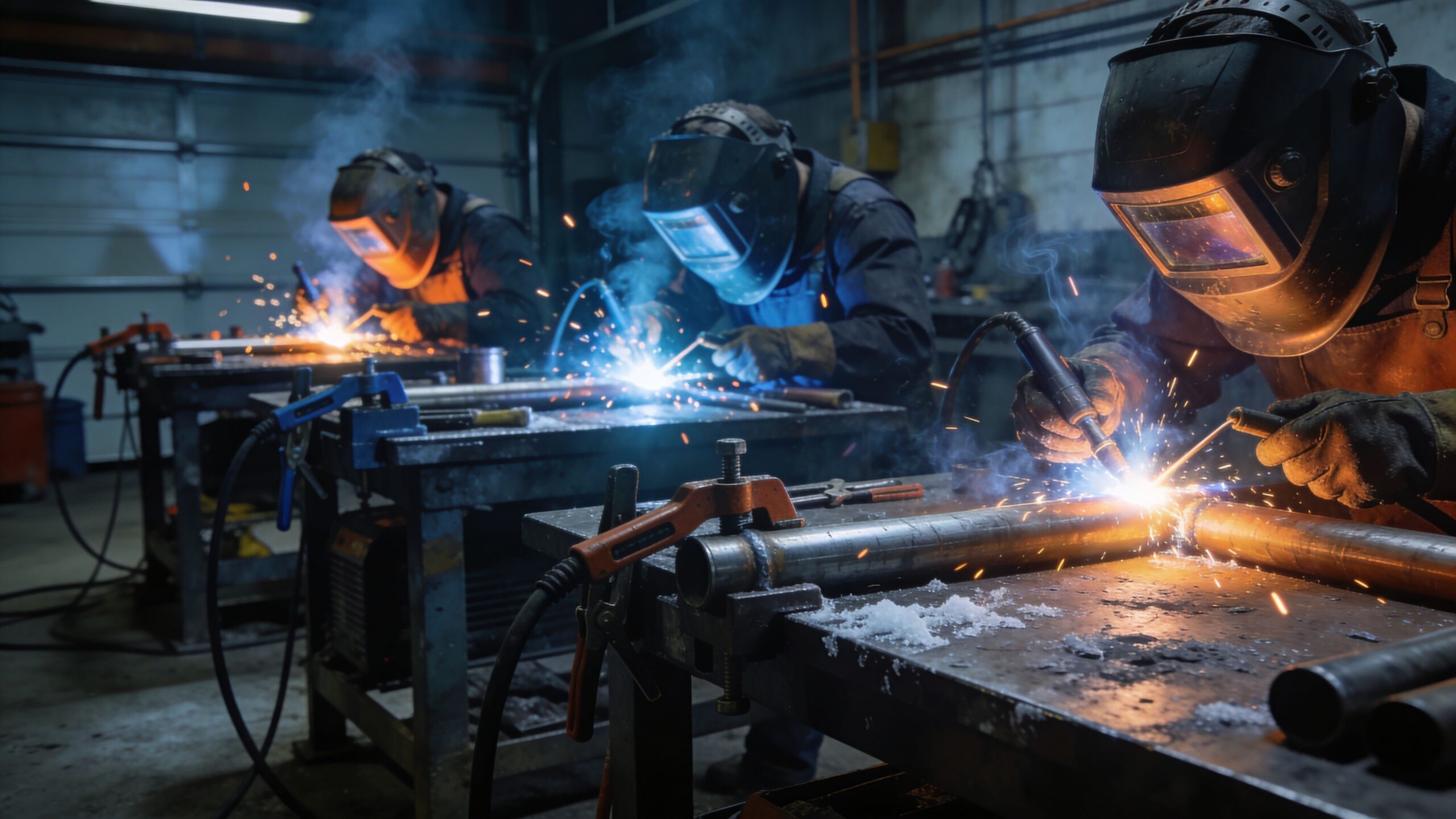
Welding is one of the most exciting skills a maker, fabricator, or hands-on DIY builder can learn. It turns separate pieces of metal into a single structure, opening the door to everything from simple repairs and garage projects to furniture building, equipment fabrication, automotive work, and artistic metal design. For beginners stepping into the welding world, one question almost always comes first: should you learn MIG, TIG, or stick welding first? The answer depends on what you want to build, how quickly you want to get comfortable, what materials you plan to weld, and the kind of workshop environment you have. Each welding method has its own personality. MIG welding is often seen as the easiest and most beginner-friendly. TIG welding is widely admired for precision and clean, beautiful welds. Stick welding is rugged, powerful, and excellent for heavy-duty work and outdoor conditions. None of them are useless, and none of them are universally perfect. The best starting point depends on your goals. This guide explores MIG, TIG, and stick welding in a practical, exciting, and beginner-friendly way. By understanding how each process works, where it excels, and what challenges it brings, you can make a smart decision about which welding method deserves to be the first one you master.
A: MIG is usually the easiest and most beginner-friendly starting point.
A: TIG usually produces the cleanest and most refined weld appearance.
A: Stick welding is typically best for outdoor and windy conditions.
A: Yes, but machine size and proper setup matter a lot.
A: Yes, TIG usually requires more coordination and practice.
A: No, the flux coating on the rod provides shielding.
A: TIG is often preferred for aluminum because of its control and precision.
A: They leave slag that must be chipped and brushed away after welding.
A: Yes, but it is usually slower and more demanding than starting with MIG.
A: Yes, learning all three gives you much more flexibility as a fabricator.
Why Learning the Right Welding Process Matters
Choosing your first welding process matters because the early stages of learning shape your confidence. Welding can feel intimidating at first. There is bright light, heat, sparks, molten metal, and a lot of technique involved. When beginners start with a process that matches their goals and skill level, the learning curve feels manageable. When they start with a process that frustrates them, progress can slow down fast.
The right process also affects the type of projects you can complete early on. A beginner interested in making steel furniture for the garage may need a different path than someone restoring farm equipment or building polished aluminum parts. Your first welder is not just a tool purchase. It is a gateway into a type of fabrication work.
That is why MIG, TIG, and stick welding deserve a close comparison. They are all powerful methods, but they reward different kinds of projects, shop setups, and learning styles. Understanding those differences helps new welders avoid buying the wrong machine or expecting one process to do everything well.
What MIG Welding Is and Why It Is So Popular
MIG welding, also known as gas metal arc welding, is often the first process recommended to beginners. It uses a machine that continuously feeds a wire electrode through a welding gun. When the trigger is pressed, the wire creates an electrical arc that melts the wire and the base metal, joining the pieces together. Shielding gas protects the weld area from contamination.
One reason MIG welding is so popular is that it feels approachable. The process is fast, relatively easy to understand, and forgiving compared with more technique-heavy methods. Because the wire feeds automatically, beginners can focus more on travel angle, speed, and control instead of coordinating multiple hand movements at once. MIG welding is especially useful for mild steel, which makes it perfect for home fabrication projects, brackets, tables, carts, frames, gates, and general repair work. In many garage workshops, MIG becomes the go-to welding process because it offers a strong combination of speed, simplicity, and clean results.
Why MIG Is Usually the Best First Welding Method
For most beginners, MIG welding is the easiest process to learn first. The biggest reason is that it removes some of the complexity that makes welding intimidating. You pull the trigger, the wire feeds automatically, and the process creates a stable arc that is easier to manage than the manual rhythm of stick or the fine coordination of TIG.
MIG welding also tends to produce cleaner welds with less slag and less post-weld cleanup than stick welding. That means beginners can see their results more clearly and adjust faster. It is easier to understand what went right and what went wrong when the weld bead is visible without heavy chipping or brushing.
Another benefit is speed. MIG welding lets beginners produce usable welds fairly quickly, which builds motivation. A new welder can move from simple practice beads to basic project work faster with MIG than with TIG in most cases. That quick success is often what keeps someone engaged enough to continue learning.
The Limitations of MIG Welding
MIG welding may be beginner-friendly, but it is not perfect for every situation. One of its biggest limitations is sensitivity to wind. Because MIG often relies on shielding gas, outdoor welding becomes difficult when breezes blow that gas away from the weld area. That can lead to contamination and weak welds.
MIG machines also tend to perform best on clean metal. Rust, paint, oil, and dirt can interfere with weld quality. While no welding process truly likes dirty surfaces, MIG generally rewards proper preparation. Beginners who expect to weld rough outdoor steel without cleaning it first may find MIG more frustrating than expected. Another limitation is portability. Some MIG setups require gas cylinders, which add bulk and reduce convenience when moving equipment around. Flux-core wire can solve part of that issue, but traditional gas-shielded MIG is best suited to indoor or protected shop environments.
What TIG Welding Is and Why It Stands Out
TIG welding, also called gas tungsten arc welding, is often considered the most refined and precise welding method. It uses a non-consumable tungsten electrode to create the arc, while the welder typically adds filler rod by hand as needed. Shielding gas protects the weld area, and the process gives the operator extremely fine control over heat and bead appearance.
TIG stands out because of its precision and visual quality. It is widely used when appearance matters, when thin metal is involved, or when special metals such as stainless steel and aluminum need to be welded cleanly. Skilled TIG welds can look beautiful, smooth, and highly controlled.
For fabricators who love detail, TIG has enormous appeal. It feels less like brute-force metal joining and more like a controlled craft. The welder controls heat, filler, torch angle, and movement with exceptional precision. That makes TIG powerful, but it also makes it demanding.
Why TIG Is Harder for Beginners
TIG welding is usually harder to learn first because it demands coordination. In many cases, the welder must control the torch with one hand, feed filler rod with the other hand, and often manage amperage with a foot pedal. That is a lot to think about while also maintaining arc length, travel speed, and weld pool control.
TIG also tends to be slower than MIG and less forgiving of mistakes. Small errors in hand movement or heat input can quickly affect the bead. Beginners often find that their early TIG welds feel inconsistent, shaky, or difficult to repeat. The process rewards patience, repetition, and a willingness to improve through careful practice. However, difficult does not mean wrong. Some beginners are naturally drawn to precision work and enjoy the challenge of mastering a more technical process first. If your main goal is to weld thin material, stainless steel, or aluminum with clean visual results, TIG might still be the right path. It is simply not the fastest route to early success for most people.
What Stick Welding Is and Why It Still Matters
Stick welding, also known as shielded metal arc welding, is one of the oldest and toughest welding methods still widely used today. Instead of a wire feed gun or tungsten electrode, stick welding uses a consumable electrode rod coated in flux. As the rod burns, it creates both the filler metal and the shielding gas needed to protect the weld.
Stick welding matters because it is incredibly practical. It works well outdoors, handles thicker steel with confidence, and tolerates less-than-perfect metal conditions better than many other methods. That is why it remains common in construction, field repair, farm equipment maintenance, and heavy steel work.
For beginners interested in rugged real-world repair jobs, stick welding has a lot to offer. It teaches arc control, puddle awareness, and discipline. It can feel raw compared with MIG and TIG, but it builds strong fundamentals and prepares welders for demanding environments.
Why Stick Welding Can Be Tricky to Learn First
Stick welding is powerful, but it can be harder for beginners than MIG. One challenge is maintaining the right arc length as the electrode burns down. New welders often struggle with sticking the rod to the metal or losing arc consistency. That can make the process feel frustrating during the first few sessions. Stick also creates slag that must be chipped away after welding. This adds cleanup time and makes it a little harder for beginners to judge the weld bead immediately. In contrast, MIG offers a more visible result during the learning phase, which often feels more encouraging.
Still, stick welding has a major advantage in simplicity of equipment. There is no wire feed system and often no shielding gas cylinder to manage. For someone working outdoors, on thicker steel, or in rough conditions, stick can actually be a very logical first process despite its learning curve.
Comparing MIG, TIG, and Stick for DIY Fabricators
When comparing these three methods, MIG is usually the best all-around starter process for home fabrication. It is fast, clean, and practical for most common steel projects. A beginner can weld brackets, shop carts, frames, furniture, and many repair pieces without needing years of experience.
TIG is the best process when appearance, precision, and material versatility matter most. It shines in detailed fabrication, thin gauge work, stainless steel, and aluminum. It is ideal for people who want control and craftsmanship, but it requires patience and more practice.
Stick is the best process when toughness, portability, and outdoor performance are priorities. It works well on thicker steel and rougher conditions. It is especially appealing for repair work, field jobs, and structural applications where appearance is less important than durability and penetration.
Each process has a place. The question is not which one is universally best. The better question is which one helps you start building successfully as soon as possible.
Which Process Is Best for Different Project Types
If you want to build home shop projects, furniture frames, utility carts, shelving, workbenches, and simple steel fabrication pieces, MIG is often the smartest place to begin. It matches the needs of most garage fabricators and offers a fast path from practice to actual project completion. If you want to build motorcycle parts, detailed custom pieces, stainless kitchen items, artistic metalwork, or precision aluminum projects, TIG may be the process worth chasing. It takes longer to learn, but it delivers elegant results that other methods struggle to match.
If you want to repair trailers, gates, heavy brackets, outdoor steel structures, farm equipment, or construction pieces, stick welding becomes extremely attractive. It is rugged and dependable, especially when wind and dirty metal make other processes less ideal. Your projects should drive your decision. A process that fits your real-world goals will always feel more rewarding to learn.
Cost, Equipment, and Shop Setup Considerations
Budget and workshop setup also influence which welding method should come first. MIG welders are widely available in beginner-friendly models, and many home shop users find the investment worth it because of how often they use the machine. A proper MIG setup may include shielding gas, wire, safety gear, and space for indoor work.
TIG machines often cost more, especially when they include strong aluminum capability and better control features. TIG also benefits from a stable, clean workspace where precision is easier to maintain. The process feels most rewarding when the environment supports that kind of detailed work.
Stick welding equipment can be relatively simple and rugged. That makes it appealing for practical users who need portability and durability more than finesse. If your workspace is basic, your budget is limited, or your projects happen outside the garage, stick might make more sense than its reputation suggests.
So, Which Welding Method Should You Learn First?
For the majority of beginners, MIG welding is the best welding method to learn first. It offers the smoothest entry point, the fastest early wins, and the broadest usefulness for common DIY fabrication projects. It is practical, approachable, and effective. If your goal is to start building useful metal projects without a steep technical barrier, MIG is usually the right answer. TIG should come first only if your main interests revolve around fine control, thinner materials, clean visual finish, aluminum work, or high-detail craftsmanship. It is a more demanding place to begin, but for the right kind of learner, that challenge can be worth it from day one.
Stick welding should come first if your main focus is outdoor repair, thicker steel, rugged utility work, or simple durable equipment that can handle less-than-ideal conditions. It is not always the easiest beginner process, but it is one of the most practical in the real world. In other words, the best first welding process is the one that matches what you actually want to build.
The Best Learning Path for Long-Term Growth
Even if MIG is the best starting point, that does not mean your journey should stop there. Many of the strongest fabricators eventually learn all three methods because each one solves a different kind of problem. MIG gets projects moving quickly. TIG teaches precision and control. Stick builds toughness and adaptability.
A smart learning path for many DIY welders is to start with MIG, gain confidence with steel projects, then move into stick for rugged field repairs or TIG for detailed craftsmanship. That progression keeps motivation high while steadily expanding your skill set.
Welding is not just about choosing one process forever. It is about building capability. The first method you learn should be the one that helps you stay excited, keep practicing, and complete real projects that make you want to learn even more.
Final Thoughts
MIG, TIG, and stick welding each bring something valuable to the fabrication world. MIG is fast, user-friendly, and ideal for most beginners. TIG is precise, elegant, and rewarding for those who love control and clean finish. Stick is rugged, dependable, and ready for hard work in challenging conditions.
If you are standing at the beginning of your welding journey and wondering where to start, MIG is usually the best first answer. It builds confidence quickly and supports a huge range of practical DIY projects. From there, TIG and stick can expand your skills and open new directions in fabrication. The sparks may look intense at first, but welding becomes far less intimidating once you choose the right starting point. Learn the process that fits your goals, practice with patience, and before long, raw steel will start turning into the projects you once only imagined.