Why Welding Safety Matters From the Very First Spark
Welding is one of the most exciting and rewarding skills in the world of fabrication. It allows makers, mechanics, builders, and artists to turn raw steel into frames, brackets, tools, repairs, and custom creations that can last for years. Yet the same process that makes welding so powerful also makes it potentially dangerous. Intense heat, bright ultraviolet light, flying sparks, molten metal, fumes, electrical current, and heavy equipment all come together in a single task. That means welding safety is not just a side topic for professionals. It is the foundation of every good weld and every successful workshop. For beginners, it is easy to focus on the machine, the arc, and the technique while treating safety as something secondary. In reality, safe habits are part of the welding skill set itself. A confident welder learns how to protect their eyes, skin, lungs, hands, feet, and surroundings before ever striking an arc. Good safety practices also protect projects. They reduce contamination, prevent rushed mistakes, improve concentration, and help create a shop environment where quality work can happen consistently. The best part is that welding safety does not need to feel intimidating. Once you understand the risks and build a few strong routines, safe welding becomes second nature. Protective gear, smart setup choices, and disciplined shop rules can transform a cluttered or risky space into a productive fabrication zone. Whether you are learning in a garage, a small home shop, or a shared workspace, strong safety habits will help you weld better, think clearer, and work longer with confidence.
A: Yes, because grinding debris, wire fragments, and shop dust can still reach your eyes.
A: Avoid synthetic fabrics that can melt; choose durable, protective clothing instead.
A: It can be, if it has ventilation, fire control, clear floors, and proper protective gear.
A: Welding can create fumes and particles that should not build up in your breathing zone.
A: Close enough to reach immediately, without crossing through sparks, cables, or clutter.
A: No, flammable materials should be removed well before welding begins.
A: They help a lot, but safe handling, awareness, and tool control still matter.
A: Because steel can stay dangerously hot long after it stops glowing.
A: It is much safer and cleaner to remove coatings and contamination first.
A: Slow down, check your setup, wear full gear, and treat every weld like the shop depends on it.
Understanding the Main Hazards in a Welding Shop
To build a safe welding routine, it helps to understand what you are actually protecting yourself from. Welding hazards are not limited to one obvious danger. They come from several directions at once, and many of them are easy to underestimate until you have experience in the shop. The bright arc is one of the most immediate risks. It produces intense visible light along with ultraviolet and infrared radiation that can injure unprotected eyes and burn exposed skin. Even a quick glance at an active arc without the right lens can cause painful arc eye, while repeated exposure can create lasting damage.
Heat and sparks are another constant concern. Welding throws off hot spatter and tiny droplets of molten metal that can burn skin, ignite clothing, or start fires if they land on cardboard, sawdust, rags, solvents, or other flammables. New welders often focus on the weld bead itself and forget that the surrounding workpiece, table, clamps, and scrap can stay dangerously hot long after the arc stops. A shop that feels calm one minute can become hazardous the next if hot metal is left in the wrong place.
Fumes and gases are also major safety issues. Welding can create airborne contaminants that vary depending on the metal, coating, filler, and process being used. Poor ventilation increases the risk of breathing harmful particles and gases, especially in enclosed areas. On top of that, welding equipment introduces electrical hazards, trip hazards from cables and hoses, noise from grinding and cutting, and mechanical hazards from tools such as chop saws, grinders, and wire wheels. Safe welding starts with seeing the whole environment, not just the torch in your hand.
The Essential Protective Gear Every Beginner Needs
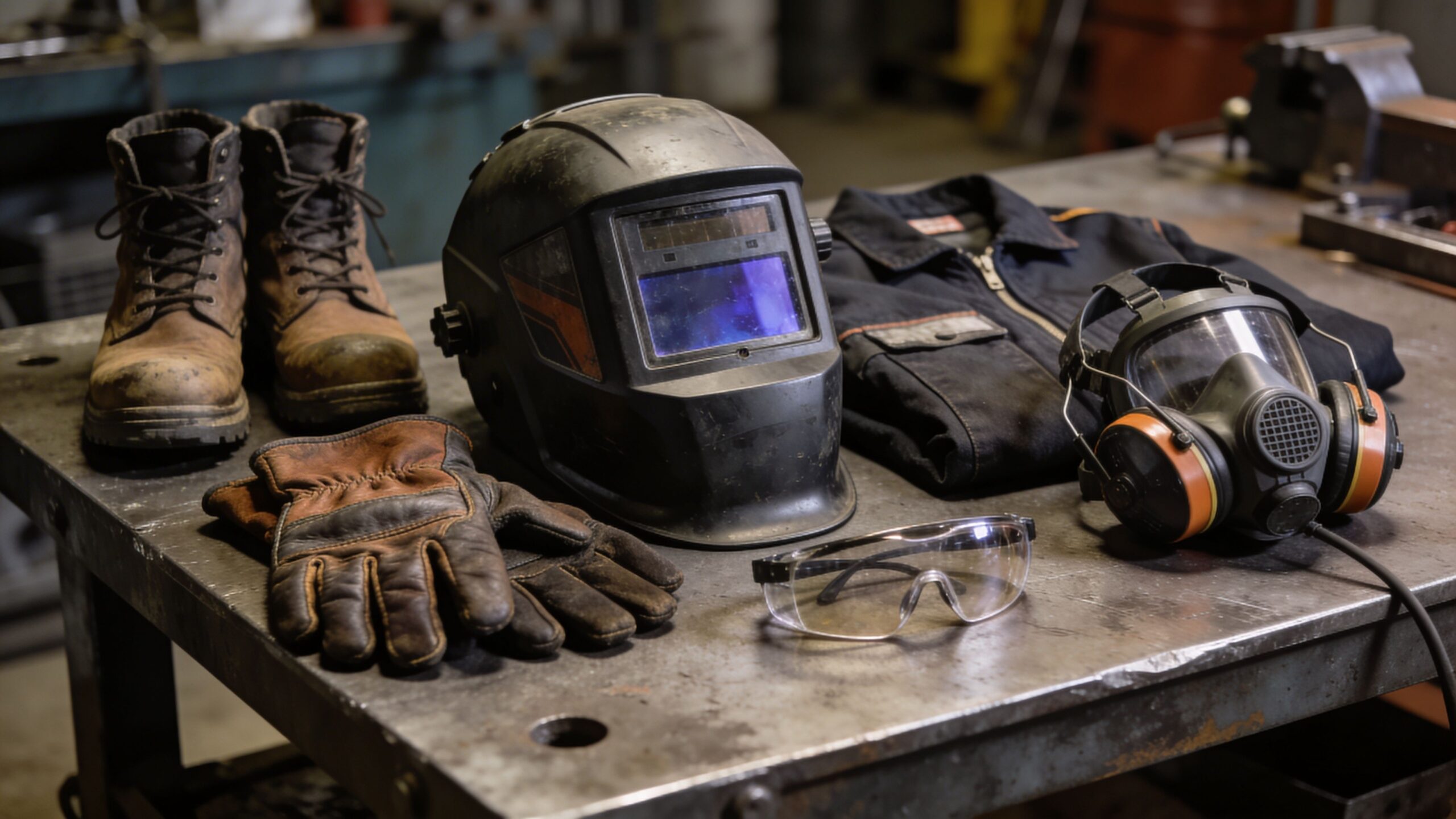
Protective gear is the first line of defense in welding, and every piece serves a real purpose. A welding helmet is the most recognizable item, but it is only part of the system. Your helmet must have the correct lens shade for the process and amperage you are using, and an auto-darkening helmet can make learning easier because it lets you see the workpiece clearly before the arc begins. A good helmet protects your eyes from dangerous light while also shielding your face from sparks, heat, and debris. It should fit comfortably and stay stable while you move. Welding gloves are just as important. They protect your hands from radiant heat, spatter, sharp edges, and hot metal. Gloves designed specifically for welding are made from durable leather and stitched to handle higher temperatures than ordinary work gloves. Your clothing matters too. A long-sleeve welding jacket or fire-resistant shirt helps protect your arms and torso, while durable pants without frayed cuffs keep sparks from getting trapped. Synthetic fabrics are a poor choice because they can melt against the skin. Heavy cotton, leather, and flame-resistant materials are much safer around welding heat.
Foot protection often gets overlooked by beginners, but it matters every time sparks fall or hot metal drops to the floor. Sturdy leather boots, ideally with protective toes, are a smart choice for welding and fabrication work. High tops provide better coverage than low shoes, and pants should fall over the boots rather than tuck inside them. Safety glasses should be worn even under the helmet because grinding, brushing, chipping, and setup work can send debris flying at any moment. Depending on the process and the ventilation in your shop, hearing protection and respiratory protection may also be necessary. Good welding gear is not about looking professional. It is about building layers of protection that work together.
Choosing the Right Welding Helmet, Gloves, and Clothing
Not all welding gear performs the same, and beginners benefit from choosing equipment that matches the type of work they plan to do. A welding helmet should offer reliable optical clarity, a dependable darkening response, and enough coverage around the face and neck. A poorly fitting or low-quality helmet can make it harder to position the torch, see the joint, and stay comfortable during longer sessions. Beginners often improve faster when they can see the work clearly, so investing in a helmet with a stable viewing area and responsive auto-darkening feature can make a real difference.
Gloves should match the balance of protection and dexterity you need. Heavy gloves are excellent for hotter processes and general shop protection, while thinner welding gloves can improve torch control for more precise work. The key is to avoid gloves that are too bulky to grip the torch confidently or too thin to protect your hands from heat and spatter. Good gloves should feel secure, extend past the wrist, and allow enough movement to position parts and adjust tools safely.
Clothing should be practical, durable, and protective rather than loose, frayed, or fashionable. Pockets, cuffs, and exposed openings can catch sparks, so smoother outer layers are often safer. Welding jackets are especially useful for beginners because they protect against spatter during those early sessions when torch angle and travel speed are still inconsistent. Even in a warm shop, it is worth resisting the temptation to roll up sleeves or expose skin. Welding safety often comes down to preventing small lapses that can lead to painful burns or distracting mistakes.
Why Ventilation and Fume Control Deserve Serious Attention
Many beginners understand the danger of sparks and bright light right away, but fumes are easier to ignore because they are less dramatic. That is exactly why fume control deserves serious attention. Welding fumes may contain fine particles and gases that you do not want to breathe, especially over time. The risk depends on the material, any coatings or contaminants on the metal, the filler being used, and the amount of airflow in the shop. Mild steel in a well-ventilated space is very different from welding coated metal in a tight garage with the door closed.
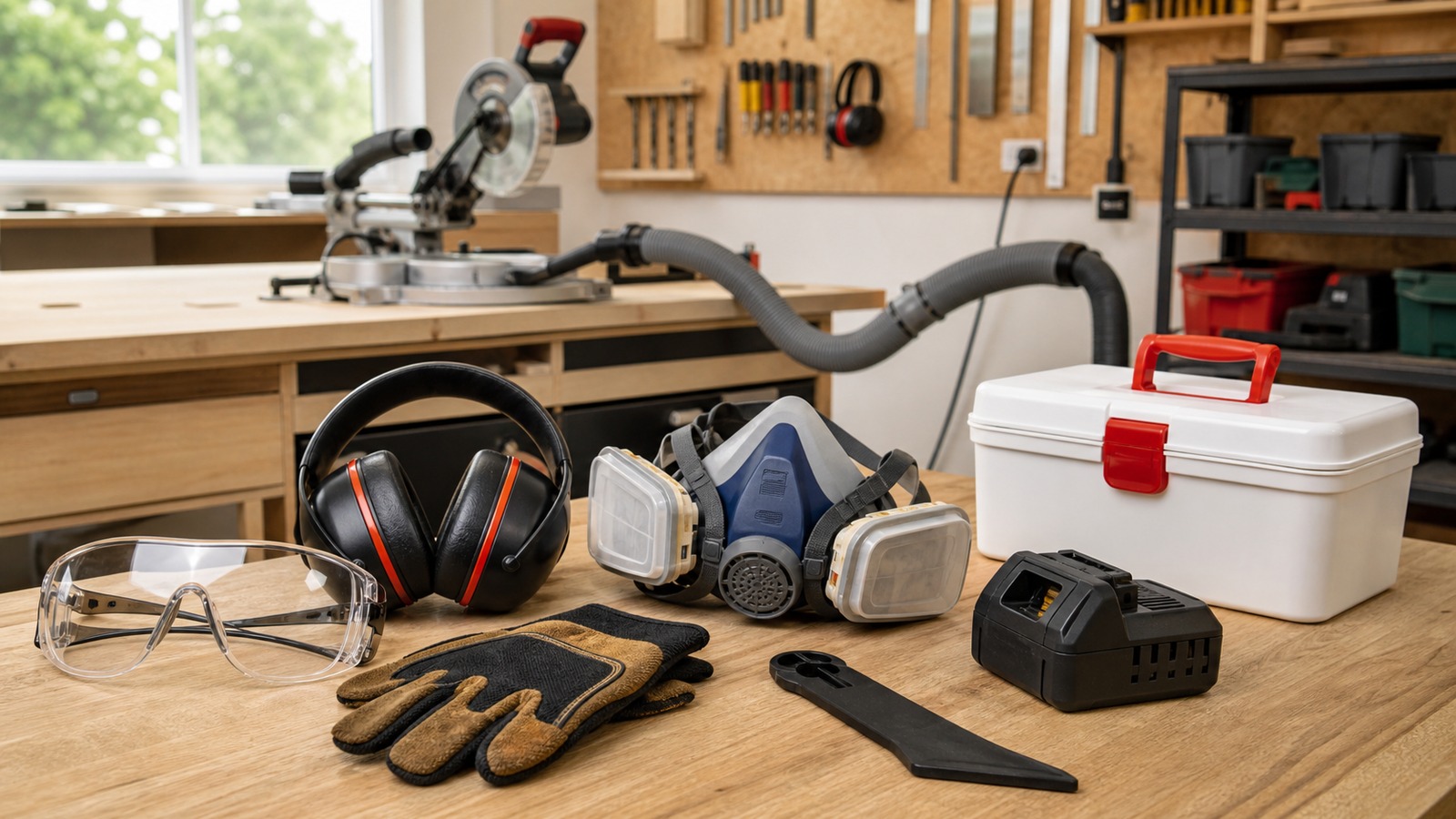
A safe welding setup should move fumes away from your breathing zone rather than across your face. Natural airflow helps, but it is not always enough, especially indoors. Local fume extraction, fans positioned to direct air away from you, and general ventilation all improve safety when used thoughtfully. The goal is not to blow shielding gas away from the weld, but to reduce the concentration of fumes where you are standing and breathing. Beginners should be especially cautious about welding painted, galvanized, oily, or dirty metal, since contaminants can create more hazardous fumes and a poorer weld at the same time. Respiratory protection may also be part of a safer setup, depending on the work. A respirator appropriate for welding-related particulates can help when engineering controls are limited, but it should support good ventilation rather than replace it. Clean metal, good airflow, and smart positioning go a long way. When you start treating air quality as part of weld quality, your whole approach to shop safety becomes stronger.
Building a Fire-Safe Welding Workspace
Welding and fire risk go hand in hand, which means the layout of your workspace matters more than many beginners realize. A single spark can travel farther than expected, bounce into hidden corners, or land on something that smolders before bursting into flame. Safe welding begins with clearing the area around the workbench. Cardboard boxes, oily rags, paper, sawdust, solvents, fuel containers, aerosol cans, and loose trash do not belong near active welding. Even a small shop can be made much safer by removing clutter and creating a defined welding zone.
The work surface itself should be suitable for hot metal and sparks. A steel welding table is ideal, but even if you are working on a limited budget, the immediate area must be resistant to heat and easy to inspect. Welding curtains or screens can help contain sparks and protect others nearby from arc flash. It is also wise to keep a properly rated fire extinguisher close at hand and fully accessible, not buried behind tools or supplies. Knowing where it is located is good. Being able to reach it instantly is better.
A strong fire-safe routine includes checking the shop after welding is complete. Some fires do not start immediately. Hot slag or sparks can smolder unnoticed in corners, under benches, or inside piles of material. A quick scan of the floor, nearby shelves, and surrounding surfaces after every welding session is a simple habit that can prevent serious damage. In a good welding shop, fire prevention is not a separate chore. It is built into setup, workflow, and cleanup.
Electrical Safety and Safe Equipment Setup
Welding machines rely on electrical current, so safe setup matters long before the first arc appears. Cables, grounding, outlets, and machine condition all influence both safety and performance. Beginners should inspect the welder, torch, leads, and ground clamp regularly for worn insulation, loose fittings, damaged connectors, or frayed sections. A machine that appears to work can still be unsafe if its cables are compromised or its connections are unreliable. That same damage can also create a less stable arc and poorer weld quality.
The ground clamp should connect securely to clean metal so the electrical circuit remains stable. Poor grounding can lead to erratic performance, overheating, and frustration that causes beginners to compensate in the wrong ways. Extension cords, if used at all, should be appropriate for the machine and power load. Overloaded circuits, damaged plugs, and improvised power arrangements add unnecessary risk to the shop. Dry conditions also matter. Standing in water, working on damp floors, or handling electrical equipment with wet gloves creates hazards no welder should accept. Safe equipment setup also means managing cables and hoses so they do not create trip hazards or snag points. A well-organized welding station is easier to move around, easier to shut down quickly, and easier to keep clean. Electrical safety is sometimes treated as invisible because there is no obvious flame attached to it, but the discipline it requires is one of the marks of a serious fabricator.
Smart Shop Rules That Make Every Weld Safer
Every good shop runs on habits. Welding safety becomes much easier when the workspace follows a few consistent rules that apply every time work begins. One of the most important is to never weld in a rushed or distracted state. Fatigue, frustration, and multitasking make people careless around hot metal and electrical equipment. The safest welders are rarely the fastest in a chaotic sense. They are the most deliberate. They take a moment to check their setup, clear the area, position the work, and confirm their protective gear before lighting the arc.
Another valuable rule is to keep the shop organized. Tools should have a place, scrap should not pile up around your feet, and recently welded pieces should be set in clearly marked safe areas while they cool. Many burns happen not during the weld itself, but during cleanup or repositioning when someone forgets what is still hot. Communication matters too, especially in shared workspaces. Other people nearby need to know when welding is happening so they can avoid arc exposure and stay clear of sparks.
Good shop rules also include process-specific awareness. Grinding requires face and eye protection. Cutting requires secure workholding. Gas cylinders must be stored and handled correctly. Flammable liquids should be kept far away from welding operations. The strongest shops are not the ones with the most equipment. They are the ones where everyone knows how the space should operate and follows the routine every time.
Common Beginner Safety Mistakes and How to Avoid Them
Most beginner welding mistakes are not dramatic. They are small, ordinary oversights that become dangerous because they happen repeatedly. One common mistake is relying on the helmet alone while skipping safety glasses. This leaves the eyes vulnerable during grinding, brushing, wire wheel work, and general handling. Another common issue is welding in short sleeves or lightweight synthetic clothing because the shop feels warm. One burst of spatter is enough to remind any welder why proper coverage matters.
Beginners also tend to underestimate fumes and overestimate how much ventilation they really have. An open garage door is helpful, but it does not automatically make the air safe, especially if the welder is standing in the path of rising smoke. Poor housekeeping is another major issue. Leaving scrap, cords, grinders, and hot offcuts scattered around the shop makes burns, trips, and fire risk far more likely. Welding on painted or dirty steel without cleaning it first is both a safety problem and a quality problem, since contaminants affect fumes and weld integrity at the same time. Another frequent mistake is touching workpieces too soon. Metal can look harmless long after the weld ends, but the heat remains. Smart welders assume recently welded steel is hot until proven otherwise. As beginners gain experience, avoiding these mistakes becomes easier, but only when they take them seriously from the start.
Creating a Safety-First Mindset for Long-Term Success
The most valuable welding safety tool in any shop is not a helmet, extinguisher, or pair of gloves. It is mindset. A safety-first welder learns to think ahead, anticipate risks, and treat preparation as part of the craft. That mindset leads to better habits, cleaner work, fewer injuries, and stronger confidence over time. It also creates better projects, because safe welders are more focused, more deliberate, and less likely to compromise quality for speed.
Welding is exciting because it feels powerful. It transforms raw material through heat, skill, and control. But real control begins before the arc starts. It begins with proper gear, clean air, fire awareness, sound equipment, and a workshop that is organized for success. Beginners who learn safety early build a stronger foundation than those who treat it as an afterthought. The goal is not fear. The goal is respect for the process and for the environment in which it happens.
As you continue learning fabrication, welding safety will keep paying dividends. It protects your health, your tools, your projects, and your workspace. More than that, it gives you the confidence to practice, experiment, and improve without unnecessary risk. In a field built on sparks, heat, and precision, safe habits are what allow creativity and craftsmanship to thrive.