Metalworking has a way of turning a simple garage or workshop into a place of real possibility. A few steel bars, a sturdy workbench, and the right tools can become shelves, brackets, carts, tables, gates, repairs, and custom parts that are both useful and satisfying to build. For beginners, metalworking often feels exciting and intimidating at the same time. There is heat, noise, sharp edges, sparks, heavy materials, and unfamiliar equipment. Yet once the basics begin to click, metalworking becomes one of the most rewarding hands-on skills a DIY maker can learn. One reason metalworking is so appealing is that it blends creativity with practicality. A woodworker shapes boards. A mechanic repairs machines. A metalworker often does both kinds of thinking at once. The process involves measuring, cutting, drilling, grinding, welding, shaping, and finishing material into something durable and real. Unlike some hobbies that stay decorative, metalworking often produces objects that serve a purpose for years. This beginner’s guide explores the essential tools, core techniques, safety habits, and first projects that help new fabricators get started with confidence. Whether you want to build small shop accessories, repair household equipment, or eventually create more advanced fabrication projects, understanding the fundamentals is the smartest first step.
A: Mild steel is usually the easiest and most affordable place to start.
A: An angle grinder is one of the most versatile starter tools.
A: No, you can learn cutting, drilling, layout, and finishing first.
A: MIG welding is usually the easiest process to learn first.
A: They keep materials stable, aligned, and safer to work on.
A: Clamp the work securely, mark clearly, and let the tool cut at a steady pace.
A: Deburring removes sharp edges and improves safety and fit.
A: A bracket, tool hanger, or small shop stand is a great starting build.
A: Yes, as long as you have ventilation, lighting, and safe workspace habits.
A: Rushing through measuring, prep, and setup before making the first cut.
Why Metalworking Is a Great Skill to Learn
Metalworking is one of the most versatile DIY skills because metal is everywhere. It appears in home repairs, outdoor structures, furniture, tools, trailers, storage systems, machines, vehicles, and decorative accents. Learning to work with metal opens up a huge range of possibilities that go far beyond buying ready-made products. It gives you the ability to create custom solutions that fit your exact needs.
Another reason metalworking stands out is durability. Metal projects often last longer and carry more weight than projects built from weaker materials. A well-made steel bracket, cart, shelf frame, or garden structure can handle serious use and still look great years later. For a maker who enjoys building things that feel permanent and dependable, metal is a deeply satisfying material.
Metalworking also teaches valuable habits that carry into many other skills. Measurement accuracy, patience, tool control, planning, and safe workshop practice all become part of the learning process. That makes it more than a hobby. It becomes a foundation for better craftsmanship in general.
Setting Up a Beginner-Friendly Metalworking Space
You do not need a huge industrial shop to begin metalworking. Many successful DIY fabricators start in a garage, shed, or corner workshop with a simple but thoughtful setup. The most important qualities in a beginner metalworking space are stability, ventilation, lighting, and organization. A clean, well-lit workspace makes every task easier and safer, especially when learning new tools.
A strong workbench is often the center of the shop. Metalworking puts far more strain on a surface than many people expect. Hammering, grinding, clamping, and cutting all demand a bench that will not wobble or shift. Many beginners start with a reinforced wooden bench, though a steel-topped surface becomes especially useful over time. Ventilation matters because grinding dust, welding fumes, and airborne metal particles can build up quickly in a closed space. Good airflow and a safe spark-aware layout are essential. It is also wise to keep the area clear of flammable materials. Metalworking may look rugged, but a safe and organized environment is one of the biggest signs of a skilled fabricator.
The Essential Tools Every Beginner Should Start With
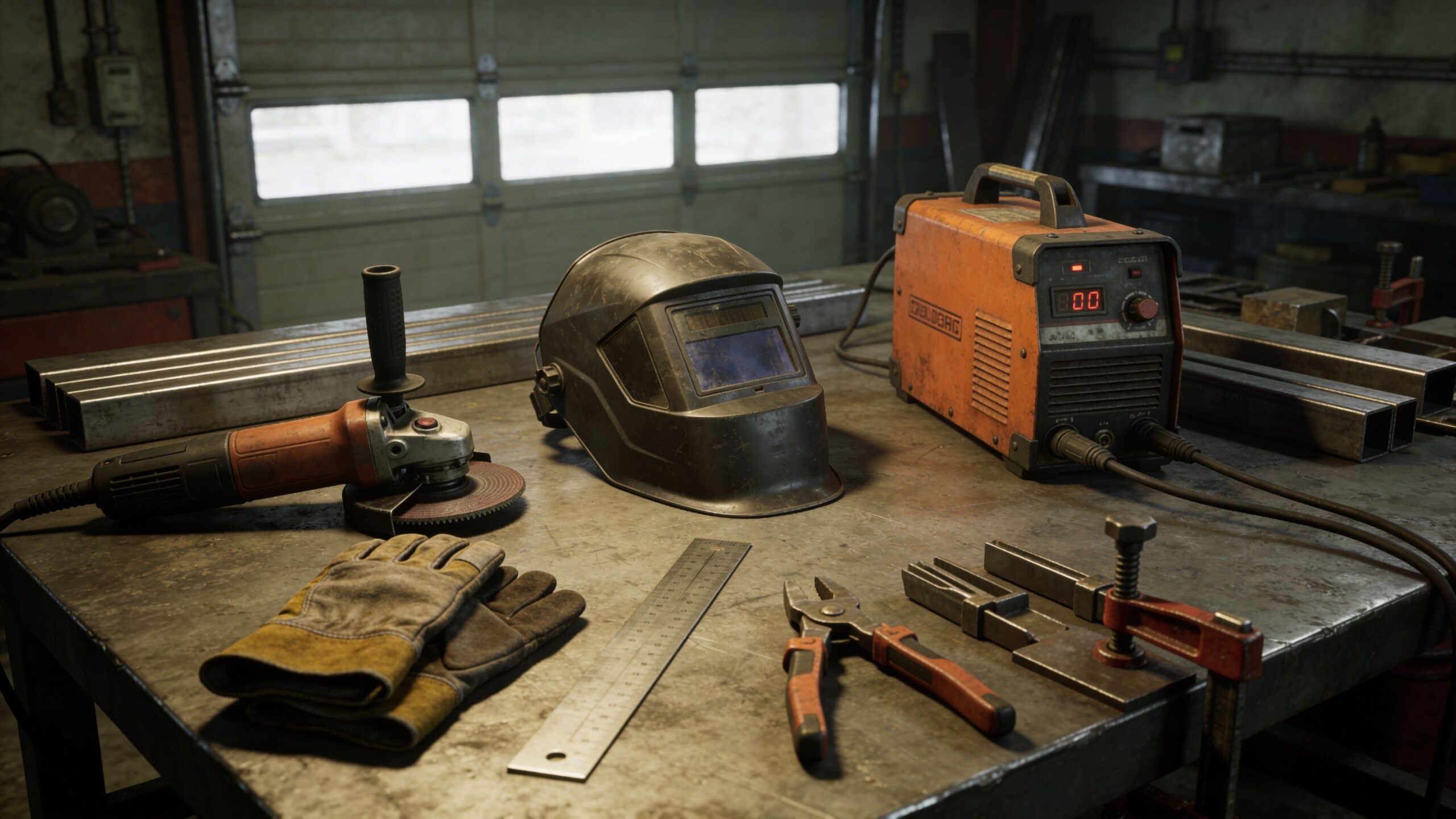
A beginner metalworking shop does not need every machine at once. In fact, starting with a focused group of essential tools is usually the smartest approach. One of the most useful tools in any beginner shop is the angle grinder. It is incredibly versatile and can cut metal, smooth welds, remove rust, shape edges, and prepare surfaces depending on the disc attached.
A bench vise is another must-have. It acts like an extra set of hands, holding steel securely while you cut, file, drill, or grind. Without a vise, even simple tasks become awkward and less accurate. Many beginners discover quickly that the vise becomes one of the most-used tools in the shop.
A drill or drill press is also important for creating clean, accurate holes in metal. A handheld drill works well for flexibility, while a drill press adds precision and repeatability. Clamps, measuring tools, metal files, safety gear, and a sturdy square round out the beginner’s core setup. If welding is part of your plan, a beginner-friendly MIG welder often becomes the next major step.
Understanding the Basic Materials
Before cutting or welding anything, beginners should understand the materials they are using. Mild steel is often the best starting point because it is affordable, strong, widely available, and relatively forgiving. It cuts, drills, and welds well, which makes it ideal for first projects and skill development. Metal stock comes in many forms, including flat bar, angle iron, square tubing, round tubing, sheet metal, and rod. Each shape has different uses. Flat bar works well for simple brackets and supports. Square tubing is popular for frames and carts. Angle iron adds strength to shelves, stands, and corners. Sheet metal can be bent and shaped into covers, trays, and panels.
Aluminum and stainless steel are also common, but they often require more specialized techniques and tools. Beginners usually make faster progress by learning on mild steel first. Once the fundamentals are solid, other metals become much easier to approach with confidence.
Measuring and Layout: The Start of Good Fabrication
Good metalworking begins long before the first spark. Accurate measurement and careful layout are what separate a clean project from a frustrating one. Even small errors can throw off alignment, weaken a structure, or make finished pieces fit poorly. That is why measuring tools are some of the most important items in the shop.
A tape measure, combination square, speed square, and metal ruler are excellent starting tools. Many fabricators also use calipers when more precision is needed. Marking tools matter as well. Soapstone, paint markers, scribes, and layout dye help create visible cut lines and drilling points on metal surfaces.
Beginners often want to rush into cutting, but careful layout saves time in the long run. Taking a few extra minutes to mark clearly, double-check dimensions, and confirm angles leads to straighter cuts, better fitting joints, and less wasted material. In metalworking, accuracy is often the first real skill to develop.
Cutting Metal the Right Way
Cutting is one of the first hands-on techniques beginners learn, and it quickly shows how different metalworking is from other shop skills. Metal resists the blade, throws sparks, and builds heat, so the right method matters. An angle grinder with a cutting disc is one of the most accessible ways to start. It handles flat bar, tubing, bolts, and many small fabrication tasks with impressive speed.
As skills grow, many fabricators add a chop saw, band saw, or other dedicated cutting tool. These machines can improve cut quality and make repetitive work much easier. Still, even with simple tools, clean cuts are possible when the material is clamped well and the operator lets the tool do the work instead of forcing it. Beginners should focus on straight lines, steady motion, and safe positioning. Good cutting is not just about removing material. It is about leaving behind a clean edge that is easier to fit, weld, or finish later. The better the cut, the easier the rest of the project becomes.
Drilling, Grinding, and Finishing Basics
Once metal is cut, it often needs holes, cleanup, and surface shaping. Drilling metal requires sharp bits, proper speed, and steady pressure. Unlike wood, metal rewards patience. Going too fast can overheat the bit and ruin the cut. Using cutting fluid often improves the result and helps the bit last longer.
Grinding is another core skill in beginner metalworking. A grinder can smooth rough edges, clean up welds, remove rust, and prepare surfaces for paint or welding. Different discs produce different results. Grinding discs remove material aggressively, while flap discs smooth and refine the surface with more control.
Finishing includes filing sharp edges, deburring drilled holes, brushing away rust, and getting surfaces ready for paint or coating. These small details matter. A project with rough edges and sloppy cleanup never feels truly complete, even if the structure is strong. Good finishing habits are part of what makes a beginner start feeling like a real fabricator.
Welding Basics for New Metalworkers
Welding is often the skill that draws people into metalworking in the first place. It is also the moment when many beginners feel both excited and nervous. Welding joins separate pieces of metal into one structure, which makes it a game-changing skill for furniture, repairs, shop tools, frames, and creative projects.
For most beginners, MIG welding is the easiest place to start. It is approachable, fast, and practical for mild steel projects. The machine feeds wire automatically, which allows new welders to focus on movement, puddle control, and joint positioning without as much coordination as TIG welding requires. That makes MIG especially useful in a home workshop setting. Welding success depends on more than the machine. Clean surfaces, tight fit-up, good clamping, and correct settings all matter. Beginners should practice simple joints on scrap metal before moving into projects. Welding improves through repetition, observation, and patience. The first welds may not look perfect, but they still build the foundation for much stronger skills ahead.
Safety Habits That Matter from Day One
Metalworking rewards skill, but it also demands respect. Sharp edges, hot metal, rotating tools, sparks, noise, and dust are part of the process. Good safety habits should not feel like an afterthought. They are part of the craft itself. A careful metalworker is usually a better metalworker.
Eye protection is essential for nearly every task. Grinding and cutting can throw off hot fragments, while drilling and brushing can send small chips in unpredictable directions. Gloves help protect against sharp edges and heat, though the right glove depends on the tool being used. Hearing protection becomes important around grinders, saws, and repeated hammering.
Welding adds more safety concerns, including intense light, fumes, and hot slag. A quality welding helmet, long sleeves, and proper ventilation matter immediately. Beginners should also get into the habit of checking whether metal is still hot before touching it. One of the simplest truths in fabrication is that fresh-cut or freshly welded metal often stays dangerous longer than expected.
Best First Projects for New Metalworkers
The best beginner metalworking projects are simple enough to complete but useful enough to feel rewarding. A basic shop bracket is a great first project because it teaches measuring, cutting, drilling, and cleanup without becoming too complicated. Wall hooks, tool hangers, and small shelf brackets all fit into this category. A welding table accessory, simple stand, or small utility cart also makes a strong beginner project once basic cutting and joining skills improve. These kinds of builds teach layout, squaring parts, clamping, and structural thinking. Because the projects are practical, they also improve the workshop itself, which adds motivation.
Metal plant stands, firewood racks, and simple outdoor frames are good next-level builds for a beginner ready to combine cleaner cuts with stronger welds. The goal with first projects is not complexity. It is repetition, accuracy, and confidence. Every finished project teaches lessons that make the next one easier and better.
Common Beginner Mistakes and How to Avoid Them
Almost every new metalworker makes similar early mistakes. One of the most common is rushing through measurement and layout. Cutting before double-checking dimensions can turn good material into scrap very quickly. Slowing down in the planning stage usually saves frustration later.
Another frequent mistake is poor surface preparation. Beginners often try to weld or paint over rusty, oily, or dirty metal and then wonder why the results look weak or messy. Cleaning the material first almost always improves the final outcome. Good preparation may not feel exciting, but it is one of the biggest secrets behind professional-looking work.
New fabricators also tend to underestimate clamping and support. Metal moves, shifts, and vibrates during cutting and welding. Properly securing the workpiece improves both safety and accuracy. In many cases, the difference between a crooked result and a clean one comes down to how well the parts were held in place before the tool ever started.
Growing Your Skills After the Basics
Once a beginner becomes comfortable with simple cuts, clean drilling, safe grinding, and basic welding, metalworking starts to open up in exciting ways. More advanced projects begin to feel realistic. Custom tables, heavier shop fixtures, gates, garden structures, and repair work all become possible when the fundamentals are steady.
As skills grow, so does the tool collection. A better welder, a metal band saw, improved clamps, a drill press, or a dedicated welding table can all increase capability. But real progress does not come only from buying tools. It comes from using the tools well, learning from mistakes, and repeating core techniques until they become second nature. The most successful beginners are usually the ones who stay curious. They pay attention to cut quality, fit-up, finish, and safety. They build simple projects well instead of chasing difficult ones too soon. Metalworking rewards steady improvement, and each project adds another layer of skill.
Final Thoughts
Metalworking can seem intense at first, but it becomes much more approachable once the basics are broken into manageable parts. A sturdy workbench, a few reliable tools, careful measurement, and safe habits create the foundation. From there, simple cutting, drilling, grinding, and welding techniques begin turning raw metal into useful and satisfying projects.
What makes metalworking special is the combination of toughness and creativity. It is practical enough to repair real-world problems and flexible enough to support personal design ideas. A beginner may start by making a bracket or shop stand, but the same skills can eventually lead to custom furniture, fabrication work, and serious workshop capability.
The journey starts with simple steps. Learn the tools, respect the process, and focus on small projects that build confidence. Before long, the sparks and steel that once felt intimidating begin to feel familiar, and the workshop becomes a place where ideas take shape in metal.