Busy Makers Need Projects That Can Survive Real Life
Time management for makers is not about squeezing a full workshop fantasy into every spare hour. It is about designing projects, spaces, and habits that can survive work, family, errands, fatigue, interruptions, and short sessions. A busy maker needs visible next steps, staged materials, realistic scope, fast cleanup, and enough flexibility that a project can pause without losing all momentum.
A: Choose a staged task such as layout, sanding, sorting hardware, dry fitting, or documenting the next step.
A: Avoid tasks with irreversible timing, fumes, glue cure pressure, or complex setup unless everything is already prepared.
A: Most busy makers do better with one main build and one low-pressure side task.
A: Use photos, notes, grouped parts, and a clear next action to rebuild context quickly.
A: Good planning protects spontaneity by making the bench ready when energy appears.
A: Choose projects with independent milestones so a small finished phase still feels useful.
A: Use portable storage, quiet task choices, safe no-touch zones, and honest cleanup routines.
A: Yes, cleanup is part of the build block because tomorrow's momentum depends on it.
A: Keep the next task visible and make progress measurable in decisions, tests, and subassemblies.
A: Pause when fatigue, missing supplies, or unclear decisions would turn shop time into damage control.
Plan Around Energy, Not Only Hours
A free hour after a long day is not the same as a free hour on a Saturday morning. Some maker tasks need judgment, patience, and good light. Others can happen during lower-energy windows. Time management improves when you match the task to the kind of attention you actually have.
Use high-energy blocks for layout, cutting, joinery, wiring decisions, finishing, or first tests. Use tired evenings for sorting parts, sanding simple edges, cleaning tools, updating a journal, or preparing the next session.
Break Builds Into Restartable Pieces
Busy life creates gaps, so projects should be divided into pieces that restart easily. A project phase might be design, material prep, rough cuts, test fit, joinery, sanding, finish samples, final finish, assembly, and review. Each phase needs a stopping point that preserves context.
This reduces the mental weight of returning. You do not need to remember everything; the project tells you where it left off.
Stage The Next Session Before Ending
The end of one session should prepare the beginning of the next. Put the relevant parts together, charge batteries, sharpen the edge that slowed you down, write the next action, and remove tools that are no longer needed. A five-minute reset can save half an hour later.
This habit is especially useful when sessions are unpredictable. If time appears unexpectedly, the project is ready to receive it.
Choose Scope That Fits The Season
Some months can handle ambitious builds. Others call for small repairs, shop organizers, simple gifts, or prototypes. There is no shame in choosing a project that fits a busy season. Finishing a small useful object often teaches more than dragging a large stalled project through months of guilt.
Scope should reflect time, space, money, and attention. The right project is the one you can keep moving without resenting it.
Protect Shared Time And Space
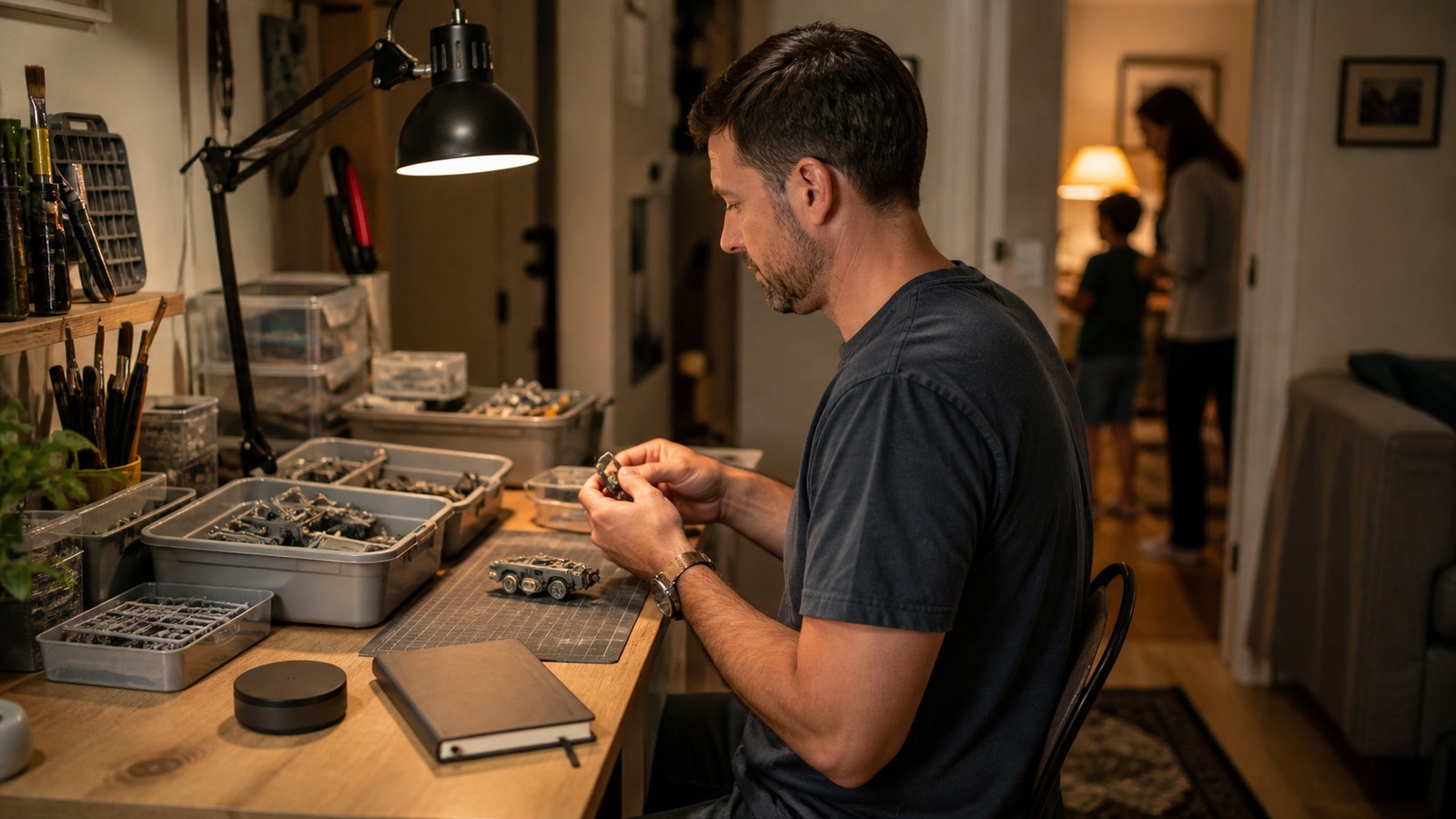
Many makers work in homes, garages, apartments, classrooms, or shared shops. Time management must include the people and spaces around the project. Noise, dust, fumes, drying parts, sharp tools, and clutter all affect others. A sustainable hobby respects those constraints.
Planning quiet tasks, portable storage, safe cleanup, and no-touch zones keeps making from becoming household friction.
Track Progress In More Than Finished Objects
A project can progress when a decision is made, a test fails usefully, a jig is built, a measurement is confirmed, or a finish sample proves itself. Busy makers need to count those steps. Otherwise, every session feels incomplete until the final object is done.
Momentum grows when progress is visible. Notes, photos, checklists, and staged parts all help show that the build is moving.
Use Deadlines Carefully
Deadlines can motivate, but they can also push unsafe or sloppy decisions. If a birthday, market, contest, or weather window matters, simplify the project early. Remove features before the final week, not during a midnight panic.
A good deadline narrows decisions and protects quality. A bad deadline makes the project louder than your judgment.
Make Cleanup A Momentum Tool
Cleanup is often treated as the tax after making, but it is also the first step of the next session. Returning to a safe, clear, staged workspace lowers resistance. Returning to dust, scattered screws, and mystery parts raises it.
End with the next session in mind. That small courtesy to future you is one of the strongest time management habits a maker can build.
Build A Project Parking System
Busy makers need a way to park projects without losing them. A parking system can be as simple as one bin per project, a tray for active parts, a photo of the current setup, and a note with the next action. The goal is to make interruption survivable. If dinner, work, school pickup, or fatigue stops the session, the project should be able to wait without scattering across the house.
This is especially useful for builds with many similar parts. Label orientation marks, keep hardware with the assembly, and store test pieces where they remain understandable. A parked project should invite return rather than demand detective work.
Use Time Blocks By Risk Level
Not every task belongs in every time block. Low-risk tasks such as sorting hardware, cutting templates, sanding simple parts, updating notes, and cleaning tools can fit into short windows. Medium-risk tasks such as rough cuts, dry fits, and simple drilling need more setup and focus. High-risk tasks such as glue-ups, finishing, wiring, first machine setups, and irreversible cuts deserve protected time.
Sorting tasks this way prevents a common busy-maker mistake: starting a fragile process because time is technically available. A rushed glue-up or half-watched finish can create more delay than waiting for a better window. Match the task to the attention and recovery time available.
Plan Supplies Before Motivation Arrives
Motivation is often wasted by missing supplies. A maker finally has two free hours and discovers the screws are wrong, the glue is hard, the battery is empty, or the finish brush is ruined. Supply planning may feel boring, but it protects the rare moments when energy and time line up.
Keep a small running list for each project. Note what must be bought, borrowed, charged, sharpened, or prepared before the next work session. Errands can then be grouped into life instead of interrupting the bench at the worst time.
Leave Visible Progress Cues
Visible progress helps a project survive long gaps. Parts stacked in order, a checked-off milestone list, a finished subassembly, or a photo of the last setup can remind you that the build is moving. Without those cues, a paused project can feel like it has gone cold even when only one small task remains.
Progress cues also reduce guilt. A busy life may not allow long uninterrupted making, but it can allow steady movement. Seeing that movement keeps the hobby from becoming another source of pressure.
Protect Rest As Part Of The Schedule
Makers often steal time from sleep and then wonder why the work becomes sloppy. Fatigue affects measuring, tool control, patience, safety judgment, and the willingness to clean up. Rest is not the enemy of progress; it is what keeps progress from turning into rework.
If the only available time is late, choose tasks that are forgiving. Save irreversible cuts, finish decisions, wiring, and complex assembly for a clearer mind. The project will usually forgive patience faster than it forgives tired confidence.
Make Finished Phases Count
Large projects feel less overwhelming when each phase produces something complete enough to respect. A finished template, tuned jig, cut part set, sanded subassembly, or tested finish sample is real progress. These small finishes create momentum before the final object exists.
This matters psychologically. Busy makers may go weeks without a dramatic reveal. Counting finished phases keeps motivation tied to craft rather than only to the final photo.
Keep Decisions Out Of Tiny Work Windows
Short sessions are useful, but they are not ideal for every kind of thinking. Design decisions, material substitutions, finish choices, and joinery changes often need more calm than a ten-minute window provides. If a short session begins with a hard decision, use the time to gather information instead of forcing a choice. Measure the opening, photograph the problem, pull the hardware, or write the question clearly.
This protects the project from rushed decisions that create hidden work later. Busy makers make better progress when small windows are used for prepared actions and larger windows are saved for decisions that deserve attention.
Use Repetition To Lower Setup Cost
Repeated project types reduce setup cost. If you build several simple shelves, organizers, planters, or repair parts over a season, the measuring habits, tool locations, hardware choices, and finish routines become familiar. The next build starts faster because fewer decisions are new. This is why small project families are often better for busy makers than unrelated one-off ambitions.
Repetition also reveals improvement. The second crate is squarer, the third finish sample is cleaner, and the fourth jig is faster to set up. A busy schedule can still produce real skill when projects build on each other.
Plan Cleanup Before Messy Work Starts
Dust, glue, finish, resin, paint, and scattered hardware all create cleanup needs that can exceed the build step itself. Before starting a messy operation, decide how it will end. Where will wet parts cure? Where will dust go? What rags, gloves, bags, or solvents are needed? How will the household or shared shop be protected?
This planning prevents the classic late-session trap where the maker finishes the fun part and discovers the cleanup is too large for the time left. Cleanup belongs inside the schedule, not after it.
Use Waiting Time Productively
Many builds include waiting: glue curing, finish drying, prints running, batteries charging, material acclimating, or parts arriving. Busy makers can use that waiting time for related low-risk tasks. Prepare hardware, sand another part, update notes, cut test pieces, clean tools, or review the next phase.
This keeps momentum without disturbing the process that needs time. Waiting is not wasted when it is planned into the workflow.
Use A Weekly Maker Review
A short weekly review can keep projects from drifting. Look at the active build, the next decision, missing supplies, available time, and any task that has become unclear. Then choose one realistic objective for the week. It might be cutting all parts, testing one finish, assembling one side, or simply clearing the bench for a Saturday session.
This review should be brief enough to repeat. The value is not in perfect planning; it is in keeping the project visible inside a busy life. Five minutes of review can prevent a project from disappearing for a month.
Design Projects With Pauses Built In
Some projects tolerate pauses better than others. A modular shelf, planter box, tool rack, or printed fixture can often stop after each phase. A complex glue-up, open finish container, or half-wired assembly may punish interruption. Choose designs and construction sequences with natural pauses when life is crowded.
Built-in pauses reduce stress. The project no longer demands a perfect uninterrupted day to move forward. It can advance in sections, and each section can end cleanly.
Keep Motivation Attached To Use
Busy makers stay motivated when the project’s purpose remains visible. A shelf will clear the entryway, a bench will improve the patio, a jig will make future work easier, and a repair will return something to service. When time is limited, usefulness can pull a project forward better than novelty alone.
If motivation fades, return to the use case. Ask who benefits when the project is done and what smaller version would still help. That question often reveals a simpler path back to progress.
Start Again Kindly
When a project has been paused for a long time, restart with kindness rather than punishment. Clear the bench, find the parts, read the last note, and choose one small action. Momentum returns through action, not guilt. A busy life may slow making, but it does not erase the value of returning carefully.