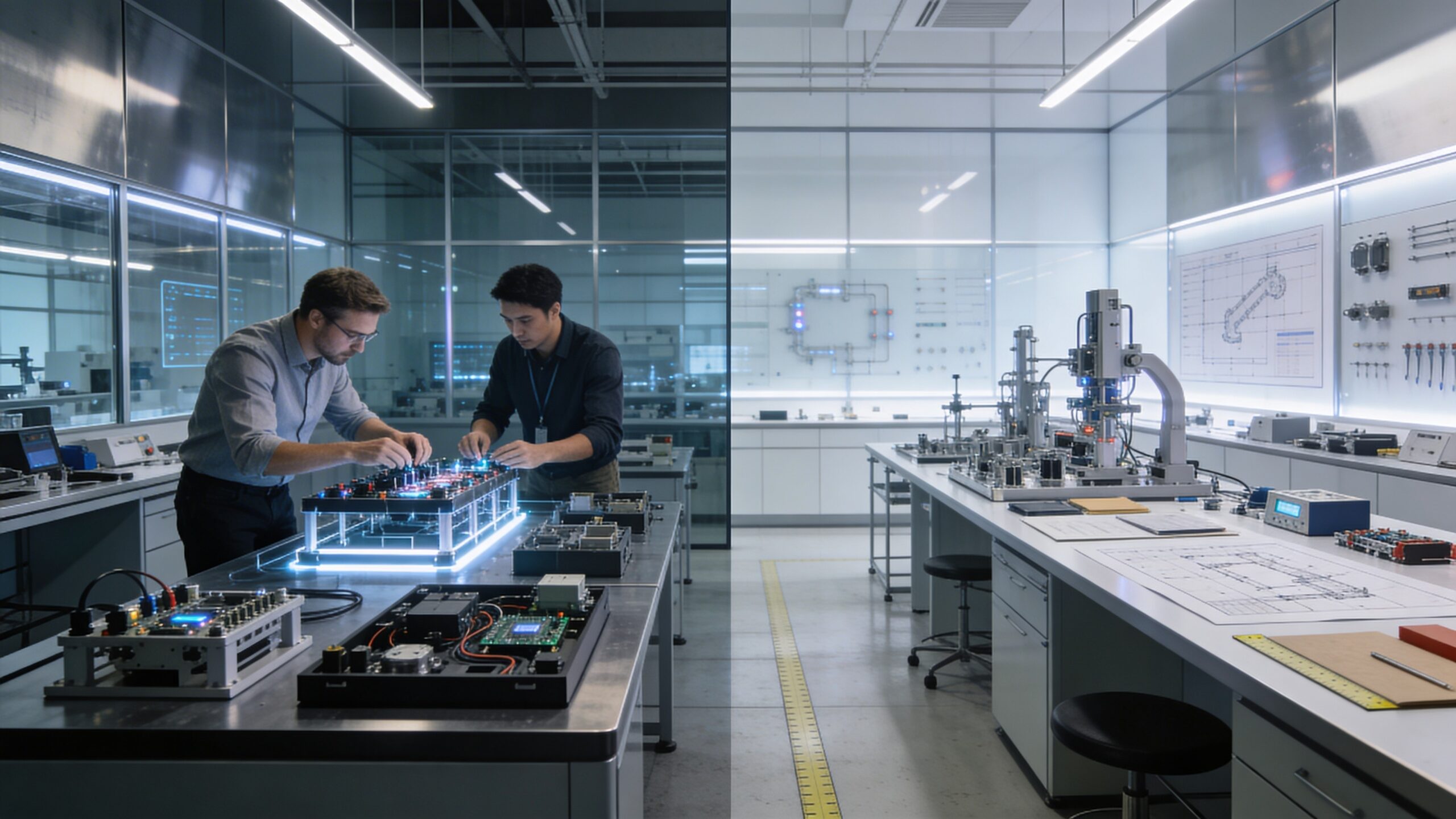
Innovation today moves at a pace that would have seemed impossible just a decade ago. New technologies emerge constantly, customer expectations evolve overnight, and entire industries can transform within months. In this fast-moving environment, the organizations and creators who succeed are rarely the ones who attempt to build perfect products from the start. Instead, they embrace a powerful approach known as rapid iteration. Rapid iteration is more than a workflow technique. It is a philosophy of innovation that values speed, experimentation, learning, and continuous improvement. From startups developing new apps to aerospace companies designing advanced hardware, rapid iteration has become one of the most important methods for modern product development. Understanding how rapid iteration works—and how to apply it effectively—can dramatically improve how teams design products, solve problems, and respond to changing markets. This guide explores the concept, the principles behind it, and why it has become essential for innovators across industries.
A: It is a process of creating, testing, evaluating, and improving ideas in fast repeated cycles.
A: It helps teams learn faster, reduce risk, improve products sooner, and adapt to changing user needs.
A: No. It also applies to hardware, product design, manufacturing, education, and creative development.
A: Iteration values learning through progress, while perfectionism often delays feedback by waiting too long.
A: An MVP is a minimum viable product built with just enough features to test core value quickly.
A: No. It means moving deliberately in short cycles with clear goals, feedback, and adjustments.
A: A strong cycle has a clear hypothesis, a testable version, useful feedback, and a specific next step.
A: Fast enough to keep learning, but not so fast that feedback becomes shallow or quality collapses.
A: It shortens the path between idea and insight, helping teams build better solutions with less waste.
A: Yes. It encourages experimentation, adaptability, collaboration, and a healthier relationship with failure.
Understanding Rapid Iteration
At its core, rapid iteration is a development process that focuses on creating quick versions of a product or solution, testing them, learning from feedback, and improving the design through repeated cycles. Instead of spending months or years attempting to perfect a single version before launch, rapid iteration encourages teams to build early prototypes, evaluate them quickly, and refine the concept repeatedly. Each cycle produces a slightly better version of the idea, informed by real-world insights and user feedback. This process dramatically reduces risk. By identifying problems early and often, teams can correct course long before costly mistakes become embedded in the final product.
Rapid iteration is commonly associated with modern product development frameworks such as agile software development, lean startup methodology, and design thinking. However, the core concept extends far beyond software. It applies to physical products, engineering systems, digital platforms, manufacturing processes, and even organizational strategy. The fundamental idea is simple: build, test, learn, improve—then repeat quickly.
Why Rapid Iteration Matters in Modern Innovation
Innovation used to follow a slower, more linear model. Teams would research, design, engineer, and finally launch a product after long development cycles. While this approach worked in stable markets, it struggles in today’s fast-changing technological landscape. Rapid iteration provides several advantages that make it uniquely suited to modern innovation environments.
First, it dramatically accelerates learning. When teams create prototypes quickly and test them often, they gather real-world data faster than competitors who rely solely on theoretical planning. Second, it reduces development risk. Discovering flaws early in the design process prevents expensive redesigns later.
Third, it improves alignment with users. Iterative feedback loops ensure that products evolve based on actual customer needs rather than assumptions. Finally, rapid iteration encourages creativity. When teams know that early prototypes do not have to be perfect, they are more willing to experiment with bold ideas. For modern innovators, these advantages translate into faster product launches, stronger user experiences, and greater resilience in rapidly changing markets.
The Core Principles Behind Rapid Iteration
Rapid iteration works because it is built on several key principles that guide how teams approach problem-solving and product development. One essential principle is speed over perfection. The goal is not to build the final product immediately but to create working versions that can reveal useful insights. Even imperfect prototypes can teach valuable lessons. Another principle is continuous feedback. Iteration depends on evaluating results constantly. Feedback may come from user testing, performance metrics, engineering analysis, or market response. A third principle is incremental improvement. Instead of dramatic, risky redesigns, rapid iteration focuses on small improvements that compound over time.
Finally, the process relies on adaptability. Each iteration should respond to what the previous cycle revealed. If testing exposes a problem, the next version should directly address it. Together, these principles create a development culture focused on learning rather than guessing.
The Rapid Iteration Cycle
The rapid iteration process typically follows a repeating cycle. Although the details vary across industries, the structure usually includes several consistent stages. The first stage involves identifying a concept or problem to explore. Teams begin with an idea, hypothesis, or design assumption they want to test.
Next comes prototype development. Engineers, designers, or developers create a simplified version of the solution. This version may be a digital mockup, physical model, software prototype, or experimental process. After development, the prototype enters testing. Users interact with the design, engineers measure performance, or researchers analyze outcomes.
The next stage is evaluation. Teams analyze what worked, what failed, and what new insights emerged. Finally, improvements are implemented. The design is updated based on lessons learned, and the cycle begins again. This cycle can repeat dozens or even hundreds of times during product development. Each iteration moves the design closer to an optimal solution.
Rapid Iteration in Technology and Product Development
The technology industry has embraced rapid iteration more aggressively than perhaps any other sector. Software development, in particular, thrives on rapid feedback loops. Agile development frameworks divide large projects into smaller work cycles known as sprints. At the end of each sprint, teams deliver updated versions of the software that incorporate new features or improvements. Because digital products can be updated quickly, developers often release early versions to real users. These versions provide valuable data that guides the next round of improvements.
Many of today’s most successful technology companies rely heavily on rapid iteration. Instead of launching products only when they feel complete, teams release versions that evolve continuously. This constant improvement model allows software to adapt quickly to user needs, security threats, and changing market demands.
Rapid Iteration Beyond Software
Although software development popularized rapid iteration, the approach has expanded into many other industries. Hardware engineering increasingly uses rapid prototyping technologies such as 3D printing and computer-aided design simulations. Engineers can create physical prototypes quickly, test them, and revise designs within days rather than months.
Manufacturing companies apply iterative techniques to production processes, refining efficiency through continuous experimentation. Consumer product designers use rapid iteration to refine ergonomics, aesthetics, and usability through repeated prototype testing.
Even fields like healthcare, architecture, and aerospace engineering now incorporate iterative design approaches to improve safety, efficiency, and performance. Across industries, the same principle applies: frequent experimentation produces better solutions than slow, rigid planning.
The Role of Prototyping in Rapid Iteration
Prototyping is the engine that drives rapid iteration. A prototype allows teams to transform abstract ideas into tangible forms that can be tested and evaluated. In early stages, prototypes may be extremely simple. Designers might sketch interfaces, create wireframes, or build basic physical models from inexpensive materials.
As development progresses, prototypes become more sophisticated. Functional prototypes simulate real product behavior, allowing deeper testing and refinement. The goal is not to build a perfect prototype but to create something that can answer important questions. Each prototype should reveal insights that guide the next iteration. This approach transforms the design process from theoretical planning into a practical learning system.
Rapid Iteration and the Lean Startup Philosophy
Rapid iteration plays a central role in the lean startup methodology, which encourages entrepreneurs to build businesses through continuous experimentation. Rather than developing a fully polished product before launch, lean startups create a minimum viable product, or MVP. This early version includes only the core functionality needed to test whether customers find the concept valuable.
The MVP is released to users, who provide feedback through usage patterns, reviews, and behavioral data. That information guides future development cycles. Through repeated iterations, startups refine their product until it meets market demand. This approach allows entrepreneurs to test business ideas quickly while minimizing financial risk. Many successful startups credit rapid iteration for helping them discover what customers truly wanted.
Rapid Iteration in Design Thinking
Design thinking frameworks also rely heavily on iterative processes. Designers begin by understanding user needs, defining the problem, and brainstorming possible solutions. Prototypes are then created and tested with users. Feedback reveals insights about usability, functionality, and emotional response.
Each round of testing leads to new design improvements. Over time, the product evolves into a solution that aligns closely with user expectations. This iterative design approach ensures that innovation remains human-centered rather than technology-driven.
The Benefits of Rapid Iteration
Organizations that adopt rapid iteration often experience dramatic improvements in innovation performance. One major benefit is faster development cycles. Instead of waiting months for results, teams gather insights within days or weeks.
Another advantage is improved product quality. Frequent testing exposes flaws early, allowing teams to refine designs continuously. Rapid iteration also promotes better user alignment. Because products evolve based on real feedback, they tend to match customer needs more closely.
In addition, the process encourages collaboration across disciplines. Engineers, designers, marketers, and product managers often work together within iteration cycles. Finally, rapid iteration fosters a culture of experimentation. Teams become comfortable exploring unconventional ideas because failures are treated as learning opportunities rather than setbacks.
Challenges of Rapid Iteration
Despite its many advantages, rapid iteration also presents challenges. One common issue is managing iteration speed without sacrificing quality. Moving too quickly can lead to rushed decisions or overlooked problems. Another challenge involves coordinating teams effectively. Frequent iterations require clear communication and strong project management to ensure that improvements remain aligned with long-term goals. Resource allocation can also become complex. Teams must balance experimentation with maintaining stable product versions.
Additionally, rapid iteration requires cultural change within organizations accustomed to traditional development models. Leaders must encourage experimentation and tolerate early failures. When implemented thoughtfully, however, the benefits of rapid iteration far outweigh these challenges.
Building a Rapid Iteration Culture
Successful rapid iteration depends not only on processes but also on organizational mindset. Teams must view experimentation as a valuable part of innovation rather than a sign of uncertainty. Early prototypes should be celebrated for the insights they generate, even when they fail.
Leadership plays a crucial role in establishing this culture. When executives encourage experimentation and reward learning, teams feel empowered to iterate rapidly. Clear goals also help guide iteration cycles. Each prototype should test a specific assumption or design question.
Finally, organizations must invest in tools and infrastructure that support rapid experimentation. Prototyping software, collaborative design platforms, simulation tools, and advanced manufacturing technologies all make iteration faster and more effective.
The Future of Rapid Iteration
Rapid iteration continues to evolve as new technologies reshape how products are developed. Artificial intelligence tools now assist with design optimization, generating and testing variations of designs automatically. Simulation technologies allow engineers to evaluate thousands of design possibilities without building physical prototypes.
Digital twins enable real-time experimentation on virtual replicas of products or systems. Meanwhile, additive manufacturing allows engineers to produce complex prototypes in hours rather than weeks. These advances suggest that iteration cycles will become even faster in the coming years, enabling innovators to explore ideas at unprecedented speed. As industries become more competitive and technologically complex, rapid iteration will likely remain one of the most powerful tools for transforming ideas into successful products.
Final Thoughts
Rapid iteration represents a fundamental shift in how innovation happens. Instead of relying on long planning cycles and perfect designs, modern innovators build solutions through continuous experimentation and learning. By developing prototypes quickly, testing them frequently, and refining designs repeatedly, teams can discover better solutions faster than ever before. In a world where technology, markets, and user expectations evolve constantly, the ability to iterate rapidly has become a defining advantage. For innovators seeking to stay ahead of change, rapid iteration is not just a method—it is a mindset that turns uncertainty into opportunity.