The Difference Between a Cool Build and a Useful One
Makers are wired to build. Give a creator a tool, a material, and a spark of curiosity, and something will happen. But there’s a quiet truth every experienced builder learns: not every clever project becomes a useful one. Some builds look amazing on the bench and fall apart in real life. Others function but feel awkward, fragile, or frustrating to use. The gap between “I made it” and “it works for people” is where design thinking shines. Design thinking helps makers solve real problems by bringing structure to creativity. It doesn’t limit experimentation; it aims it. Instead of starting with features, it starts with people, context, and constraints. Then it moves through rapid prototypes, honest tests, and purposeful iteration until the solution earns its place in the real world. For makers, design thinking is less about fancy process charts and more about building the right thing—faster, smarter, and with fewer dead ends.
A: Not always, but observing real use cases improves outcomes fast.
A: Design thinking still helps by testing under realistic conditions and constraints.
A: As soon as you have a testable idea—rough is fine.
A: Let the person try it first, then ask what felt confusing or easy.
A: Watch someone use it silently and note where they hesitate.
A: Tie every feature to the problem statement and remove what doesn’t help.
A: Test both paths with small prototypes and let behavior decide.
A: When it reliably meets the need and changes stop improving outcomes.
A: No, it works for processes, jigs, workflows, and tools too.
A: It focuses creativity on solutions people actually want to use.
Real Problems Live in Real Context
A real problem isn’t just a complaint. It’s friction that repeats. It’s a task that wastes time, a tool that causes fatigue, a workflow that breaks down when life gets messy. Makers often notice these problems because they’re close to the work. The frustration appears during a repair, a hobby session, a jobsite moment, or a daily routine where something feels harder than it should.
Design thinking starts by respecting that context. If you’re building a jig to speed up a cut, you don’t just measure the board; you watch the entire process. Where does the hand hesitate? Where do errors happen? What causes rework? If you’re making an assistive device, you don’t just copy dimensions; you learn how the user moves, grips, and adapts over time. Real problems don’t exist in isolation, and design thinking trains makers to design for the full situation—not the perfect scenario.
Step One: Empathy in Maker Terms
Empathy can sound abstract, but in maker terms it’s practical. It means taking your hands off the solution long enough to understand what the user is actually dealing with. Sometimes the “user” is someone else. Sometimes it’s your future self after a long day, wearing gloves, working in bad light, or rushing to finish a task. Empathy is designing for reality, not for the clean conditions of a workbench photo. Makers build empathy through observation. They watch someone use a tool and notice the small compensations: a grip that shifts, a wrist that twists, a shoulder that rises. They listen to the language people use—what they complain about, what they tolerate, and what they secretly avoid. They ask questions that uncover constraints: “When does this get worst?” “What would make this easier?” “What do you do when it fails?” This kind of empathy reveals the true target. Often the real need isn’t speed or power; it’s comfort, confidence, safety, or simplicity.
Step Two: Defining the Problem Without Trapping Yourself
A maker’s biggest temptation is to define the problem as the solution they want to build. “I need to make a better clamp” is already a decision. Design thinking encourages a clearer statement: “I need a way to hold this material securely with one hand, without marring the surface, in tight spaces.” That kind of definition opens options.
When makers define a problem well, they create a design brief that acts like a compass. It keeps the build from drifting into feature creep. It also reduces wasted iteration because each prototype is tested against a specific purpose. A strong problem definition includes who it’s for, what success looks like, and what constraints matter. If the user is a beginner, your solution may need to be forgiving. If the context is outdoors, water and dust become design requirements. If the build must be low-cost, every part choice has consequences.
Step Three: Ideation That Stays Grounded
Ideation is where creativity goes wide. Makers sketch, brainstorm, and imagine alternatives before committing to a path. The key difference in design thinking is that ideation stays anchored to the defined problem and the user’s reality. It isn’t just “What can I build?” It’s “What could genuinely help?” Makers often ideate best by mixing extremes. One concept might be overbuilt and rugged, another might be minimal and elegant, another might be modular, and another might be disposable or repairable. These contrasts reveal trade-offs. They also expose hidden priorities. If your “simple” version feels the best to use, that’s a clue the user values clarity over features. If the “modular” version wins, maybe customization matters more than you assumed. Ideation becomes valuable not because you pick the first idea, but because you learn which direction fits the problem.
Prototyping: The Maker Superpower Design Thinking Depends On
Design thinking loves prototypes because prototypes make ideas honest. A sketch can hide flaws. A physical mockup can’t. For makers, prototyping is the strongest advantage you have over purely digital problem solvers. You can build a question and get an answer quickly.
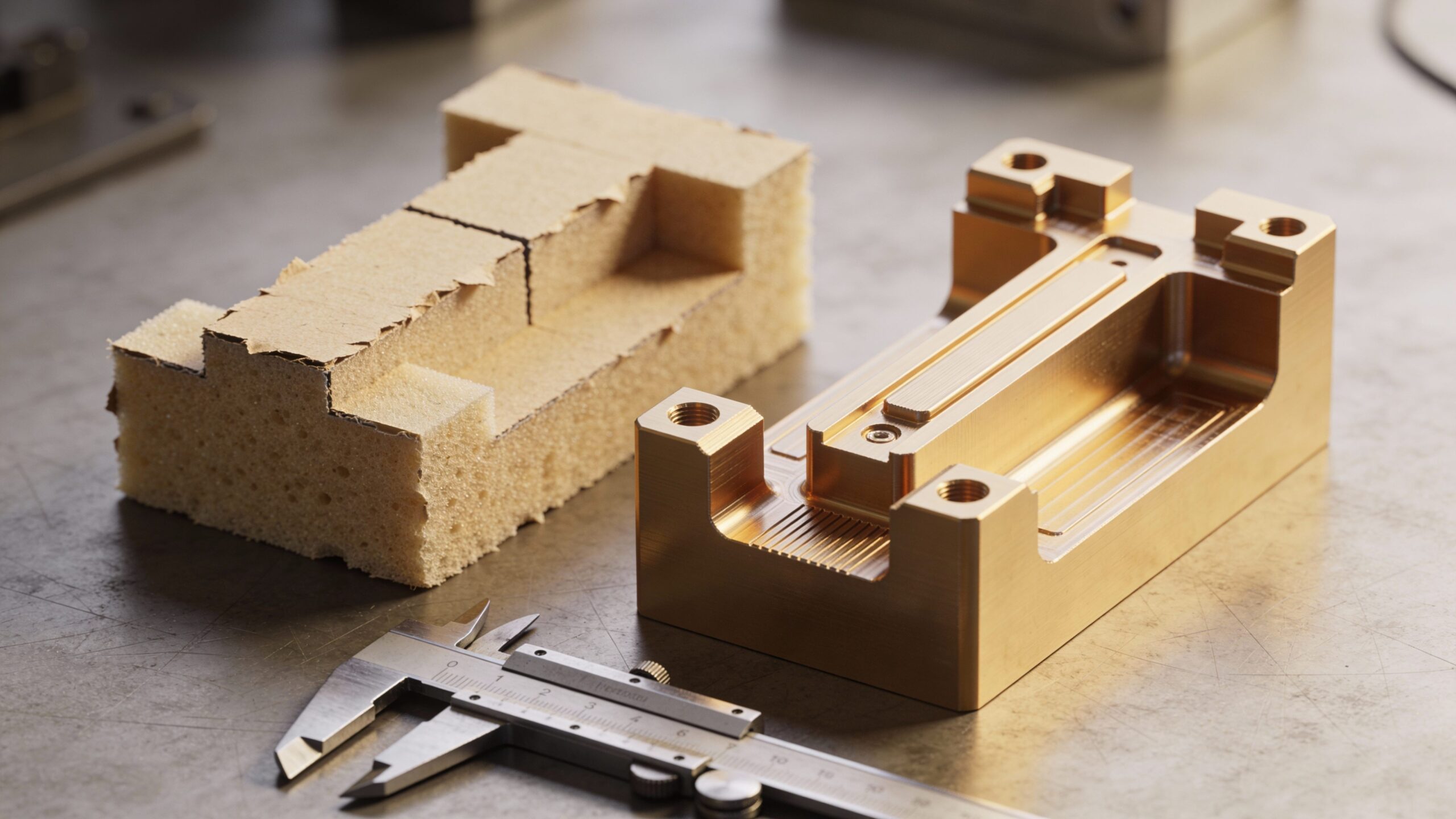
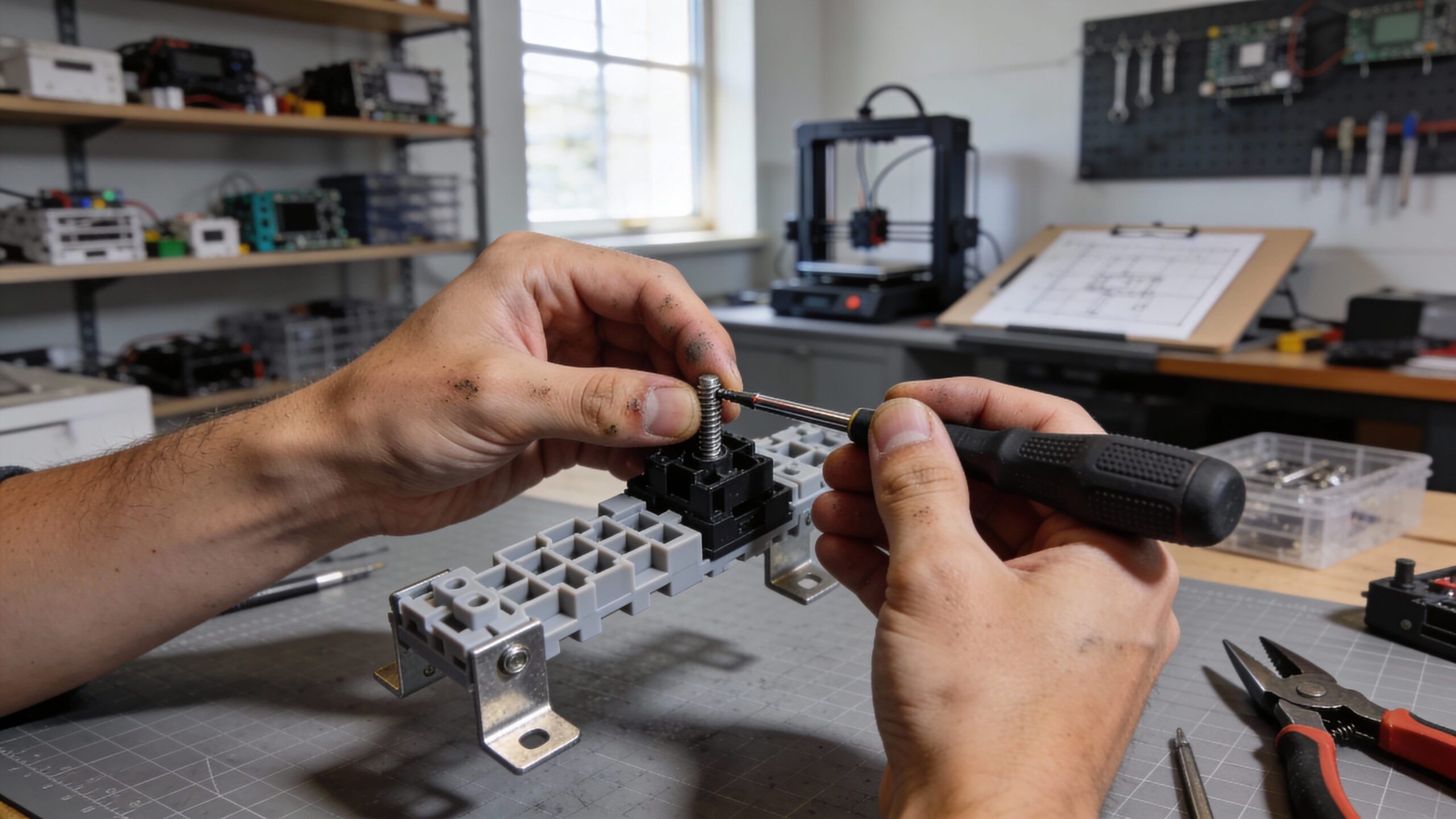
The smartest prototypes are intentionally rough. Cardboard models, foam shapes, scrap wood jigs, and quick 3D prints exist to test a single assumption: does it fit the hand, does it align properly, does it withstand the load, does it guide the motion, does it feel intuitive? When makers prototype with purpose, they build faster and learn more. They stop chasing polish early and instead chase clarity.
Prototypes also de-risk complex builds. If a design has multiple unknowns—mechanical action, fitment, durability, and user behavior—makers can prototype each uncertainty separately. That way, failure is small, cheap, and informative, not catastrophic and discouraging.
Testing: Where Real Problems Reveal Themselves
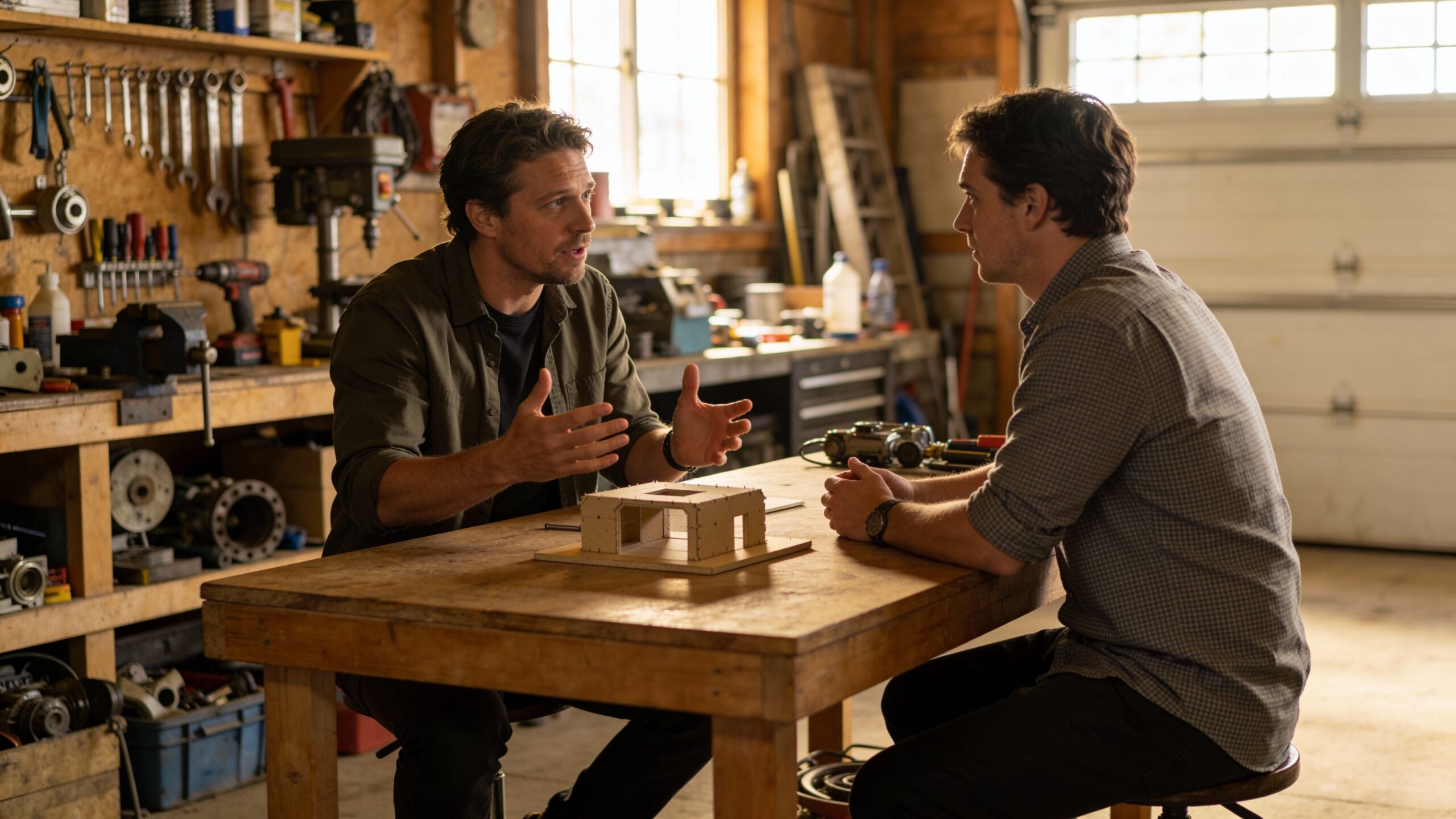
Testing is the moment your build leaves your imagination and meets reality. In design thinking, testing isn’t a final exam; it’s a conversation. Makers test by putting prototypes in hands, placing them in environments, and watching what happens without overexplaining. A good test is quiet. You let the object speak through behavior.
This is where surprises show up. People hold things differently than you expect. They skip steps you assumed were obvious. They use the build in ways that feel “wrong” but reveal true needs. A handle that seemed comfortable becomes tiring. A latch that felt secure becomes confusing. A device that works perfectly fails when exposed to dust or humidity. These aren’t setbacks; they’re insight. The most valuable test results often come from small moments: a pause before using, a question asked twice, a workaround invented immediately. Those moments point directly to what the design must fix next. Makers who embrace testing stop taking failure personally. They treat it as data that improves the next version.
Iteration: Turning Feedback Into Better Builds
Iteration is where design thinking becomes a maker’s secret advantage. Many builders iterate, but design thinking makes iteration strategic. Instead of rebuilding everything, you adjust what matters most. Instead of changing five variables at once, you change one or two so you can see what worked.
A strong iteration cycle is tight and focused. You prototype, test, capture what happened, and then decide what to change based on the user’s experience and the defined goal. Over time, your design becomes simpler, sturdier, and more intuitive. It stops feeling like a prototype and starts feeling like something that belongs in the world.
Iteration also helps makers avoid “solution attachment,” the trap of loving your first idea too much. When you’re willing to revise, you’re willing to become right. Design thinking rewards that mindset. It turns the workshop into a learning engine where every version has a purpose.
Design Thinking in Action: Common Maker Scenarios
Design thinking shows up in thousands of everyday maker problems. A maker building a bike accessory might discover the real issue isn’t mounting strength, but how quickly it can be installed and removed without tools. A woodworker creating a dust collection attachment might learn that the real pain isn’t suction power, but clogging and cleanup time. A 3D printing creator might realize their part is strong enough, but difficult to orient, install, or maintain.
Even a “simple” organizer project benefits. A storage solution that looks great may fail because the items don’t return easily after use. Observing how people actually put things away leads to better shapes, labels, and placement. The goal isn’t to impress; it’s to reduce friction. For makers who sell, design thinking becomes even more powerful. Customers don’t buy features; they buy outcomes. They want confidence that a product will fit, work, and last. A design thinking approach produces clearer instructions, better packaging choices, fewer returns, and happier users—because you built around real usage, not assumptions.
The Role of Constraints: Why Limitations Make Better Designs
Makers understand constraints. Limited tools, budgets, time, and materials are normal. Design thinking reframes constraints as creative allies. A constraint forces clarity. It makes you choose what matters.
If your build must be affordable, you can’t add complexity without reason. If it must be repairable, you’ll avoid designs that require special parts or permanent assembly. If it must work outdoors, you’ll prioritize sealing, durability, and ease of cleaning. Constraints guide decisions and often lead to more elegant solutions because they prevent unnecessary features from creeping in.
Constraints also support better problem definitions. “Make it smaller” is vague. “It must fit in a drawer and be usable with one hand” is actionable. When makers use constraints intentionally, they build solutions that feel refined and trustworthy.
Avoiding the Two Classic Maker Traps
The first trap is overengineering. Makers love capability, but capability can become clutter. A product with too many modes can become confusing. A build with too many parts can become fragile. Design thinking keeps makers honest by returning to the user’s need. If a feature doesn’t directly improve the experience or outcome, it may not belong.
The second trap is designing for yourself only. Sometimes that’s fine, especially for personal projects. But when the goal is broader usefulness—sharing, teaching, selling—your preferences may not match the audience. Design thinking helps makers expand perspective without losing personality. You can still build with your signature style, but you validate that style against real usage.
Design Thinking as a Workshop Habit
The magic of design thinking isn’t the vocabulary; it’s the habit. It’s the pause before building, the choice to test earlier, the willingness to listen, and the discipline to iterate with purpose. When those habits become normal, your projects start landing differently. They feel less like experiments and more like solutions. A maker who practices design thinking begins to notice problems everywhere, but not in a negative way. It becomes a kind of superpower: seeing friction, imagining alternatives, and building prototypes that reveal the path forward. Over time, you waste less material, spend less time chasing dead ends, and create work that earns real appreciation because it makes life easier.
Real-World Solutions Are Built, Not Imagined
Makers solve problems because they’re willing to do what most people won’t: test ideas in the real world, learn from failure, and keep refining until it works. Design thinking strengthens that instinct. It turns creativity into a repeatable process that produces better outcomes—stronger usability, clearer purpose, and designs that feel right in the hand and in the moment.
If you want to build smarter, start smaller. Observe first. Define the problem clearly. Prototype quickly. Test honestly. Iterate with intention. Do that consistently, and you’ll find that your best builds aren’t the ones that look impressive on the bench. They’re the ones that quietly solve a real problem so well that people forget the problem ever existed.