Why a Garage Metalworking Shop Is a Powerful Starting Point
A garage can become one of the most exciting and productive spaces a maker will ever build. It may begin as a place to store tools, park vehicles, or stack old boxes, but with the right planning it can transform into a serious metalworking shop capable of cutting, grinding, welding, shaping, repairing, and fabricating a wide range of steel and aluminum projects. For beginners, a garage shop offers something especially valuable: control. You can organize the workflow around your own projects, choose tools that match your budget, and build the space gradually as your skills improve. A small shop does not have to feel limiting. In fact, compact spaces often force smarter decisions. When every square foot matters, storage becomes more intentional, machines get chosen more carefully, and the overall shop layout becomes more efficient. A well-planned small metalworking shop can outperform a much larger but poorly organized space because the builder can move more smoothly from measuring to cutting to assembly to finishing. That efficiency matters whether you are building a workbench, fabricating brackets, repairing a trailer, or learning to weld for the first time. The goal is not to fill your garage with every tool imaginable. The goal is to create a safe, flexible, and inspiring workspace that supports real fabrication work. When you set up your garage shop with the right foundation, it becomes more than a work area. It becomes a launch point for projects, skills, and creative momentum.
A: Yes, with smart storage, compact tools, and a layout built around workflow.
A: A sturdy workbench or welding table is often the best foundation for the whole shop.
A: No, a focused set of core tools can handle many beginner and intermediate projects.
A: Use wall storage, keep floors clear, and avoid buying tools that do not match your workflow.
A: Many small shops benefit from at least one mobile bench or cart for flexibility.
A: Yes, especially for welding, grinding, and cutting, where fumes and dust can build up quickly.
A: A grinder, welder, clamps, measuring tools, vise, and strong lighting get used constantly.
A: Use strong wall racks or organized vertical storage that keeps material out of walkways.
A: Yes, but zoning the space clearly helps protect both projects and household items.
A: Smart maintenance, regular cleanup, and upgrades based on real project needs keep it working well.
Start With Space, Layout, and Workflow
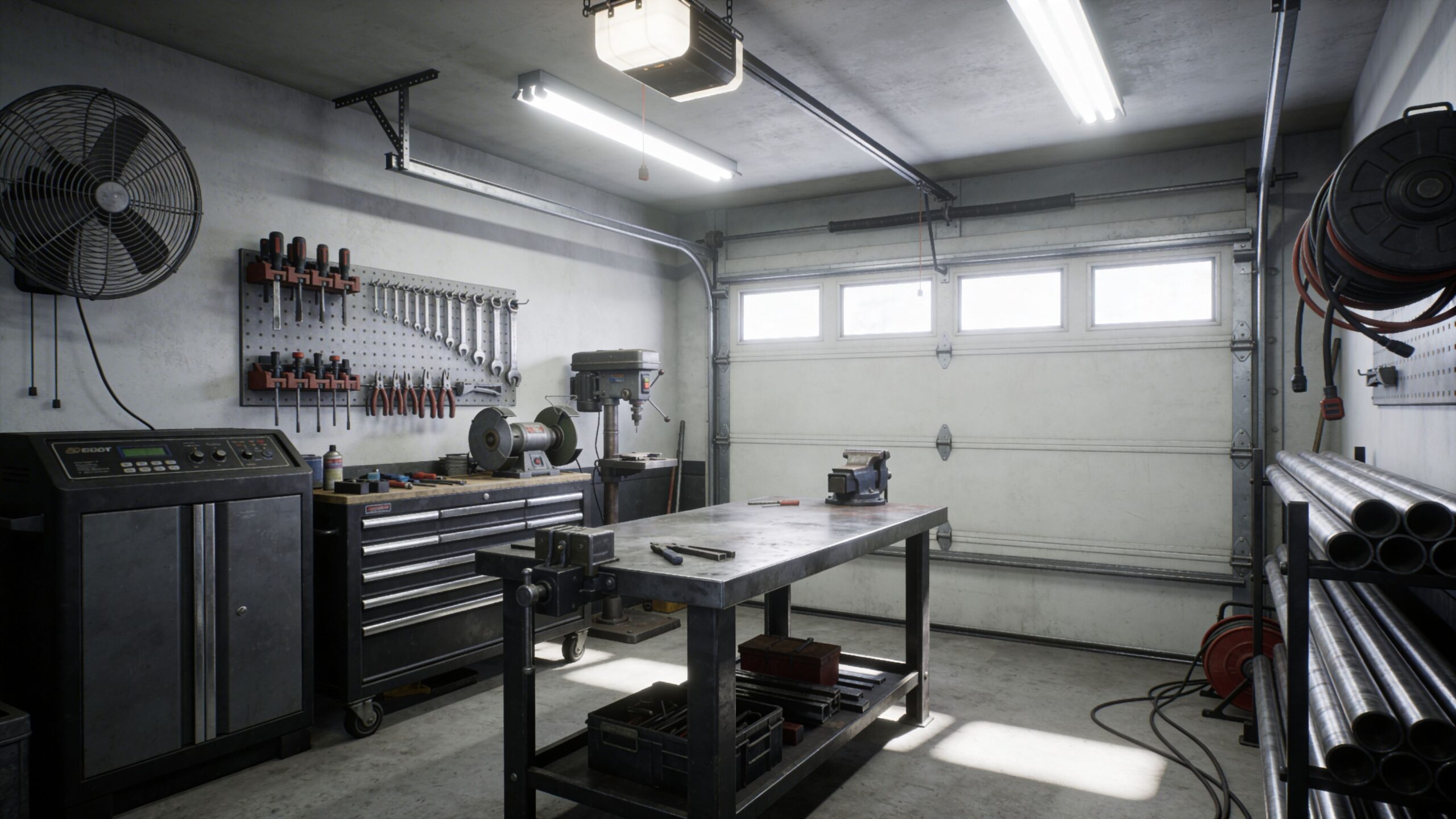
Before buying tools or moving benches into place, the smartest first step is to study the space itself. Every garage has its own dimensions, door swing, ceiling height, lighting, power access, and storage opportunities. The most successful small metalworking shops are designed around workflow rather than random tool placement. Think about how material enters the shop, where long steel stock will be stored, where cutting will happen, where welding and assembly will happen, and where finished projects can cool, cure, or wait for the next step.
In a compact garage, layout matters even more because large pieces of metal can quickly make a room feel crowded. Long steel tubing, flat bar, sheet metal, and angle iron need storage that does not interfere with walking paths or tool access. A good layout keeps one side of the shop more open for project handling while using walls and corners efficiently for storage, hanging tools, and shelves. If the garage still needs to function partly as a parking or household storage area, zoning becomes even more important. It helps to think in terms of dedicated areas: a clean measuring and planning zone, a fabrication zone, a cutting and grinding zone, and a storage zone.
The best layout also reduces unnecessary motion. You should not have to cross the entire garage every time you need a clamp, square, grinder, or marker. When the workflow makes sense, the shop feels calmer and more capable. That kind of efficiency saves time, reduces frustration, and improves safety because fewer tools and materials end up scattered around the floor.
Choose the Right Workbench and Welding Table
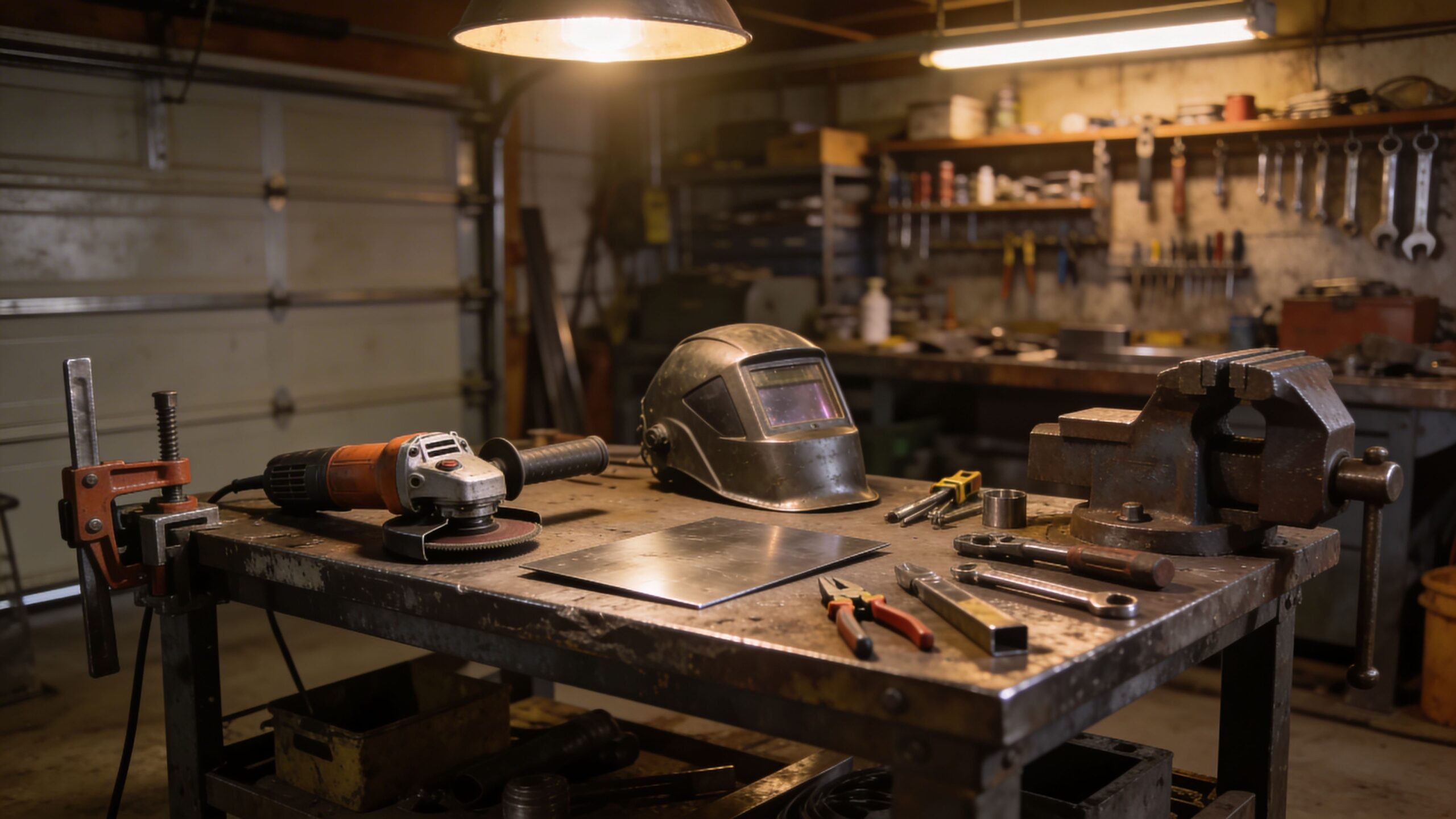
The workbench is the heart of a garage metalworking shop. It is where raw material gets measured, parts are aligned, clamps get tightened, and projects begin to take shape. A weak or unstable bench will make every job harder, while a sturdy, well-sized bench can improve nearly every aspect of fabrication. For most beginners, a heavy steel workbench or welding table is the best central anchor for the shop. It provides a heat-resistant surface, a place to clamp workpieces, and a reliable station for layout and assembly.
In a small garage, the right bench size matters. An oversized table can dominate the room and make it difficult to move large projects around. A bench that is too small, however, becomes frustrating the moment you start working with tubing frames or long steel parts. A compact but solid table, often on locking casters or positioned to allow access from multiple sides, can be a strong solution for limited spaces. Some makers prefer a fixed welding table as the main station and add a secondary fold-down bench or side support for long materials. Bench height also affects comfort and productivity. A table that is too low forces awkward posture, while a table that is too high can make grinding, fitting, and welding less stable. Think about the kinds of projects you want to build and how often you will be standing at the bench for extended periods. A good work surface becomes the foundation of the entire shop, and once it is in place, the rest of the layout starts to make more sense.
Essential Tools for a Beginner-Friendly Metalworking Shop
One of the biggest mistakes people make when setting up a garage shop is assuming they need everything at once. In reality, a small metalworking shop can do impressive work with a focused set of core tools. For most beginners, the most important categories are measuring, cutting, grinding, clamping, drilling, and welding. If those bases are covered well, the shop can handle a surprisingly wide range of projects without feeling underpowered.
A good angle grinder is one of the most valuable tools in the shop because it can cut metal, remove rust, clean welds, shape edges, and prep surfaces for fabrication. A welder, especially a beginner-friendly MIG machine, opens the door to steel frames, brackets, carts, shelves, and repair work. A drill press or strong handheld drill makes hole drilling more precise and repeatable. Clamps, locking pliers, magnetic squares, tape measures, combination squares, layout markers, and metal files may not seem dramatic, but they are the tools that turn rough work into accurate work.
Over time, many garage shops grow into chop saws, band saws, bench grinders, vises, and plasma cutters. But the strongest beginner setup comes from choosing dependable core tools rather than chasing a huge collection too early. Quality, reliability, and versatility matter more than sheer volume. A small shop built around essential tools will stay cleaner, function better, and leave more room for projects.
Power, Lighting, and Ventilation Make the Shop Truly Usable
A metalworking shop is only as functional as the infrastructure behind it. Tools need power, your eyes need light, and your lungs need clean air. These basics are less glamorous than welding machines and steel benches, but they often determine whether the shop feels frustrating or professional. In many garage setups, improving power access, lighting placement, and ventilation has a bigger day-to-day impact than buying another machine. Power planning starts with understanding what your tools require. Some welders and heavier equipment may need dedicated circuits or higher-voltage service, while grinders, drills, lights, and chargers need well-placed standard outlets. Extension cords stretched across the floor create clutter and hazards, so it is better to think ahead about where tools will live and how they will be powered. Even in a small space, clean cable management makes a huge difference in safety and workflow.
Lighting deserves serious attention because fabrication work depends on visibility. Layout lines, saw cuts, grinding angles, fit-up gaps, and weld puddles are easier to control in a bright shop with layered lighting. Overhead shop lights establish general brightness, while focused task lighting at the workbench, drill area, and saw station improves accuracy. Ventilation matters just as much, especially if welding, grinding, or cutting happens indoors. Moving air through the garage helps control fumes and dust, but the airflow should be planned so it supports the work rather than scattering debris or interfering with welding gas coverage. When power, lighting, and air movement are handled well, the shop instantly becomes more capable.
Safety Has to Be Designed Into the Shop
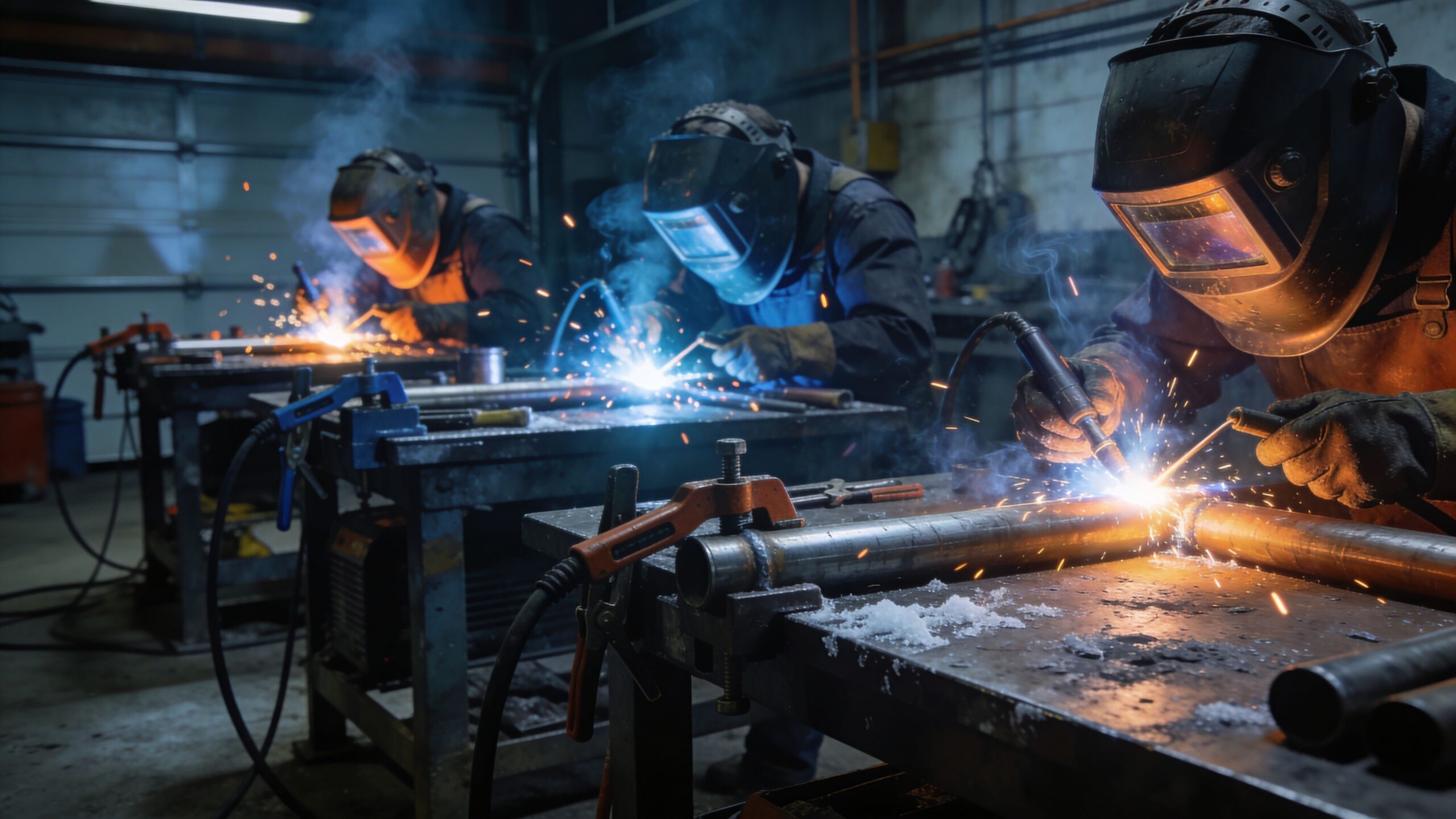
A great garage metalworking shop is not just organized and well-equipped. It is intentionally safe. Metalworking brings sparks, sharp edges, hot materials, electrical equipment, noise, dust, fumes, and heavy stock into a relatively small environment. That means safety cannot be treated like an afterthought. It has to be built into the way the shop is arranged and used from the very beginning.
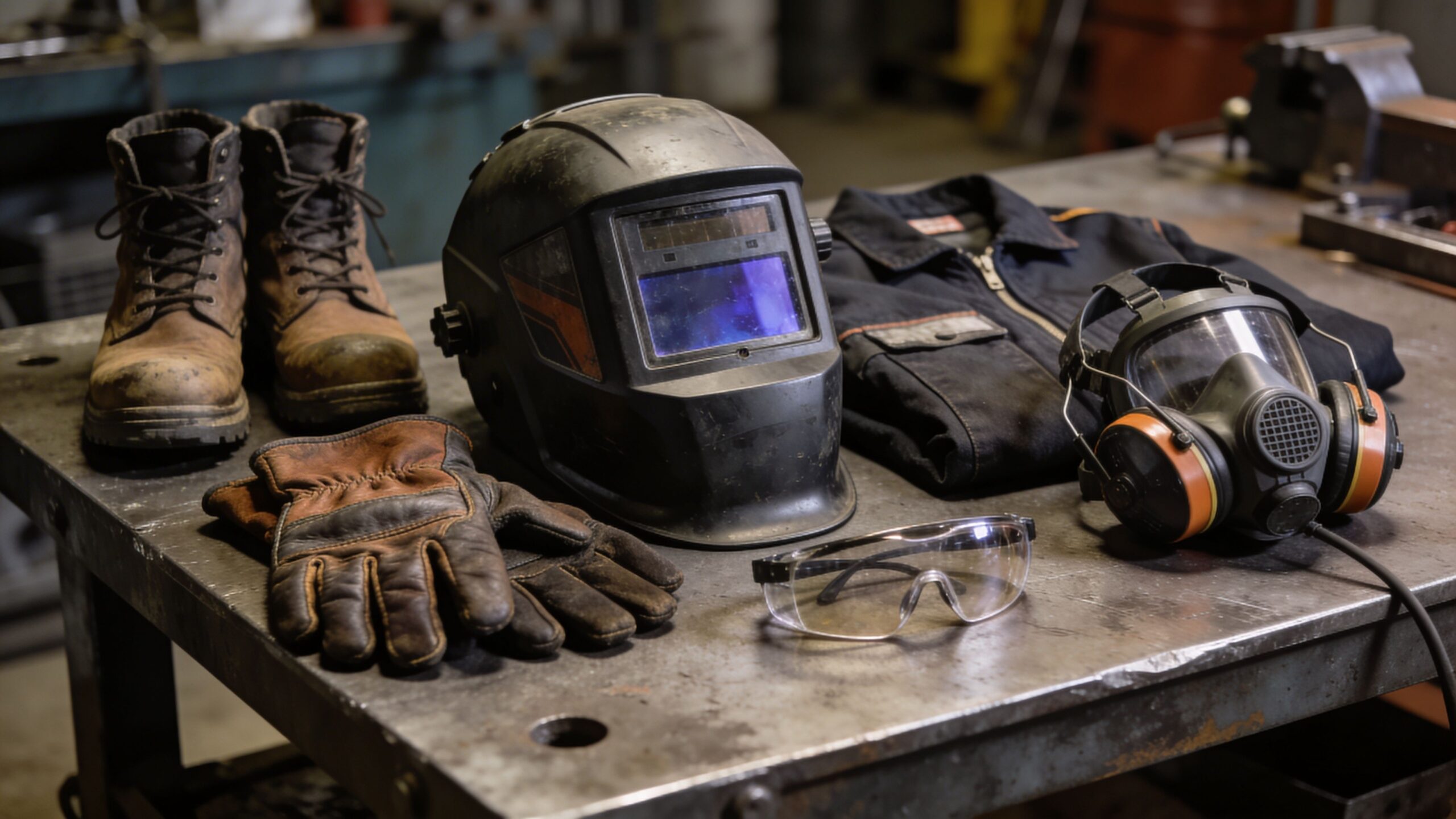
A clean and defined fabrication zone reduces many common problems. Floors should stay as clear as possible so steel offcuts, cords, hoses, and tools do not become trip hazards. Flammable materials should be kept far from welding and grinding areas, and a fire extinguisher should always be easy to reach. Welding helmets, safety glasses, gloves, ear protection, and fire-resistant clothing need an obvious storage location so they are easy to grab before work starts. If personal protective gear is buried in a drawer or on the far side of the garage, people are more likely to skip it.
Hot metal management is another part of safe design. Recently cut or welded material should have a clear landing zone, not just get dropped wherever space happens to be available. Gas cylinders should be secured properly. Grinding sparks should be directed away from sensitive tools, flammable clutter, and vehicle surfaces if the garage serves multiple roles. The best safety system is not just a rule list. It is a layout that encourages the right habits automatically.
Smart Storage Solutions for Small Shops
Storage is what separates a cramped garage from a functional fabrication shop. Without a plan for steel stock, clamps, grinders, helmets, extension cords, abrasives, drill bits, and fasteners, even a good shop layout can collapse into clutter. In a small space, storage should focus on accessibility, visibility, and vertical efficiency. Walls are often underused in garage shops, yet they can hold an enormous amount of valuable gear when organized with racks, hooks, pegboards, shelves, and magnetic holders.
Long material storage deserves special attention because steel tubing and bar stock are awkward and heavy. Horizontal wall racks can work well if they are strong enough and placed to keep material out of head height walking zones. Vertical corner storage can also be effective for shorter offcuts and commonly used pieces. Small parts benefit from labeled bins and drawers so time is not wasted hunting for cut-off wheels, flap discs, welding wire, nuts, bolts, or spare tips. One of the smartest storage habits in any shop is to keep frequently used items close to the main workbench. Clamps, squares, markers, measuring tools, and grinders should not require a scavenger hunt. Meanwhile, less frequently used tools can live on deeper shelves or secondary storage walls. A compact shop feels bigger when the floor stays open and the vertical surfaces do more of the work. Good storage supports both speed and safety, which makes it a true fabrication upgrade.
Build a Shop Around the Projects You Actually Want to Make
It is easy to get distracted by dream-shop ideas, industrial machines, and social media workshop setups that look impressive but do not match your real needs. The best garage metalworking shop is the one that supports the projects you actually want to build. That could mean brackets and repairs, off-road parts, workbenches, tool carts, decorative steel furniture, gates, shelves, or general fabrication jobs. Once you know the kinds of work you want to do most often, the shop becomes easier to design.
If welding frames and brackets is the priority, the shop should emphasize a good welding table, clamping systems, steel storage, and fit-up space. If precision drilling and smaller fabricated parts are the focus, then layout, lighting, vises, and drilling accuracy may matter even more. If the shop will support both metalworking and woodworking, separation between spark-heavy zones and cleaner assembly zones becomes important. The point is not to build a generic shop. It is to build a useful one.
This project-first mindset also helps control costs. Instead of buying tools because they seem impressive, you invest in equipment that solves real problems in your workflow. That approach creates a shop that grows naturally over time, with each addition earning its place. The result is a garage workspace that feels personal, practical, and ready for real work rather than just display.
Keeping the Shop Clean, Efficient, and Ready for Work
A garage metalworking shop never stays excellent by accident. It stays excellent because it is maintained. Even a beautifully planned layout can become frustrating if scrap piles up, grinders collect dust, cords knot together, and work surfaces disappear under random hardware. Cleanliness is not about appearance alone. It directly affects safety, accuracy, and motivation. When the shop is ready to work, projects start faster and progress more smoothly. A strong cleanup rhythm is one of the most valuable habits a maker can build. Putting tools back after each session, sweeping metal dust and grinding debris, sorting offcuts, and checking consumable supplies keeps the space usable. It also helps you notice problems early. Dull discs, frayed cables, low welding wire, damaged clamps, or unstable storage are easier to fix before they interrupt an important project. Small maintenance tasks keep the shop dependable.
There is also a psychological benefit to a clean fabrication space. An organized shop invites action. You are more likely to start a project, test an idea, or spend an evening improving your skills when the environment feels ready. In that sense, shop upkeep is not separate from making. It is part of the process that keeps creativity moving.
Growing Your Garage Shop Over Time
One of the best things about starting a garage metalworking shop is that it can evolve with your skills. You do not need a perfect setup on day one. In fact, most strong shops are built in stages. The first version may be simple: a bench, a welder, a grinder, a vise, and a few clamps. But each project teaches you something about what the shop needs next. Maybe you realize you need better material storage, stronger lighting, a drill press, a chop saw, or a cart for consumables. That gradual growth creates a shop shaped by experience rather than guesswork.
As you improve, the shop may become more specialized. You might add jigs for repeatable welding work, a dedicated grinding station, mobile tool carts, better fume control, or a more advanced machine for cutting and shaping. The beauty of starting small is that every upgrade becomes meaningful. You feel the difference because you know exactly what problem it solves.
A garage shop does not need to become an industrial fabrication facility to be valuable. It only needs to become a dependable, safe, and inspiring place where ideas turn into real objects. That is the true power of a home metalworking setup. It creates the freedom to build, repair, experiment, and improve on your own terms.
Turning a Garage Into a True Fabrication Space
Setting up a small metalworking shop in your garage is really about building capability. It is the process of taking an ordinary household space and giving it purpose, order, and creative power. With smart layout planning, a sturdy workbench, essential tools, strong lighting, safe ventilation, thoughtful storage, and a project-driven mindset, even a modest garage can become a serious fabrication environment.
For beginners, this kind of shop is more than a convenience. It is a training ground. It is where measuring becomes more precise, cuts become cleaner, welds become stronger, and ideas become more ambitious. Every improvement to the shop supports an improvement in skill. Over time, the space begins to reflect the work being done inside it. It becomes more efficient, more personal, and more capable with every project completed. The most exciting part is that you do not have to wait for the perfect shop to begin. Start with the fundamentals, make deliberate choices, and let the space grow with your experience. A small garage metalworking shop can become one of the most productive and satisfying places on your property, and once it is set up well, it will keep opening new doors for fabrication, repair, and creative building.