Why Rapid Prototyping Feels Like a Superpower
Rapid prototyping is the moment invention stops being a daydream and starts becoming a process. It’s how creators move from “I think this could work” to “I tested it, and here’s what I learned” in days instead of months. The word rapid doesn’t mean sloppy. It means intentional speed—building the fastest possible version that can answer a real question. When people hear “prototype,” they often imagine something polished: a sleek model that looks ready for store shelves. Rapid prototyping flips that expectation. It says your early builds should be quick, imperfect, and brutally useful. Their job is to reveal what’s true. Does the shape feel right? Does the mechanism bind? Does the user understand it instantly—or hesitate? Does it survive real force? Every fast prototype turns a guess into evidence. For beginners, rapid prototyping is especially powerful because it creates momentum. It replaces uncertainty with hands-on learning. And once you’ve felt the satisfaction of improving an idea through real iterations, you stop waiting for the perfect plan. You start building.
A: Short build-test-learn cycles focused on one key question at a time.
A: The biggest risk—comfort, fit, or the core mechanism.
A: No, early prototypes exist to reveal truth, not impress.
A: Use easy materials, change few variables, and test immediately.
A: When precision, fit, or complex geometry becomes the main bottleneck.
A: That’s normal—each failure shows where to strengthen or simplify.
A: Several; strong products often emerge from many small iterations.
A: Build both quickly and let testing decide.
A: Keep every prototype tied to a learning goal and test result.
A: Better usability, fewer late redesigns, and faster confidence in the concept.
What Rapid Prototyping Actually Means
Rapid prototyping is a design-and-build approach focused on fast iteration. Instead of spending a long time on one “final” design, you create multiple versions quickly, test them, learn, and refine. Each prototype has a specific purpose. Some prototypes test size and form. Others test ergonomics and comfort. Others test function, durability, or assembly logic.
The key is that rapid prototypes are not built to impress. They are built to inform. The fastest teams in the world don’t win because they’re lucky. They win because they learn faster than everyone else. Rapid prototyping is how learning becomes a repeatable advantage.
It also changes your relationship with failure. In rapid prototyping, a failed prototype isn’t a setback. It’s data. It tells you where the design breaks, where the assumptions collapse, and where the next version needs to evolve.
The Core Principle: Prototype the Risk, Not the Whole Product
One of the biggest beginner mistakes is trying to prototype everything at once. That often leads to big, slow builds that are hard to change and easy to abandon. Rapid prototyping works best when you focus on the highest-risk part of the product first.
Every idea has a “make-or-break” element. It might be a latch that must feel effortless. It might be a grip that must fit a wide range of hands. It might be a mechanism that must cycle smoothly. It might be a housing that must fit tight internal components. Your first rapid prototype should attack that single risk directly. When you prototype risk first, you avoid polishing a design that can’t succeed. You also keep your builds small and fast, which makes iteration less painful and progress more consistent.
Rapid Prototyping Methods That Work in the Real World
There isn’t one “best” method. The best method is the one that answers your current question fastest. Most successful workflows use a mix of methods, switching as the learning goal changes.
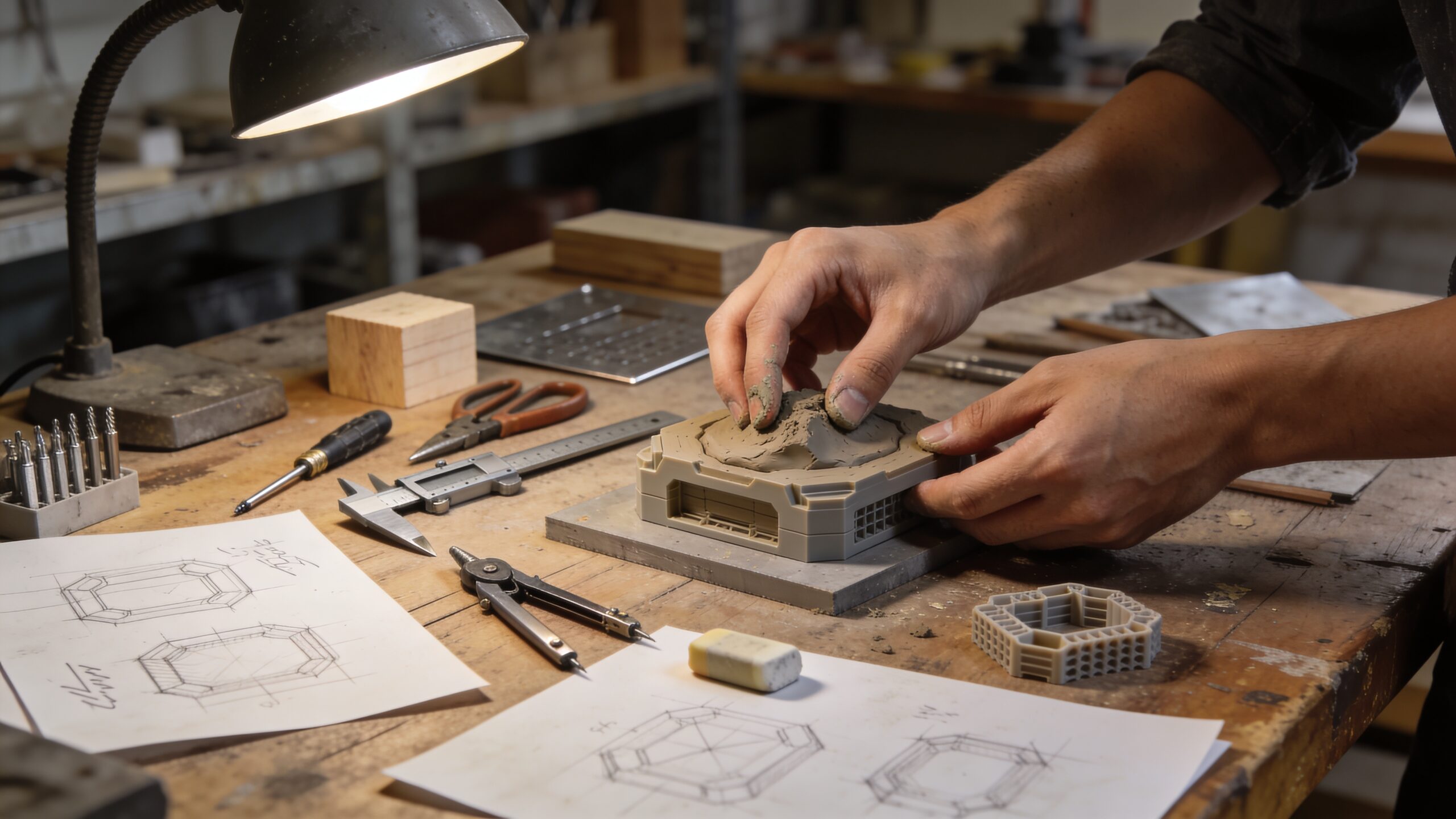
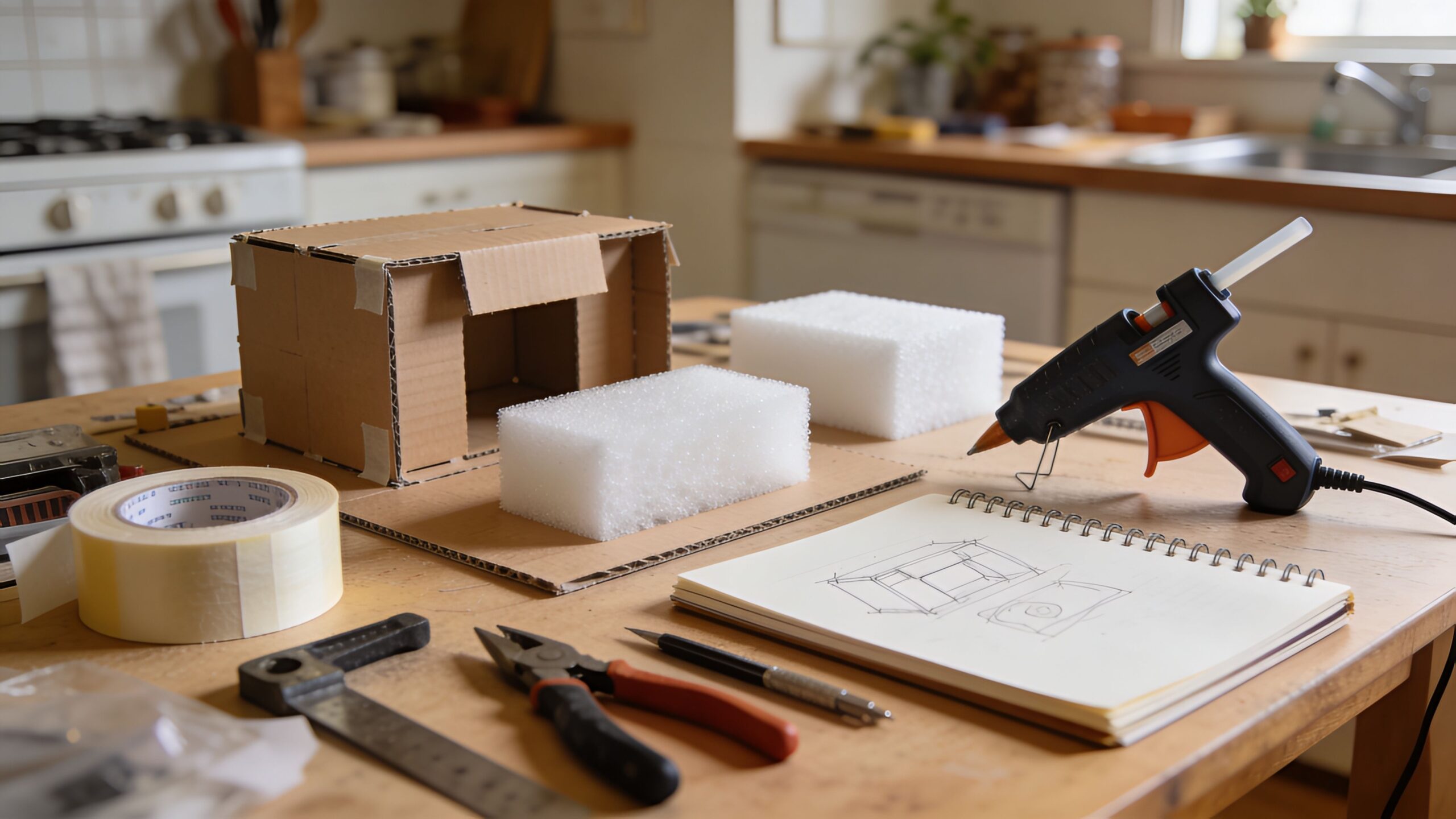
Hand-built mockups are the fastest way to confirm form and ergonomics. Cardboard, foam, tape, and clay can turn a sketch into a real object in minutes. These prototypes are perfect for testing how something feels, how it fits in a space, and whether the concept makes sense at human scale.
Digital prototypes—like CAD models and simple simulations—are ideal when geometry and fit matter. They help you avoid physical builds that fail for predictable spatial reasons. Digital models also make it easier to communicate ideas clearly and create a pathway to 3D printing or CNC fabrication.
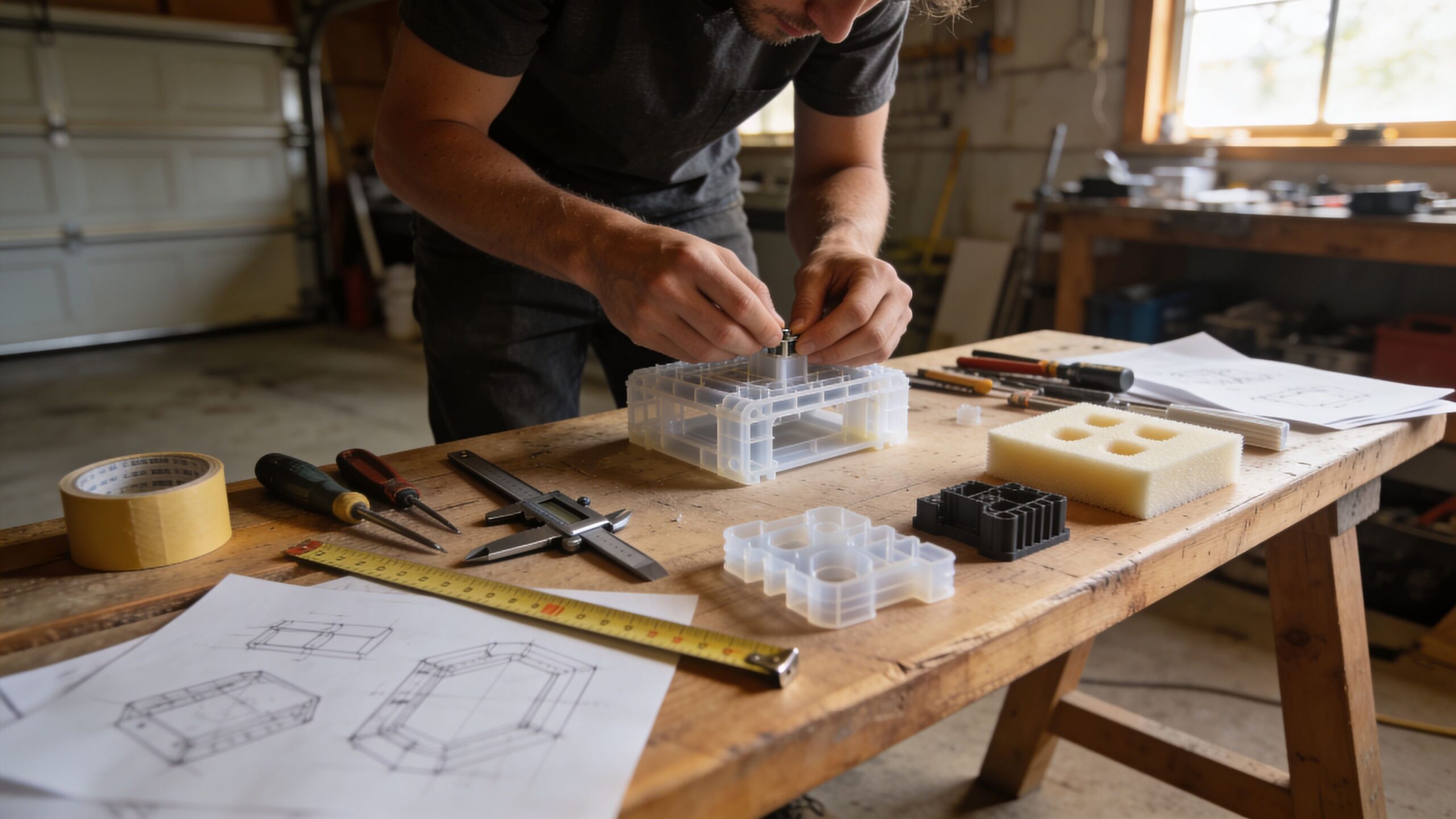
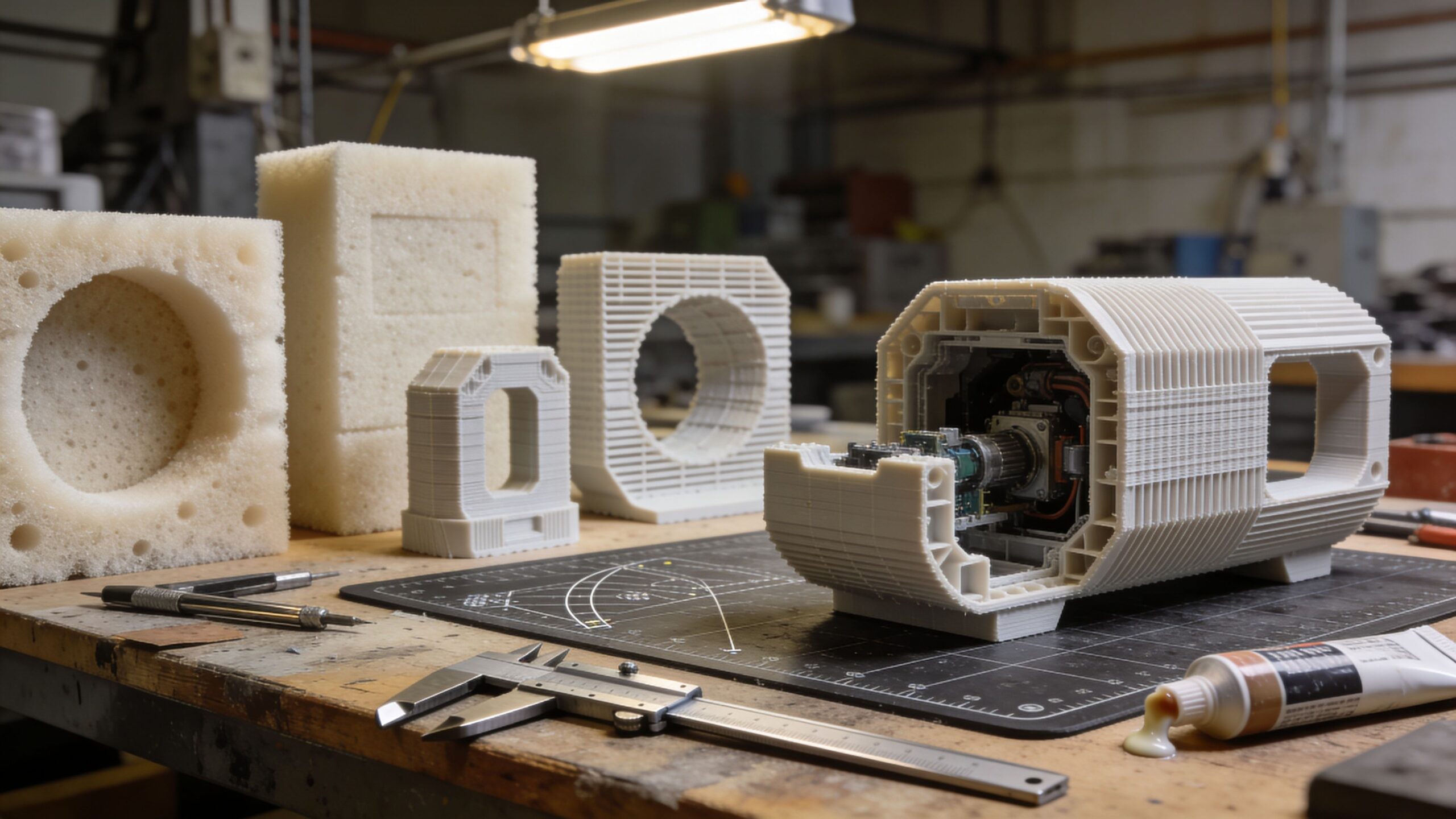
3D printing is one of the most popular rapid prototyping tools because it lets you create complex shapes quickly. It’s especially valuable for testing housings, ergonomic grips, and assemblies. But printing can also slow you down if you print too large, too detailed, or too often before you’ve proven the concept with simpler methods.
CNC cutting, laser cutting, and basic fabrication methods can accelerate prototypes that need stronger materials or more precision. These methods become especially valuable later, when durability and repeatability start to matter. The smartest rapid prototyping teams don’t commit to one method. They commit to fast truth.
Tools That Make Rapid Prototyping Easier
Rapid prototyping is not about having the fanciest workshop. It’s about having the right tools for quick building and quick changes. A sharp utility knife, a cutting mat, tape, hot glue, and simple measuring tools can take you surprisingly far.
Measuring tools matter more than beginners expect. A ruler and calipers help you compare versions and make intentional changes rather than random adjustments. Clamps and simple jigs can improve build stability and repeatability, which helps you test prototypes more fairly.
Digital tools matter too. Even simple 3D modeling software can help you refine proportions and avoid collisions. But the tool is never the goal. The goal is speed of learning. If software slows you down early, build physical mockups first and bring digital tools in when precision becomes the bottleneck. Documentation tools are underrated. A phone camera and quick notes can become your version control system. When you photograph each iteration and label what changed, you stop repeating mistakes and start building a map of progress.
How Rapid Prototyping Produces Real Results
Rapid prototyping isn’t just a creative process—it’s a results engine. It produces real outcomes that change the direction and quality of a product.
First, it reveals usability truth. Many products fail because they are confusing, uncomfortable, or awkward to use. Rapid prototypes expose those issues early, when design changes are still cheap. Second, it reduces cost risk. It’s far cheaper to discover a failure in cardboard than after expensive materials or manufacturing steps. Rapid prototypes save money by preventing late-stage redesigns. Third, it improves product performance. Each iteration tightens the design. Weak joints become stronger. Mechanisms become smoother. Ergonomics become more intuitive. A product that feels “effortless” is almost always the result of many prototypes, not one genius design moment. Fourth, it creates better decisions. Rapid prototyping turns design debates into tests. Instead of arguing about which version is better, you build both quickly and let reality decide.
The Rapid Prototyping Workflow That Keeps You Moving
The most effective rapid prototyping workflow is built around cycles. Each cycle has a purpose, a build, a test, and a learning outcome. The cycle doesn’t have to be long. It can be a single afternoon.
Start by defining one question for the current iteration. For example, “Does this handle feel comfortable after ten minutes?” or “Can this latch close one-handed reliably?” Then build the simplest prototype that can answer that question. Test it in a realistic way. Capture what you learned. Adjust one or two variables and build the next version.
This cycle prevents perfection paralysis because it focuses on one improvement at a time. It also prevents the chaos of changing everything and not knowing what caused progress. Rapid prototyping isn’t about racing blindly. It’s about moving with direction.
Knowing When Speed Helps and When It Hurts
Speed is powerful, but it must be controlled. Rapid prototyping works best when you stay focused on learning goals. If you build too quickly without testing carefully, you might miss the true cause of problems. If you change too many variables at once, you may create confusion instead of clarity.
The trick is controlled speed. You move fast, but you measure what matters. You document changes. You test consistently. You keep your prototypes simple enough to revise without emotional pain. When you do this well, rapid prototyping becomes a skill that compounds. Each project teaches you how to prototype faster and smarter on the next one.
Matching the Method to the Stage
Early-stage rapid prototypes should favor speed and ease of change. That usually means hand-built mockups and simple digital models. Mid-stage prototypes often shift toward functional builds, stronger materials, and more precise dimensions. Later-stage prototypes focus on manufacturability, assembly, and durability. The method should evolve as the questions evolve. When the big unknown is comfort, build physical mockups. When the unknown is fit and geometry, go digital. When the unknown is durability, use stronger materials and stress testing. The best creators don’t worship a tool. They choose a tool that fits the question.
Rapid Prototyping for Beginners: The Mindset Shift That Changes Everything
For beginners, rapid prototyping is less about technique and more about mindset. You stop treating the first version as something that must be “right.” You treat it as something that must be informative. That shift removes pressure and replaces it with curiosity.
You also stop waiting for perfect clarity. You build to create clarity. In rapid prototyping, action produces insight. Insight produces better action. The loop becomes addictive in the best way because you can feel yourself improving the idea in real time. This is why rapid prototyping is one of the most valuable skills in innovation. It teaches you to convert uncertainty into progress with your hands, your tools, and your willingness to test.
The Real Results: Better Products, Faster Confidence, Stronger Innovation
Rapid prototyping produces more than prototypes. It produces confidence. Every build teaches you something real. Every test removes a layer of uncertainty. Every iteration moves the product closer to a version that works in the real world. When rapid prototyping is done well, the final product isn’t just better-designed. It feels inevitable. It feels like the result of a thousand small decisions proven by reality. Because that’s exactly what it is.
If you want real results, prototype the risk, move fast with intention, test honestly, and iterate with discipline. Rapid prototyping won’t just help you build a product. It will teach you how to build ideas into reality—again and again.