Drills and drivers are the heartbeat of modern making. Whether you’re building furniture, repairing your home, crafting DIY projects, or fabricating with metal or plastic, these tools unlock a world of precision, power, and creative possibility. Yet many beginners—and even experienced makers—never fully understand how much control, finesse, and technique these everyday tools truly offer. Mastering drills, drivers, and bits means mastering speed, torque, accuracy, and efficiency. This guide will walk you through the essential skills, strategies, and secrets professionals use to drill cleaner holes, drive fasteners straighter, and get better results in every material. Let’s dive into the real maker’s guide to these indispensable tools and elevate your craft one hole, one fastener, and one perfect bit selection at a time.
A: A drill is versatile for holes and light driving; an impact driver delivers pulsing torque for tough fasteners.
A: You may be starting too fast or on a slick surface—use a center punch and begin at low speed.
A: Match the bit to the screw, keep the bit square, use proper clutch settings, and apply steady, firm pressure.
A: Start with quality twist bits, a brad-point set, a few Forstner bits, and a mixed driver bit kit.
A: Use low speed, steady pressure, and cutting oil to keep the bit cool and extend its life.
A: You may be using too much speed or pressure, or a dull bit—slow down and replace worn bits.
A: Yes, for most masonry you’ll want hammer mode plus proper masonry bits for efficient drilling.
A: Use the drill’s clutch, set it with test screws in scrap, and keep pressure even while driving.
A: Cordless offers mobility and convenience; corded excels in continuous heavy-duty drilling without battery concerns.
A: Holes are cleaner, bits last longer, screws seat perfectly, and you spend less time correcting mistakes.
Understanding Drills: The Powerhouse of Precision
Drills come in various styles, each offering specific strengths. A standard cordless drill is the most versatile tool in the modern workshop, capable of drilling holes, driving screws, mixing finishes, and even sanding with specialty attachments. Hammer drills bring pulverizing strength for drilling into concrete and masonry. Drill presses provide stationary precision unmatched by handheld tools, perfect for repeatability and perfectly vertical holes.
But understanding drills begins with learning their language: speed (RPM), torque, and clutch settings. High speed is ideal for small holes and soft materials, while slower speeds prevent burning and chatter in dense hardwoods or metals. Torque determines how much rotational force the drill applies. Too much torque can strip screws; too little can stall the bit. The clutch setting allows you to fine-tune how hard the drill drives before slipping, protecting both tool and material. A maker who understands how to pair speed and torque with each material quickly discovers that drilling is not brute force—it’s finesse.
Drivers: Controlled Power for Perfect Fastening
While drills can drive screws, a dedicated driver—or even better, an impact driver—provides unmatched control and power for fastening tasks. Drivers excel in repetitive work, attaching hardware, building frames, and assembling furniture. Impact drivers add bursts of rotational force to push stubborn fasteners through dense material without bogging down. But using drivers effectively is more than pulling a trigger. It’s about feeling the torque, positioning the bit square to the material, and starting screws slowly before accelerating. The biggest mistakes beginners make are driving too fast and misaligning bits, leading to cam-out, stripped screw heads, or split wood. Precision driving requires controlled pressure, good bit-to-fastener contact, and the ability to let the tool advance the screw, not shove it. Drivers are mechanical, but the skill behind them is entirely human.
Choosing the Right Bit: The Secret Behind Every Successful Cut
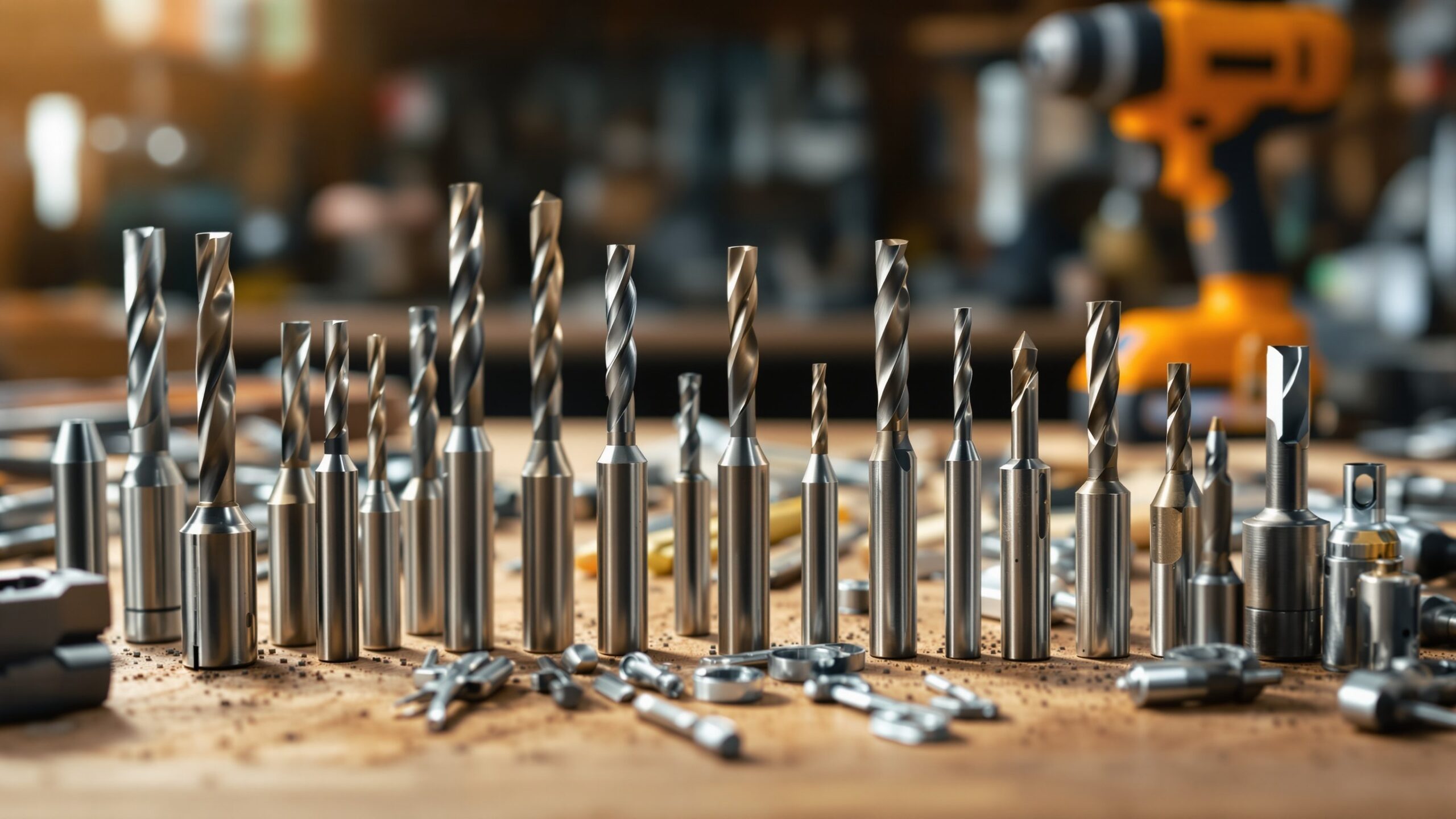
Bits make or break a project. The wrong bit leads to burned holes, wandering cuts, stripped screws, and frustration. Understanding bit design helps you choose the right one every time. Twist bits are general-purpose and great for wood, plastic, and soft metals. Brad-point bits shine in woodworking with their sharp center spur and clean-cutting outer spurs. Spade bits offer fast, aggressive cuts but can cause tear-out. For smooth, flat-bottom holes, Forstner bits are unmatched. Auger bits dominate in deep drilling where pull-through is needed. In metalworking, cobalt bits withstand heat and resist dulling, while step bits enlarge holes cleanly in sheet metal.
Driver bits also vary widely—Phillips, Torx, square (Robertson), hex, Pozidriv—and each performs differently. Torx and square provide excellent grip, reducing the likelihood of stripping. High-quality bits last longer, hold fasteners more securely, and reduce tool wear. The moment you understand how to match bit geometry to the job, your drilling and driving instantly improve.
Speed Control: The Most Underrated Skill in Drilling
Anyone can squeeze a trigger—but not everyone knows how to control speed. Drilling at full speed is rarely the right approach. Softwoods and smaller bits allow for high RPMs, but hardwoods, plastics, and metals require slower speeds to prevent melting, burning, or chattering. For wood, letting the bit bite slowly prevents splintering. For metal, low speed and steady pressure reduce heat buildup. Plastics require moderate speed to avoid melting and fusing to the bit. Even drywall benefits from controlled drilling to prevent blowout. Speed control is especially crucial at the start of a hole. Starting too fast makes the bit skate across the surface, damaging the material. A slow, steady entry creates a clean guide for the rest of the cut. The best makers drill with their ears as much as their hands—listening for smooth cutting, not straining or squealing.
The Power of Pilot Holes: Clean Cuts and Strong Fasteners
Pilot holes are the unsung heroes of accurate drilling and driving. They guide screws, reduce material splitting, and ensure fasteners seat straight. Without pilot holes, screws fight their way into wood or metal, creating stress and cracks.
A proper pilot hole matches the screw’s core—its solid center shaft—rather than its full thread diameter. This allows threads to bite while the screw advances smoothly. For hardwoods or long screws, a stepped pilot hole may be needed, widening the top portion to accommodate the screw shoulder.
Countersinks pair beautifully with pilot holes by creating clean, conical recesses for screw heads. This prevents mushrooming wood fibers and allows fasteners to sit flush or below the surface. Once you understand pilot holes, your projects instantly look more professional and your fasteners gain strength and longevity.
Preventing Tear-Out: Clean Holes Every Time
Tear-out happens when fibers on the exit side of the material break free, leaving ragged edges. Clean drilling requires planning for both entry and exit. Backing boards placed behind the workpiece provide support, preventing fibers from tearing free. Slowing down as the bit exits helps reduce blowout. Using brad-point or Forstner bits creates cleaner edges because of their cutting geometry. Another technique is drilling halfway from one side, then flipping the board and finishing from the other. The two holes meet in the middle, eliminating tear-out completely. Clean holes are a hallmark of quality work—but the techniques are simple once you know them.
Driving Fasteners with Control, Confidence, and Zero Slippage
Driving screws sounds simple, but doing it well takes skill. The key is bit alignment. If the bit isn’t square to the screw head, even the best driver will slip. Begin by seating the bit in the screw with gentle pressure, then power up gradually. Let the threads engage before applying full speed.
Matching the bit type to the screw head is vital. Phillips heads strip easily because their design naturally cams out under pressure. Torx and square drive screws remain engaged even during heavy driving. When working close to an edge, slow speed and pilot holes prevent splitting. In dense materials, waxing screws or using self-drilling screws reduces friction. Driving is not brute force—it’s controlled engagement between tool, bit, and fastener.
Understanding Torque: Power with Precision
Torque is the measure of twisting force—and it’s something every maker must learn to control. Too much torque strips screws, damages wood fibers, or snaps fasteners. Too little torque leaves screws proud or stuck halfway in. Clutch settings are your best friend. They allow the drill or driver to slip at a predetermined torque level, preventing overdriving. Impact drivers don’t have a clutch, but their pulsing action delivers torque more efficiently without constant pressure. Proper torque ensures fasteners seat firmly without crushing the material. This is especially important in softwoods, drywall, MDF, and plastics, which are prone to stripping. Once you master torque, your fasteners sit perfectly every time.
Keeping Bits Sharp: The Difference Between Struggle and Mastery
Sharp bits drill cleaner, faster, and cooler. Dull bits create smoke, burning, chatter, oversized holes, and frustration. Many makers don’t realize how quickly bits dull, especially in hardwood or metal.
Regular maintenance—cleaning, sharpening twist bits, and oiling metal bits—extends life dramatically. Using the correct speed also reduces wear. Cobalt and carbide bits stay sharp longer in metal and composite materials. A sharp bit feels like it pulls itself forward, requiring surprisingly little pressure. When drilling feels like work, the bit likely needs attention.
Drilling in Wood: Clean, Controlled, and Splinter-Free
Wood is forgiving, but still demands technique. Always start drilling slowly. Brad-point bits deliver the cleanest holes, especially in visible work. For deep drilling, periodically pull the bit out to clear chips and reduce heat. When drilling into end grain, slow speed and sharp bits are essential. End grain tends to split, wander, or burn if rushed. Pilot holes are mandatory for screws in end grain, which naturally holds fasteners poorly. Softwoods drill quickly, while dense woods like maple, oak, and walnut require patient, steady pressure. Understanding wood grain and density is the difference between clean craftsmanship and messy results.
Drilling in Metal: Slow, Lubricated, and Precise
Metal requires an entirely different approach. Low speed, steady pressure, and bit lubrication ensure clean results. Cutting oil prevents overheating and prolongs bit life. Center punches create small divots to prevent the bit from wandering.
Sheet metal benefits from step bits, which enlarge holes smoothly without grabbing. For thicker steel, cobalt bits resist heat and abrasion better than standard high-speed steel. Good metal drilling feels smooth and controlled—not squeaky, smoky, or erratic.
Drilling in Plastic: Heat Management Is Everything
Plastics melt easily, so drilling requires medium-slow speeds and light pressure. Too much heat causes melting, cracking, or fused debris on the bit. Certain plastics like acrylic benefit from specialized bits with modified cutting angles. Tape placed over the drilling area protects the surface from chipping. Supporting the plastic evenly prevents flexing and cracking. Drilling plastic is a test of finesse, not force.
Using Jigs and Guides: Precision That Never Fails
Jigs elevate drilling and driving from manual skill to mechanical certainty. A simple fence or straightedge ensures perfectly aligned holes. Drill guides guarantee vertical entry. Doweling jigs, pocket hole jigs, and shelf pin jigs make complex layouts quick and accurate.
Even a scrap board clamped as a guide rail dramatically improves cut accuracy. Jigs remove guesswork—and guesswork is the enemy of consistency. Smart makers build jigs as often as they build projects.
Workholding: The Forgotten Key to Perfect Drilling
The most precise bit is useless if the workpiece moves. Clamps, vises, bench dogs, and wedges stabilize material so you can focus on alignment. Workholding ensures safety and accuracy. A stable workpiece feels like an extension of your hands. You control the drill—not the other way around.
When to Use an Impact Driver vs. a Drill
Drills excel at drilling holes, delicate driving, and work requiring finesse. Impact drivers thrive in heavy-duty tasks: long screws, lag bolts, structural work, and dense materials. They prevent wrist strain by transferring torque through pulsing impacts rather than continuous twist.
Knowing which tool to grab prevents damage, speeds up work, and produces cleaner results. Use the drill for precision. Use the impact driver for power.
Project Planning: The Secret to Cleaner Holes and Faster Builds
Accurate drilling begins long before you switch on the tool. Planning includes choosing your bit, marking your centers clearly, considering clamp placement, and thinking through hole depth.
Good makers visualize each step. They rehearse tool angles, entry points, and exit strategies. They prepare backup boards, pilot holes, and even spare bits to prevent interruptions. Planning reduces errors more than any tool or technique.
Advanced Techniques for Professional-Grade Results
As your confidence grows, so do your options. Depth stops let you drill holes to exact depths. Bit extensions reach into awkward places. Countersink/counterbore combos create perfect hardware recesses. Plug cutters let you hide screws under matching wood patches. Angle drilling jigs open new possibilities in tight spaces. The more techniques you learn, the more control you gain.
Mastering Drills, Drivers, and Bits Unlocks True Craftsmanship
Drills and drivers are simple on the surface, but mastering them transforms your projects. Understanding your tools, choosing the right bits, controlling speed and torque, and planning each cut elevate your work from basic to exceptional. These tools blend power with finesse, science with art, and technique with imagination.
When you master drills, drivers, and bits, you unlock a world of making where every hole is clean, every fastener seats perfectly, and every project reflects true craftsmanship.